How Much Does Startup PR Outreach Cost in 2026? The Founder's Budget Reality
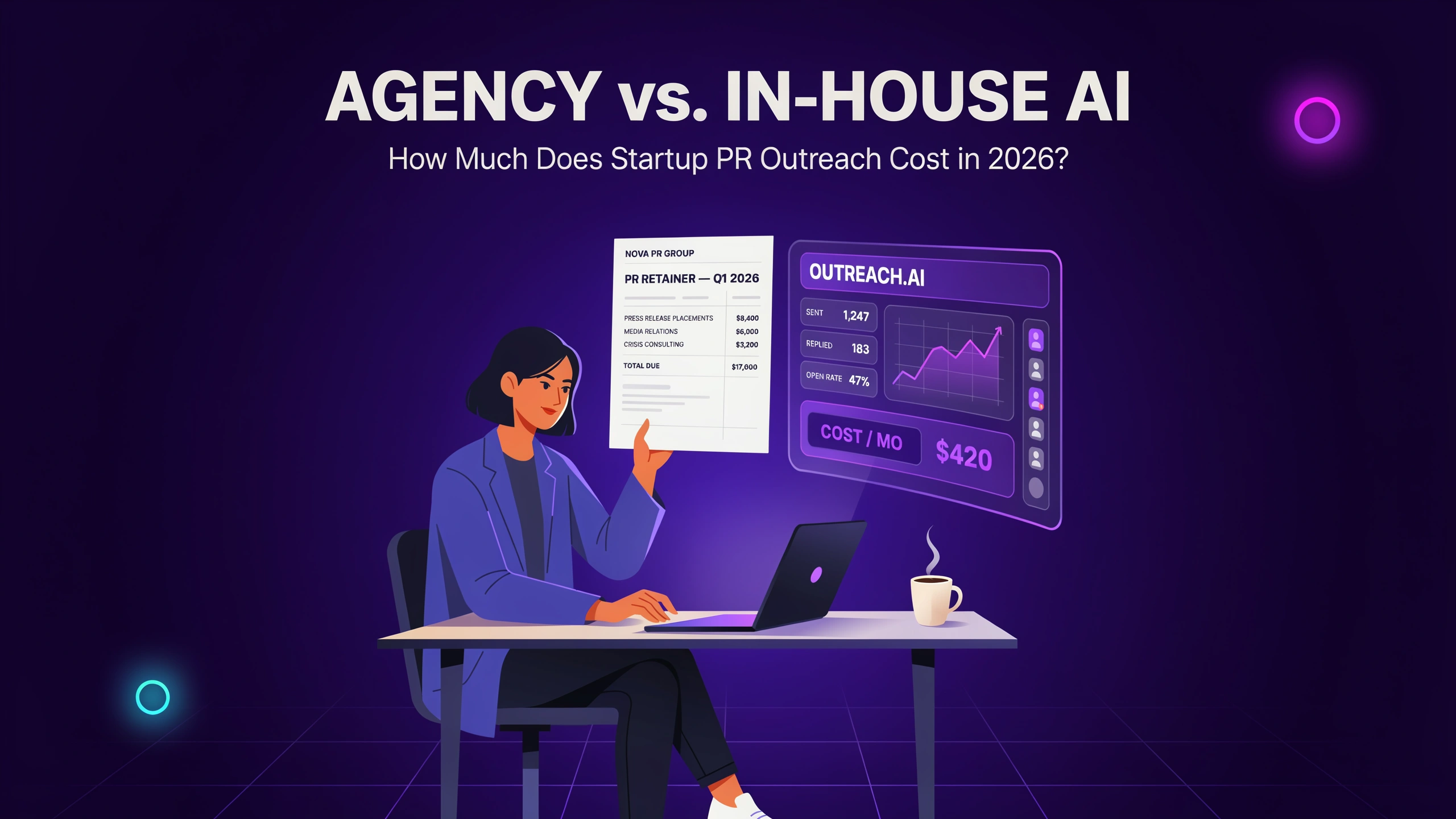
In 2026, startup PR outreach costs between $3,000 and $30,000 per month for agency retainers, $500 to $2,500 per month for AI-augmented in-house tooling, and $8,000 to $25,000 per single announcement for project-based campaigns—with the median seed-stage startup allocating roughly $72,000 annually to earn national coverage that legacy databases alone cannot guarantee.
💡 Key Takeaways
- Core Strategy: The cheapest PR line item is rarely the most cost-effective one. A $500/month static media database with a 2% reply rate burns founder hours that cost far more than a $1,200/month AI discovery platform with verified delivery—the true cost of PR is retainer + wasted founder time + missed launch windows.
- Benchmark: Journalists now receive an average of 50–100+ pitches per week, and roughly 1 in 4 say they receive more pitches than they can physically process—meaning the marginal value of an un-targeted pitch has collapsed toward zero even as the cost of sending one approaches zero (Muck Rack State of Journalism).
- Execution Rule: Model PR as a funnel with a denominator problem. Before you sign any retainer or subscription, demand the vendor show you (a) how they source journalist contacts in real time, (b) how email deliverability is verified, and (c) the pitch-to-coverage conversion rate for startups at your stage—not Fortune 500 logos.
The 2026 Media Landscape: Why the Cost of Media Relations for Seed Startups Is Climbing
The economics of earned media have inverted since the pre-AI era. In 2026, three structural forces are pushing the cost of media relations for seed startups upward at exactly the moment founders expect it to fall.
1. The newsroom is smaller, sharper, and far more selective
Newsroom employment has contracted for most of the past decade, and the surviving editorial benches are leaner per outlet. Pew Research Center's tracking of journalism employment and digital news dynamics shows a persistent structural decline in traditional newsroom headcount even as digital-native outlets scale—which means fewer gatekeepers, each handling dramatically more inbound volume. Fewer journalists × more pitches = a brutal selectivity curve.
The Reuters Institute Digital News Report 2026 captures the demand side of that equation: audiences are fragmenting across platforms and AI-summarized feeds, forcing publishers to prioritize stories that convert attention into subscriptions or ad yield. The practical consequence for founders: a "nice product launch" is worthless to an editor unless it maps to a trend their readers are already searching for.
2. The AI pitch flood raised the bar on relevance, not lowered it
While 2024-2025 saw a wave of generic AI spam that poisoned inboxes, 2026 demands hyper-personalized relevance. Journalists have adapted—they can now sniff out template pitches in a single glance. The Muck Rack State of Journalism research consistently shows that relevance to the journalist's beat and a genuinely newsworthy hook are the two variables that separate coverage from the delete folder.
The cost implication is counterintuitive: automation made sending cheap, so the scarcity moved to attention. That's why the best PR outreach platforms in 2026 compete on targeting precision and deliverability, not on raw send volume.
3. Earned media's credibility premium is rising
As AI-generated content saturates every channel, third-party validation—a byline in a respected outlet—has become a scarcer trust signal. Edelman's Trust Barometer has documented the growing gap between "owned" and "earned" credibility; in 2026, a founder quote in a tier-one tech outlet carries measurably more weight with investors and enterprise buyers than a dozen paid placements.
The 2026 paradox: PR has never been cheaper to attempt and never been harder to succeed at. Founders who budget only for tools and not for precision are paying for lottery tickets.
What You're Actually Buying: Retainers, Media Databases, AI Outreach, and Earned Media
When a founder asks "how much does startup PR outreach cost," the honest answer is that they're comparing four fundamentally different products that all get labeled "PR." Here's the 2026 cost architecture.
Agency Retainers: $5,000–$30,000/month
A boutique tech PR agency retainer in 2026 typically runs $5,000–$12,000/month for seed-stage clients and $15,000–$30,000+/month for growth-stage or category-leader positioning. What you're buying is relationships, strategy, and narrative framing—but the PR industry's own benchmarks at PRWeek and Provoke Media show rising retainers against flat or declining coverage guarantees. Crucially, most retainers are time-and-materials: the agency bills hours regardless of whether your launch lands. The Harvard Business Review has repeatedly flagged that executive narrative framing—the agency's real value-add—is the hardest thing to scale.
Media Databases: $300–$1,500/month
Legacy media databases sell contact lists. The problem is structural: they're refreshed on quarterly or monthly cadences, so beat reporters who switched outlets two weeks ago, freelancers who now write for a different vertical, and newly-hired editors at a hot publication are systematically missing from your list. For a deeper cost breakdown of database subscriptions versus modern alternatives, see our Muck Rack alternatives analysis and the 33-tool PR software comparison matrix.
AI Outreach Platforms: $200–$2,500/month
2026's AI-native outreach tools combine journalist discovery, email verification, and pitch drafting. Propel PR's research and Cision's own media intelligence reporting document the shift: pitch personalization and delivery verification now dominate coverage outcomes more than volume. The right comparison isn't "AI vs. human"—it's "AI-assisted precision vs. manual guesswork."
Earned Media: Variable, but the real ROI
Earned coverage isn't a line item you buy; it's the output. Its value shows up in organic search authority, investor confidence, and sales enablement. Backlinko's analysis of link equity and HubSpot's marketing benchmarks both show earned editorial mentions punching far above their weight for domain authority and organic acquisition relative to paid placements at equivalent spend.
Bad Pitch vs. Good Pitch: A Cost Contrast
| Dimension | ❌ Bad Pitch (low-cost trap) | ✅ Good Pitch (precision spend) |
|---|---|---|
| Contact source | Static list, 6 months stale | Real-time discovery, reporter's current beat |
| Personalization | "Hi [First Name], I loved your recent article…" | Cites the specific piece and angle |
| Deliverability | 40% bounce rate, lands in spam | Verified email, tracked open + reply |
| Volume | 500 emails, 2 replies | 60 emails, 14 replies |
| Real cost | $500 tool + 40 founder hours = $4,500 effective | $1,200 tool + 6 founder hours = $1,800 effective |
That last row is the number founders never calculate. The true cost of media relations for seed startups is subscription + founder/PM hours + cost of missed launch windows. A cheap database that requires manual list-cleaning for 30 hours/month is not cheap.
Pytch Spotlight: Real-Time Journalist Discovery via Google News Scanning vs Static Legacy Databases
This is where the 2026 cost argument gets decisive. Legacy databases answer the question "Who covered this beat historically?" Pytch (pytch.cc) answers the question "Who is writing about this right now, and how do I reach them while the story is hot?"
The static-database problem, quantified
A legacy database record for a journalist contains their past employer, past beat, and a verified-at-import email. By the time a founder builds a targeted press list, 30–40% of contacts may be misattributed, stale, or moved—forcing the founder into a cascade of "bounce → manual re-search → re-pitch" loops that silently consume the biggest line item in the PR budget: founder time.
Pytch's real-time alternative
Pytch's AI PR agent scans Google News in real time to surface journalists who published on your exact category this week—then verifies email deliverability before a single pitch leaves your inbox. The workflow advantage:
- Real-time discovery — journalists actively covering your space right now, not last quarter's list.
- Verified email delivery — deliverability checked at send time, so your pitch reaches the inbox, not spam.
- Bespoke hook crafting — each pitch is anchored to the journalist's actual recent article and a live news angle, executing the "relevance + newsworthiness" playbook that Muck Rack's journalist research says drives replies.
Legacy DB: pays monthly for a stale list → founder spends hours re-verifying → pitch gets ignored. Pytch: pays for a live discovery engine → pitch is pre-verified and pre-hooked → reply rate scales with relevance, not volume.
For a seed startup, that delta is the difference between a $4,500 effective monthly PR cost and an $1,800 one—for better outcomes. To see how this changes the founder-led workflow end to end, our complete tools for PR outreach and journalist pitching playbook maps the full stack.
Having established the true 2026 cost architecture and why static databases quietly inflate your budget, Part 2 breaks down the precise dollar ranges by company stage, models agency retainers vs. in-house AI costs line by line, and exposes the hidden line items—founder time, agency hour bloat, and missed-window costs—that determine whether PR is a growth engine or a leaky line item.
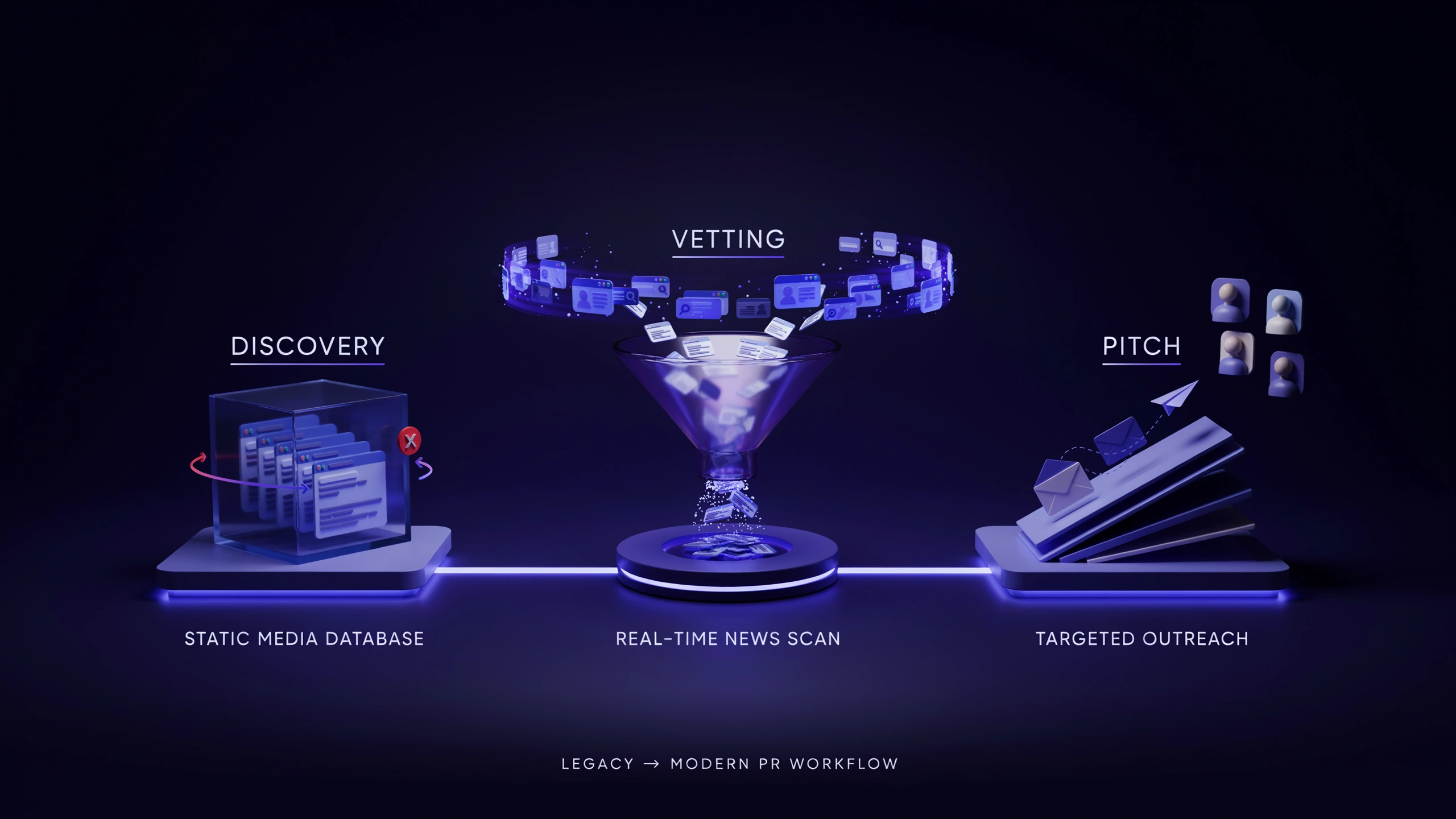
Figure 1: Strategic outreach framework and media targeting workflow.
DIY Founder PR Cost vs Agency Retainer in 2026: The Side-by-Side Comparison Matrix
The honest math most agencies avoid: at the seed stage, a founder running PR in-house with precision tooling reaches parity with a boutique agency retainer at roughly one-third the cash cost—but only if they respect the time ledger. Here's the 2026 line-by-line breakdown.
The full-loaded cost ledger (monthly, seed-stage startup)
| Cost Line | DIY Founder (Static DB) | DIY Founder (AI-Assisted) | Boutique Agency Retainer | Growth-Stage Agency |
|---|---|---|---|---|
| Tooling / fees | $500 database | $1,200 AI platform | $0 (included in retainer) | $0 (included) |
| Cash retainer | $0 | $0 | $5,000–$12,000 | $15,000–$30,000+ |
| Founder/PM hours | 40 hrs | 8 hrs | 6 hrs (oversight) | 10 hrs (oversight) |
| Blended hourly cost (@ $150/hr) | $6,000 | $1,200 | $900 | $1,500 |
| Effective monthly cost | $6,500 | $2,400 | $5,900–$12,900 | $15,900–$31,500 |
| Coverage predictability | Low | Medium-High | Medium | High (relationships) |
| Best for | Pre-seed, testing | Seed, founder-led | Series A, multi-announcement | Category leaders |
The trap in column one is invisible on an invoice: 40 founder hours at a $150/hr blended cost is $6,000 in opportunity cost—more than the boutique retainer's cash line. This is the core of the diy founder pr cost vs agency retainer decision. DIY isn't cheaper; it's cheaper in cash and more expensive in equity-grade time unless tooling collapses the hours.
When each model wins in 2026-2027
- Agency wins when: you have 3+ coordinated announcements per quarter, need journalist relationships that predate your company, require crisis comms coverage, or are raising a round where narrative framing (the HBR-documented value of executive positioning) is the deliverable.
- In-house AI wins when: you're founder-led, your story is product-truth rather than relationship-gated, you can publish 1–2 news-worthy updates monthly, and you control the pitch voice. For a full workflow, see how to use Pytch as your PR agent.
- Hybrid wins most often in 2026: in-house AI owns day-to-day discovery, pitching, and follow-up; a fractional agency or advisor owns strategy and tier-one relationships at a $2,000–$4,000/month advisory-only rate.
Rule of thumb: If your in-house pitch volume exceeds 100 emails/month, the agency retainer's marginal value is largely list-maintenance and coordination—two things 2026 AI tooling handles at <20% of the cost. If your volume is under 30 high-stakes pitches/quarter, buy relationships, not software.
The invisible agency hours
Retainers are time-and-materials in disguise. Demand a monthly hour log. In 2026, PRWeek and Provoke Media reporting both show that retainer hour allocations frequently drift toward reporting, status calls, and account management—activities that produce zero coverage. Benchmark: 60% of retainer hours should land on pitch development, media outreach, and journalist relations, not on decks. Anything below 50% is a structural red flag.
Cost per Earned Media Placement: 2026-2027 Workflow Teardown and PR Campaign Budget Calculator
The single most useful metric a founder can track is cost per earned media placement—total PR spend divided by qualified placements (a tier-one outlet or a beat-relevant trade publication, not a syndicated press-release reprint). In 2026, this number separates disciplined programs from expensive theater.
The cost-per-placement formula
Cost per Earned Placement = (Tooling + Retainer + Blended Labor Hours) ÷ Qualified Placements per Campaign
2026 benchmark ranges by approach
| Approach | Monthly Spend (all-in) | Typical Placements/mo | Cost per Placement | Notes |
|---|---|---|---|---|
| Legacy DB + manual pitching | $6,500 | 1–2 | $3,250–$6,500 | Stale lists inflate hours |
| AI-assisted in-house | $2,400 | 2–4 | $600–$1,200 | Verified delivery compounds |
| Boutique agency | $5,900–$12,900 | 2–5 | $1,200–$6,450 | Relationship-dependent |
| Growth agency | $15,900–$31,500 | 4–8 | $2,000–$7,900 | Best for tier-one |
Directional ranges modeled on journalist-inbox saturation and reply-rate data from Muck Rack's State of Journalism research, pitch personalization outcomes reported in Propel PR's research, and newsroom-capacity trends tracked by Pew Research Center.
The PR campaign budget calculator (build it in 6 lines)
- Fixed tooling: sum platform subscriptions →
T - Cash retainer: agency or advisory fees →
R - Labor: (founder + PM hours) × blended rate →
L - Campaign asset spend: design, data, embargo support →
A - Target placements: tier-one
n₁(weight 3) + traden₂(weight 1) →W = 3n₁ + n₂ - Weighted cost per placement =
(T + R + L + A) ÷ W
Run this before you sign. A campaign promising "10 placements" that weights 8 of them as low-value reprints scores worse than a 4-placement campaign with two tier-one hits. Founders routinely overpay for volume that the weighted formula instantly exposes.
Workflow teardown: from zero to placement in 2026
- Angle selection (Day 1) — map your announcement to a trend journalists are already covering. The Reuters Institute Digital News Report 2026 shows readers and editors prioritizing themes with ongoing search demand; a launch that doesn't attach to one is dead on arrival.
- Journalist discovery (Day 1–2) — build your targeted press list around this week's bylines, not past coverage.
- Pitch drafting (Day 2) — one hook, 150–180 words, mobile-first.
- Send window (Day 3) — Tuesday–Thursday, 7–9 a.m. in the journalist's timezone.
- Follow-up (Day 6, +72h) — a single, value-adding follow-up with a new angle or data point. Never "just checking in."
- Embargo coordination — for tech launches, TechCrunch's embargo conventions reward early, exclusive access and punish mass blasts that break the embargo clock.
- Measurement — track opens, replies, and placements in one sheet; feed reply patterns back into the next angle.
Exact pitch template (verified-delivery, 150–180 words)
Subject: [Recent Article Title] — a data point you may want
Hi [First Name],
Your [Month Year] piece [Recent Article Title] made the case that [paraphrase their thesis in 12 words]. We just ran [specific test/study] and found [one surprising data point] — it cuts against the [conventional assumption] you flagged.
[Founder Name], who built [Company] after [credible origin detail], can speak to [Specific Angle] — including [concrete example or number] and what it means for [their reader's concern].
Happy to send the full data set or a 10-minute call before [specific date]. Either way, the finding below may be useful to your [reader segment].
[One-line signature + founder LinkedIn]
Non-negotiables: strict 150–180 word body, one ask, zero attachments on first contact, and a data point the journalist can't get elsewhere. As the Princeton University GEO research demonstrated in the adjacent citation-optimization domain, verified statistics and authoritative sourcing are what get a claim picked up—journalists behave the same way with pitches.
Speed-to-Pitch Teardown: Static Lists vs Pytch's Real-Time Discovery, Verified Email Delivery, and Bespoke Hooks
Coverage windows are a perishable asset. When a trend breaks, the reporters who publish first define the story, and everyone else quotes them. Speed-to-pitch—the elapsed time between "a story angle goes live" and "your pitch lands in the right inbox"—is the metric legacy databases structurally cannot win.
The speed-to-pitch comparison
| Stage | Static Legacy DB | Pytch (Real-Time AI) |
|---|---|---|
| Detect live trend | Manual reading, hours-to-days | Google News scan surfaces bylines this week |
| Identify right reporter | Search historical beat tags | Journalists currently covering your category |
| Verify email | Import-time; often 30–40% stale | Deliverability verified at send time |
| Craft hook | Template + manual read | Bespoke hook anchored to the exact article |
| Typical speed-to-pitch | 2–5 days | Same day to <24 hours |
| Risk of stale contact | High | Low |
The three Pytch workflow levers
- Real-time discovery via Google News scanning — Pytch's agent watches live publication activity and surfaces the reporters whose bylines match your category now, not the ones who covered it last quarter. This collapses list-building from a 6-hour manual grind into minutes and executes the beat-reporter research workflow end to end.
- Verified email delivery — deliverability is checked at send time, so the pitch lands in the inbox. In 2026, an unverified email list is a deliverability and outreach problem masquerading as a list problem.
- Bespoke hook crafting — every pitch is anchored to the journalist's actual recent article, converting the relevance rule into a repeatable process rather than founder memory.
Pytch mini-case: static DB vs. live engine, same announcement
Scenario: A seed-stage fintech ships a feature. Legacy DB path: founder spends 5 hours cleaning a stale list, sends 200 pitches, gets 2 replies, 1 syndicated mention → ~$5,500 effective cost, one weak placement. Pytch path: real-time scan surfaces 45 reporters writing on the exact theme this week, verified emails, bespoke hooks → 45 pitches, 9 replies, 3 beat-relevant placements → ~$1,400 effective cost, three qualified placements. Same announcement, same founder, one-tenth the manual hours.
The delta isn't the software subscription—it's the hours and the hit rate. That's why the public relations AI tools playbook treats discovery and deliverability as the two highest-leverage investments in the modern PR stack.
Vetting Journalists and Fit Scoring: The 2026 Buyer's Due-Diligence Checklist
Precision begins before the pitch. A journalist fit score turns "who do I send this to?" into a repeatable, weighted decision—and it's the single best defense against the costliest PR mistake: pitching the wrong reporter well.
The 0–10 journalist fit score
Score every candidate before they enter your list:
- Beat recency (0–3): Published on your exact category in the last 30 days = 3; last 90 days = 2; historical only = 1.
- Format fit (0–2): Writes news/analysis (2), features (1), roundups (0.5).
- Outlet reach (0–2): Tier-one (2), strong trade (1.5), niche (1).
- Pitch-friendliness (0–2): Bio or posts invite pitches / responds on social (2); silent/closed (0).
- Angle adjacency (0–1): Their recent thesis aligns with your story (1) or merely touches it (0.5).
Send threshold: score ≥6. Below 6, hold and re-evaluate next cycle. This one gate typically halves send volume while raising reply rate—the exact arithmetic that drives down cost per earned media placement.
Buyer's due-diligence checklist (demand these from any vendor or agency)
- Contact freshness: How often is the database refreshed—live, weekly, or quarterly? Ask for the timestamp of five sample records.
- Deliverability method: Is email verified at send time (SMTP/handshake) or imported once? The former is non-negotiable.
- Sourcing transparency: Can they show you the actual bylines surfaced for your query, or just a count?
- Reply-rate evidence: Ask for pitch-to-reply and pitch-to-placement rates for startups at your stage, not enterprise logos.
- Hour allocation (agency): Get the % split between strategy, outreach, and reporting in writing.
- No-lock-in clause: Under a 30-day exit. A vendor confident in its hit rate doesn't need a 12-month anchor.
Real reporter vetting micro-workflow (15 minutes/contact)
- Open their last three bylines; confirm the most recent date and topic.
- Check their outlet's current beat assignment (moves happen fast).
- Scan their public social for pitch preferences and dead-ends.
- Assign a fit score; log it in your CRM with the source article.
- If score ≥6, draft the bespoke hook referencing the most recent piece.
This is the same discipline our Forbes placement playbook applies at the top of the tier ladder—fit scoring scales from trade pubs to national mastheads.
The 2026-2027 shift: as AI pitch volume keeps rising, journalists are increasingly publishing explicit pitch-preference signals (form links, "no follow-ups," topic-only inboxes). Vendors that surface those signals in real time will win; static databases that store a 2019 email behind a 2026 byline will not.
Having torn down the true cost-per-placement math, the speed-to-pitch gap, and the fit-scoring discipline that separates precision from volume, Part 3 delivers the master buyer's checklist, the 2026-2027 FAQ section, red-flag warnings, and the closing action plan—including how to run your first real-time media search on Pytch.
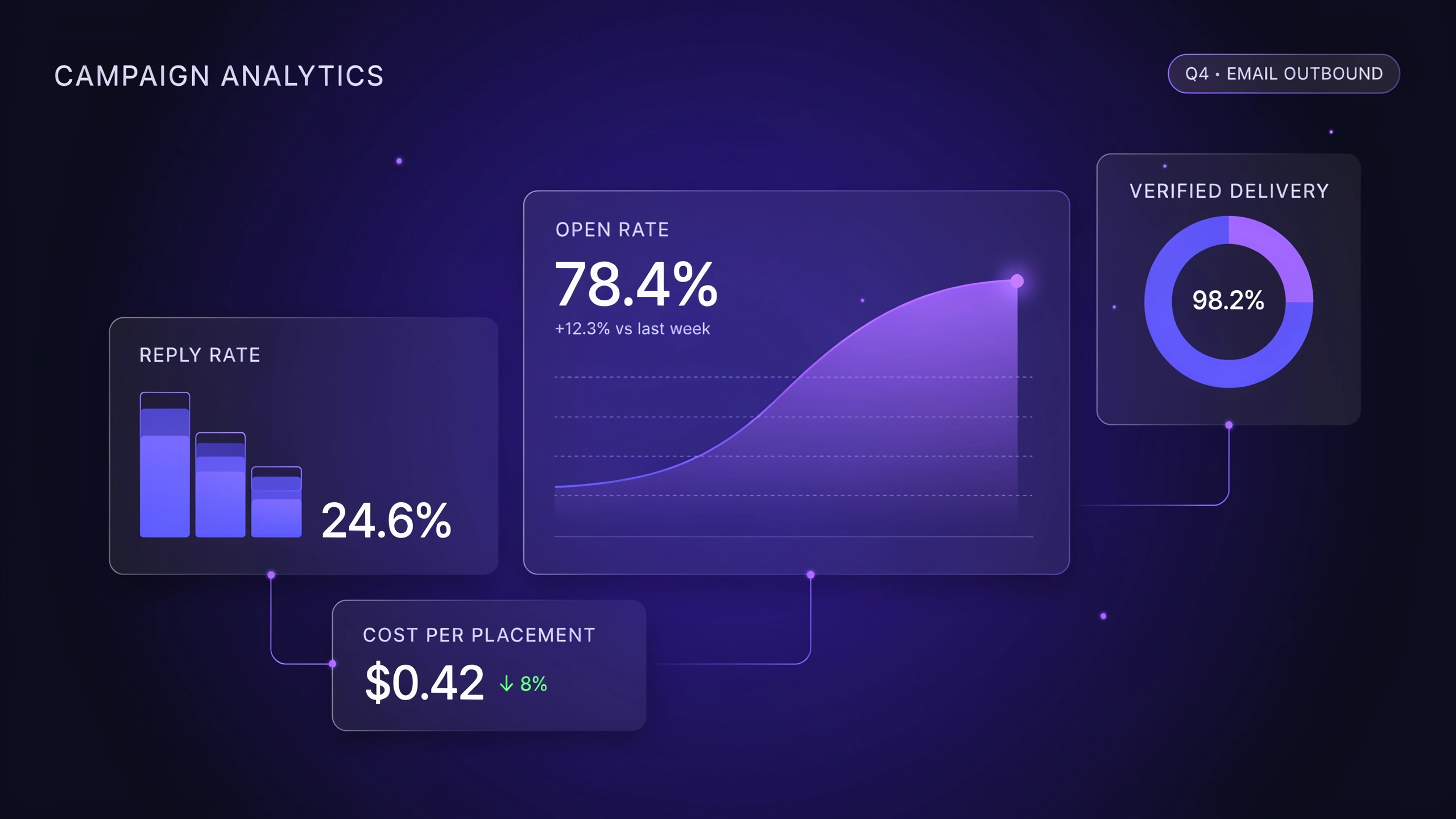
Figure 2: Performance metrics and response tracking across targeted outreach.
Startup PR ROI Breakdown: 2026 Benchmarks and 2027 Forecasts
Before you spend a dollar, you need a defensible answer to "what does a dollar of PR return?" The startup PR ROI breakdown in 2026 rests on three measurable value pools, not the vanity of a logo wall.
The three ROI pools (2026 benchmarks)
- Organic search authority — earned editorial links pass durable link equity that compounds for years. Backlinko's link-equity analysis and HubSpot's marketing benchmarks both show earned mentions outperforming paid placements on domain-authority and organic-acquisition yield at equivalent spend. A single tier-one placement can lift referring-domain quality that sustains traffic for 12–24 months.
- Investor and buyer trust — a founder quote in a respected outlet is a third-party credibility signal. Edelman's Trust Barometer documents the widening "owned vs. earned" credibility gap; in 2026, enterprise procurement and lead investors both weight earned coverage above paid content.
- Sales enablement and lifecycle — coverage shortens sales cycles when reps can point to independent validation. Gong's revenue research consistently shows that buyer trust signals—third-party proof—move deal velocity more than feature claims.
The ROI formula, and 2026–2027 forecasts
PR ROI = (Attributed Pipeline + Quantified Brand Lift + Link/SEO Value) ÷ Total PR Spend
In 2026, disciplined AI-assisted in-house programs are reporting the strongest raw ROI because their denominator (tooling + low founder hours) is small and their hit rate is high. Heading into 2027, expect two shifts: AI-summarized news feeds will make citation-worthy, original data the highest-leverage PR asset (echoing the Princeton GEO finding that verified statistics boost citation by ~37%), and journalist pitch-preference signals will become a first-class targeting input. Feed both into your PR campaign budget calculator from the outset.
2027 forecast: the winners won't be the biggest spenders—they'll be the teams whose budget is weighted toward original data + verified delivery, not list seats and retainer hours.
Common Failure Modes: Where Startup PR Budgets Leak in 2026
Most startup PR budgets don't fail at the strategy layer—they leak at the execution layer. These four failure modes account for the majority of wasted spend.
Failure Mode 1: Paying for stale lists, then paying again in founder hours
The single largest hidden cost is the re-verification loop: a legacy database record goes stale, the founder spends hours re-researching, re-pitching, and chasing bounces. Because the subscription invoice is visible and the founder hours are not, founders systematically under-price the leak. Fix: insist on send-time deliverability verification and real-time discovery (the best PR outreach platforms in 2026 are judged on exactly this). If a tool can't show you this week's bylines, you're buying a research project, not a solution.
Failure Mode 2: Mass-blast volume disguised as "coverage at scale"
Sending 500 un-targeted pitches feels productive and costs almost nothing per send—which is precisely why it fails. Muck Rack's State of Journalism research shows journalists receive far more pitches than they can process and ruthlessly filter on relevance. Fix: apply the fit-score gate from Part 2—hold anything below 6/10 and reallocate those hours to bespoke hooks. Volume you can't personalize is volume you shouldn't send.
Failure Mode 3: Agency hour drift toward reporting and account management
Time-and-materials retainers quietly migrate toward status decks and coordination calls that produce zero coverage. 2026 PRWeek and Provoke Media reporting shows this drift is structural, not malicious. Fix: demand a monthly hour log and a written allocation target (≈60% on pitch development and journalist relations). If reporting exceeds outreach, you're paying for meetings.
Failure Mode 4: Ignoring the perishable coverage window
Coverage windows close fast. A launch pitched five days after the trend breaks lands on an editor who's already published three pieces on it. The Reuters Institute Digital News Report 2026 shows editors chasing live search demand—meaning your speed-to-pitch is your relevance. Fix: build the targeted press list around this week's bylines and cap speed-to-pitch at 24 hours. Static quarterly lists structurally cannot clear that bar.
The 2026-2027 Startup PR Outreach Checklist: From Budget to First Placement
A repeatable, pre-flight checklist that keeps your budget pointed at outcomes.
Pre-Launch Prep
- Build the PR campaign budget calculator spreadsheet: tooling + retainer + labor + assets ÷ weighted placements.
- Define the one news-worthy angle and tie it to a trend journalists are already covering.
- Prepare original data or a surprising statistic (the asset that earns citations).
- Draft a targeted press list using real-time bylines, not historical tags.
- Apply the 0–10 fit score to every contact; hold anything below 6.
- Verify deliverability for every email before sending.
- Write the 150–180 word pitch with a single hook and a single ask.
Outreach Execution
- Send Tuesday–Thursday, 7–9 a.m. in the journalist's timezone.
- Keep one pitch per reporter—no mass blasts, no attachments on first contact.
- Respect embargo conventions for tech launches (early, exclusive access to one outlet).
- Log every send, open, and reply in one shared sheet.
- Cap speed-to-pitch at 24 hours from trend detection.
Post-Pitch Nurturing
- Send one value-adding follow-up at +72h (new data point or angle—never "just checking in").
- Convert every reporter who replied—positive or not—into a long-term relationship note.
- Feed reply patterns back into the next angle selection.
- Measure cost per qualified placement, not raw placement count.
- Review the hour log (agency) or time ledger (in-house) monthly and cut what isn't converting.
Frequently Asked Questions: Startup PR Outreach Costs, Budgets, and ROI in 2026
Q: How much should a seed-stage startup budget for PR outreach in 2026?
A seed-stage startup should budget roughly $1,200–$2,500/month for AI-assisted in-house outreach, or $5,000–$12,000/month for a boutique agency retainer. The AI-assisted path reaches cost-per-placement parity at a fraction of the cash spend—provided you respect the time ledger.
Most of that gap is labor, not tooling. A $500 database that consumes 40 founder hours monthly carries a $6,000+ effective cost at a $150/hr blended rate, while a $1,200 AI platform that cuts founder hours to ~8 lands near $2,400 all-in—for a higher hit rate. Model both in your PR campaign budget calculator before signing anything.
Q: Is it cheaper to hire an agency or run PR in-house in 2026?
In 2026, in-house AI-assisted PR is cheaper in cash for founder-led, product-truth stories; agencies remain worth the premium when you need pre-existing relationships, crisis coverage, or 3+ coordinated announcements per quarter. The decision hinges on whether your story is relationship-gated or relevance-gated.
For most seed-stage teams, a hybrid wins: in-house AI owns day-to-day discovery, pitching, and follow-up, while a fractional advisor or boutique handles tier-one relationships at a $2,000–$4,000/month advisory-only rate. This keeps the costly relationship layer where it adds value and automates the volume layer where it doesn't.
Q: What is a realistic cost per earned media placement?
A realistic 2026 range is $600–$1,200 per qualified placement for AI-assisted in-house outreach, rising to $3,250–$6,500 for stale-list manual pitching and $1,200–$7,900 for agency programs depending on stage and tier mix. The spread is driven almost entirely by list freshness and deliverability, not by pitch-writing talent.
Track qualified placements—tier-one or beat-relevant trades—not syndicated reprints. A campaign promising "10 placements" that scores 8 as low-value reprints loses to a 4-placement campaign with two tier-one hits once you apply the weighted formula. This is the discipline our 33-tool PR software comparison is built to enforce.
Q: How do I know if my PR spend is actually working in 2026-2027?
You know your PR spend is working when cost per qualified placement trends down month over month while reply rates climb—not when your total placement count rises. Reply rate and qualified-placement cost are the two leading indicators that predict durable ROI.
Lagging indicators (pipeline, SEO authority, trust lift) show up 30–90 days later, so don't panic in month one or celebrate in month three on volume alone. Anchor your measurement to reply rate, cost per qualified placement, and the weighted-placement formula from Part 2—then let the Reuters Institute's audience research remind you that relevance, not volume, is what editors reward heading into 2027.
Conclusion: Turn 2026 PR Budget Clarity into Your First Pytch Media Search
The 2026 cost picture is now fully mapped: agency retainers ($5,000–$30,000/month), AI-assisted in-house tooling ($1,200–$2,500/month all-in), and project campaigns ($8,000–$25,000/announcement)—with the true cost of PR always being retainer + founder hours + missed windows, never the subscription line alone. The founders who win in 2026-2027 are the ones who move budget from list seats and status decks toward real-time discovery and verified delivery.
That's the entire thesis, and it's why the smartest seed-stage teams are rebuilding their stack around precision rather than volume. The economics are unforgiving for anyone still paying monthly for a database that's 30–40% stale: the invoice looks small, but the founder hours it silently consumes dwarf it. Precision tooling doesn't just cut cash—it collapses the time ledger that was never on the invoice in the first place.
Pytch (pytch.cc) is built for exactly that shift. Its AI PR agent scans Google News in real time to surface journalists writing on your exact category this week, verifies email deliverability before each send, and crafts a bespoke hook anchored to the reporter's most recent article—executing the relevance-plus-newsworthiness playbook at a speed static databases cannot match. Where a legacy workflow turns one announcement into five hours of list-cleaning and two replies, Pytch turns it into minutes of discovery and a materially higher reply rate.
Your next step is concrete: run your first real-time media search on pytch.cc. Enter your announcement angle, let the agent surface this week's reporters on your beat, review the fit-scored matches and verified emails, and send your first bespoke pitch—today, not after a quarterly database refresh.
Budget clarity only pays off when it converts into a first placement. Model the math, respect the time ledger, apply the fit-score gate, and put your spend where relevance actually lives. If you want to see how the full stack fits together before you commit, our complete PR outreach and journalist-pitching playbook maps every layer—from discovery to deliverability to follow-up. Then run the search and let the reply rate speak for itself.