
Best PR Outreach Platform in 2025: Data-Driven Guide to Journalist Discovery, AI Pitching & Verified Email Delivery
A PR outreach platform is the system that finds relevant journalists, verifies their contact data, and delivers a personalized pitch into the right inbox at the right moment. In 2025, the best platforms replace static contact databases with real-time journalist discovery, AI-assisted hook writing, and deliverability-verified email infrastructure.
💡 Key Takeaways
- Core Strategy: Coverage is won by relevance and timing, not volume. The winning stack scans what journalists published this week and pitches only where the reporter has an active, demonstrable interest.
- Benchmark: Roughly two-thirds of media pitches never receive a reply, per State of Journalism research tracking hundreds of pitches per week per journalist — and newsroom employment has fallen sharply since 2008 according to Pew Research Center's newsroom employment data, so the same shrinking pool now absorbs more noise than ever.
- Execution Rule: Never send a pitch to an address you have not verified in this quarter, and never send a hook you could not defend as specifically written for that one journalist. Discovery freshness and email validity are now the two hard gates; everything else is optimization.
The PR Outreach Crisis: Why 65% of Pitches Go Unanswered
The supply-demand inversion nobody priced in
The economics of media pitching broke somewhere around 2016 and have been deteriorating since. Two curves crossed:
- Supply of pitches exploded. Every founder with a launch, every agency with a retainer, every AI wrapper with a Series A now has access to a contact database and a bulk sender.
- Demand for pitches collapsed. Newsrooms shrunk. Individual reporters inherited the beats of two or three laid-off colleagues and now carry a workload that makes deep, patient sourcing a luxury.
The result is a structural imbalance in which the majority of pitches are not rejected — they are never opened. Industry tracking consistently shows the average journalist receiving well over a hundred pitches a week, with the clear majority dismissed as irrelevant before a second paragraph is read, as documented in recurring State of Journalism research from Muck Rack. Independent surveying of the PR side of the equation shows the same pain from the opposite angle: practitioner research catalogued in Cision's industry resources repeatedly ranks "media outreach effectiveness" and "measurement of coverage impact" as top-of-list challenges for communications teams year after year.
Meanwhile, the amplification math has shifted. Reuters Institute's Digital News Report has tracked rising news avoidance and platform fragmentation — fewer reliable eyeballs per story, but a higher premium on the credibility of the outlets that still command attention. That means a handful of well-targeted placements now outperform a hundred scattershot mentions, both for reputation and for measurable pipeline.
The three failure modes behind the 65%
1. The wrong journalist. A database match on "SaaS" or "AI" is not a beat. Beats are behaviors: what a reporter wrote last Tuesday, which sources they quoted, what they explicitly said they are not covering anymore.
2. The wrong inbox. Contact data ages fast in a shrinking industry. Reporters change outlets, get promoted to editor, or move to newsletters and podcasts. A bounced or spam-filtered pitch doesn't just fail — it damages domain reputation for every future send.
3. The wrong hook. The most common failure is not laziness but framing: the pitch is written about the sender's milestone rather than the reporter's ongoing story.
Contrast: the same launch, two pitches
Bad PR pitch (the default output of most automated workflows): Subject: [Company] Raises $12M Series A to Revolutionize AI Workflow Automation Hi there, I hope this finds you well! I'm reaching out because we just closed a $12M Series A led by [Fund]. Our platform helps teams automate workflows with AI. Would love to be featured in [Publication]. Full release attached. Why it fails: "Hi there" signals a list. The milestone is the story — and funding rounds are not news to a reporter unless they signal a market shift. There is no reference to anything the reporter has written. Attachments from unknown senders get flagged.
Good PR pitch (the output of a real-time discovery workflow): Subject: Follow-up on your piece about AI agents breaking procurement — one data point Hi Maya — your line in last week's piece about AI agents "arriving faster than compliance teams can write rules" matched what we're seeing across 400 mid-market finance teams: 61% now have an agent in production with no written policy covering it. I have the raw survey cross-tabs and the CFO of a 900-person logistics firm who will talk on record about the audit failure that forced their policy. Worth 15 minutes? If procurement isn't your beat anymore, tell me who took it over and I'll stop bothering you. Why it works: It references a specific published story, delivers a hard number within two lines, offers named human access rather than a press release, and includes an exit ramp that protects the sender's reputation with that reporter forever.
The gap between these two pitches isn't effort — it's information. The second pitch required knowing what Maya published last week, what she covers now, and which proof point would be new to her. That's an infrastructure problem.
Inside the Best PR Outreach Platform: From Static Databases to Real-Time AI
What a "pr pitching platform" actually has to do
Strip away the marketing and a PR pitching platform performs four discrete jobs. The best 2025 platforms differ from their predecessors almost entirely in how they perform the first one.
- Discovery — identify which journalists are actively covering your category right now.
- Verification — confirm the human, the outlet, the beat, and the deliverable email address.
- Personalization — construct a hook that is provably specific to that journalist's recent work.
- Measurement — track opens, replies, coverage, and downstream business impact without guessing.
Discovery is where legacy tools are structurally weakest, because a database is a snapshot and journalism is a stream. A contact record updated four months ago tells you what a reporter used to cover. It cannot tell you that on Tuesday she published a piece on procurement audits that your data directly answers — and that's the single most valuable piece of information in the entire workflow.
The real-time AI shift — and what it's actually good at
The credible applications of AI in media pitching are narrower — and far more useful — than the hype suggests:
- Scanning published output at scale. Instead of matching on a static beat tag, models read what journalists published in the last 7–30 days across thousands of outlets, extract the specific sub-topics, and rank reporters by recency and depth of interest rather than by keyword overlap in a profile field.
- Drafting a bespoke hook from that evidence. Given a target article, an angle, and two proof points, a model produces a first draft that opens with the reporter's own framing — work that used to take 20 minutes per email.
- Verifying deliverability before send. Pattern validation, MX record checks, catch-all detection, and bounce history scoring on the domain, not just the address.
There's an emerging body of research explaining why evidence-dense outreach outperforms generic outreach. Princeton University's work on Generative Engine Optimization research found that content incorporating verified statistics earned roughly 37% more citations, and content citing authoritative sources gained about 40%, versus unoptimized equivalents. The same principle governs human gatekeepers: a pitch carrying a specific, verifiable, new number clears the credibility bar that a claim-laden pitch does not. Journalists are, professionally, citation machines.
This is the design philosophy behind Pytch — a real-time approach that treats journalist discovery as a live newsroom scan rather than a database query, pairs it with verified email delivery, and uses AI to write the hook around what the reporter published this week rather than around the sender's press release.
Why "more contacts" is the wrong metric
Legacy platforms sell seat licenses against a contact count. That metric is actively harmful:
- A 1,000,000-contact database that is 30% stale produces bounces, and bounce rates above roughly 2–3% start degrading domain sender reputation for every future campaign.
- Personalization at scale is mathematically impossible against a static list; the only way to make 5,000 records "personalized" is templating, which reporters recognize instantly.
- Coverage attribution is opaque — most legacy dashboards report mentions, not replies, and replies are the only leading indicator that matters.
The better operating metric is reply rate per verified, research-backed send. A team sending 40 correctly researched pitches and receiving 11 replies is running a vastly healthier program than a team sending 4,000 scored-zero pitches and receiving 9.
Why Legacy Databases Fail: A Workflow Comparison with Pytch's Real-Time AI
The structural failure of the static record
A legacy media database is a CSV with a subscription attached. Its failure modes are predictable:
- Staleness. Beat changes, outlet closures, and job moves create a permanent decay curve. The database vendor's update cycle is annual or quarterly; the news cycle is hourly.
- Legacy-beat taxonomy. Records are tagged with the taxonomy the vendor built years ago — "technology," "business," "startups" — which is too coarse to distinguish a reporter who covers AI infrastructure from one who covers consumer gadgets.
- No signal of active interest. A reporter who wrote about your exact category eighteen months ago and nothing since is a lower-probability target than one who published on it last Thursday. Static records cannot express that difference.
- Opaque sourcing. Many records were harvested from bylines and public pages, with email patterns inferred. Inference is not verification.
Side-by-side: two workflows, one launch
Below is an operational teardown of how the same announcement — a Series A plus a proprietary dataset on AI agent adoption — plays out under each model. Time estimates are modeled from observed agency workflows, not a controlled study.
Workflow A — Legacy database (static list + mail merge)
| Step | What happens | Realistic time |
|---|---|---|
| 1. Query the database | Filter by "AI," "SaaS," "venture" tags; export 800 records | 20 min |
| 2. Manual vetting | Skim 800 profiles to remove obvious mismatches; ~180 survive | 3–4 hours |
| 3. Find the hook | Open each reporter's last article manually — rarely done in full | 0–6 hours (usually skipped) |
| 4. Merge and send | One template, three variables (first name, outlet, beat) | 45 min |
| 5. Deliverability | Unknown. Bounces surface after the fact | — |
| 6. Outcome | 180 sends, high bounce volume, 1–3% reply rate typical | 1–2 days elapsed |
The core defect: step 3 is where all the value lives, and it is the step that gets skipped, because the workflow makes it prohibitively expensive. The result is a template that reporters can identify from the subject line.
Workflow B — Pytch's real-time AI (news scan → verified delivery → bespoke hook)
| Step | What happens | Realistic time |
|---|---|---|
| 1. Live news scan | Google News and outlet-level scanning surfaces every article published in the target category in the last 7–14 days | Minutes, automated |
| 2. Rank by live relevance | Reporters ranked by recency, depth, and sub-topic specificity — not by a profile tag | Automated |
| 3. Verify the inbox | Email validated against deliverability signals before it enters the send queue | Automated |
| 4. Generate the bespoke hook | AI drafts an opening tied to the specific article, with your proof point placed in the first two lines | 3–5 min per pitch, reviewed by a human |
| 5. Send and track | 40–60 high-fit pitches; replies attributed to source article | Ongoing |
| 6. Outcome | Smaller volume, materially higher reply rate, protected domain reputation | Same day |
The mini-case: A seed-stage infrastructure company runs both approaches in parallel for one launch. Workflow A produces ~180 sends against a list built from profile tags, of which an estimated 40–50 addresses are stale; replies arrive from reporters who mostly ask to be removed. Workflow B produces 45 pitches, each referencing a specific article published within the past ten days, each sent to a verified address; the team can name every reporter they contacted and every piece of evidence used. Only one of these two programs is repeatable next quarter without burning the brand's reputation with the beat.
The operating principle: In 2025, journalist discovery is a freshness problem, not a coverage problem. You do not need more contacts. You need to know what 50 specific reporters published in the last ten days, and you need a verified line into each of them.
What to demand from any journalists pitching platform in 2025
- Recency-proofed discovery. Ask the vendor to show you the last article they matched for a sample reporter, with a timestamp.
- Deliverability verification at the address level, with bounce and spam-complaint reporting you can audit.
- Evidence-linked personalization — the ability to trace every AI-drafted hook back to the source article that justified it.
- Reply-rate reporting as a first-class metric, not just coverage mentions.
- Human review in the loop. AI should compress research time from 20 minutes to 3, not remove the judgment that decides whether a pitch deserves to exist.
The teams winning coverage in 2025 have largely stopped asking "how many journalists are in the database" and started asking "how fresh is the signal." That shift — from inventory to intelligence — is the single biggest structural change in media pitching since the press release moved to email.
In Part 2, we go inside the mechanics: how real-time journalist discovery actually works under the hood, how to build a verified email infrastructure that survives at scale, how to construct hooks that survive a three-second scan, and the specific benchmarks — reply rates, open rates, and coverage conversion — that separate elite PR programs from the rest.
Figure 1: Strategic outreach framework and media targeting workflow.
How to Find and Vet Journalists with a Journalists Pitching Platform
Most teams open a journalists pitching software account, type their category into a filter, and export a list. That is the exact behavior that produces the 65% silence. Vetting is not a filtering step performed on a list — it is a research process that produces a list, and it happens in a fixed order.
Step 1: Define coverage territories, not keywords
A keyword is a string match. A coverage territory is a set of ongoing stories a reporter is actively assigned to. Build three to five territories, each stated as a sentence a human would say out loud:
- Too broad: "AI," "SaaS," "fintech."
- Usable: "How mid-market finance teams are governing AI agents they already deployed"; "The procurement bottleneck in enterprise software renewals"; "Secondaries and liquidity in venture-backed startups."
The test: if you cannot name two specific stories published in the last 30 days inside a territory, it is not a territory — it is a hope.
Step 2: Run a recency-first discovery scan, not a profile search
This is where a real-time media pitching platform diverges from a static database. Instead of querying profile fields, you query published output inside a date window. Four scan patterns do most of the work:
| Scan type | Query pattern | What it surfaces |
|---|---|---|
| Category sweep | "AI agent" AND (compliance OR audit OR governance) with a 14-day date filter | Every article published in your territory this cycle |
| Outlet sweep | Site-restricted scan of 8–12 target outlets, date-sorted | Beat ownership — who keeps appearing |
| Competitor sweep | Company name + category terms, last 30 days | Reporters already engaged with your market |
| Contrarian sweep | Territory terms + "hype" / "overblown" / "reality check" | Reporters writing the skeptical angle you can serve with data |
Pytch runs this as a live Google News scan at the outlet level, then ranks reporters by recency and sub-topic depth rather than by a taxonomy tag someone typed into a database three years ago. The practical difference: a scan returns "published on AI audit failures nine days ago, quoted two CFOs, third piece on the topic this quarter" — a behavioral signal — instead of "tag: artificial intelligence."
Rule of thumb: if the most recent article your discovery step returned for a reporter is older than 30 days, that reporter is not an active target this cycle. Archive and re-scan next quarter.
Step 3: Score every candidate on a five-factor fit model
Score ruthlessly and in writing. This rubric is the difference between 40 researched sends and 400 guesses:
| Signal | What you actually check | Score |
|---|---|---|
| Recency | Published on your sub-topic within 14 days | 0–3 |
| Depth | Article engages the mechanism (how/why), not just the headline | 0–3 |
| Role | Staff writer or editor with a live byline — not a contributor page or syndicated feed | 0–2 |
| Access pattern | Quoted operators, founders, or practitioners in at least two of their last three pieces | 0–2 |
| Contactability | Address verified this quarter and active on at least one public channel | 0–2 |
Threshold: 8 of 12. Below 8, the pitch is a coin flip with your domain reputation as the stake. A team applying this threshold typically sees a 200-name scan collapse to 35–50 genuinely pitchable reporters — and that is the correct outcome, not a failure of the tool.
One trap worth naming: volume masquerading as fit. Some reporters publish eight pieces a week across a wide surface. They look like a jackpot in a relevance-ranked list. In practice, high-volume generalists rarely go deep enough on any single topic to need your proof point. Weight the Depth score honestly and they fall out of the list on their own.
Step 4: Vet the human, not the record
Four checks, each under 90 seconds:
- Byline continuity. Is there published work under this name in the last 90 days at the outlet listed? Contributor pages and aggregator scrapes fail here constantly.
- Current assignment. Read the bio and the last two pieces. Bios lag. A reporter whose bio says "covers consumer tech" may have spent the last month on enterprise AI.
- "Now covering" signals. Reporters announce beat changes publicly more often than databases record them. Check pinned posts and recent replies.
- Source pattern. Do they quote people like your spokesperson — operators, customers, independent analysts — or only VCs and academics? If your proof point is a customer survey, a reporter who only quotes investors is a misfire regardless of fit score.
Red flags that should disqualify immediately: "former" anywhere in the bio; bylines that only appear on syndicated reposts; outlets with no identifiable editor; contact pages that route to a general news@ alias; any address whose domain shares a mail server with a known bulk sender.
Step 5: Verify the inbox before it enters the queue
Deliverability verification is not a pre-send nicety — it is a gate. Sequence it this way:
- Syntax and domain validation first (cheap, catches typos and dead outlets).
- MX record check to confirm the domain accepts mail at all.
- SMTP-level mailbox verification where the provider supports it.
- Catch-all and role-account flagging —
info@,press@,editor@are low-yield and high-complaint. - Domain-level bounce and complaint history — the reputation you are risking belongs to your sending domain, not the recipient's.
Operating thresholds: keep bounce rate under 2%; treat any single campaign crossing 3% as an incident requiring list remediation before the next send. Never re-send to a hard-bounced address — the second bounce is the one that teaches a filter your domain is untrustworthy.
Step 6: Tier the list and sequence it
- Tier 1 — 10 to 15 reporters. Fit score 10–12. Fully bespoke hook, verified inbox, human-reviewed line by line. Send first, 5–7 days ahead of any public announcement.
- Tier 2 — 25 to 40 reporters. Fit score 8–9. Same hook architecture, lighter research, one shared proof point.
- Tier 3 — newsletters, podcasts, trade publications. Frequently overlooked and measurably more responsive to data-dense pitches than news desks, because they have airtime to fill and fewer inbound pitches than a national desk.
Rule of thumb: a founding team should cap a single pitch cycle at 50 verified sends. Beyond that, review quality collapses and the hooks become templated — which reporters detect from the subject line alone.
Crafting Bespoke Hooks: The Media Pitching Workflow That Earns Replies
The anatomy of a hook that survives a three-second scan
A pitch is read in one of two modes: triage (subject line plus first two lines) or evaluation (the whole thing). You earn evaluation only by winning triage. That imposes a fixed structure:
| Element | Spec | Function |
|---|---|---|
| Subject line | 4–8 words, contains the reporter's own framing or a hard number | Proves it is not a template |
| Line 1 | Their thesis, quoted or precisely paraphrased | Proves you read it |
| Line 2 | One new, numeric, attributable proof point | Proves you have something they don't |
| Line 3 | Named human access — a specific person who will talk on record | Reduces their work |
| Line 4 | The ask (15 minutes, or "use the data, no call needed") | Lowers commitment |
| Line 5 | Exit ramp — "if this isn't your beat, tell me who owns it" | Protects the relationship |
Hard constraints: 150–180 words total. Zero attachments on the first contact. One link maximum, and only if it is the dataset itself. No "I hope this finds you well," no "quick question," no "circling back," no bolded product names.
The five hook archetypes (with formulas)
1. The Data Correction — "Your piece argued [Thesis]. The number we're seeing is [X], not [Y]." Highest-yield archetype. Use when you hold proprietary or survey data that sharpens or complicates a claim the reporter already made publicly. Cornell's research on generative engine optimization found verified statistics lifted citation rates by roughly 37% versus unoptimized content — journalists behave like the retrieval systems in that study, because a number is the cheapest possible fact to verify and reuse.
2. The Missing Stakeholder — "You quoted [Category A]. The people absorbing the cost are [Category B] — I can put three of them on the record." Use when you have access to a constituency the reporter's coverage has not yet reached.
3. The Second-Order Consequence — "If [Trend] holds, [Adjacent Market] reprices within two quarters. Here's the operator data." Use for forward-looking business and infrastructure reporters.
4. The Contrarian Confirm — "You called [Consensus] overblown. We have 400 deployments that suggest you're right for a reason nobody's named yet." Use sparingly and only with real evidence. Reporters remember the pitch that agreed with them and added something.
5. The Deadline Peg — "With [Regulation/Reporting Season] landing [Date], here's what [N] companies have already changed." Use when a calendar event forces the story. Timing beats novelty.
The hook construction workflow: research → draft → verify
Six steps, roughly 12 minutes per Tier 1 pitch once practiced:
- Pull the target article in full (2 min). Not the headline, not the summary. The paragraph structure is where the angle lives.
- Write their thesis in one sentence, in your own words (2 min). If you cannot, you do not understand the piece and the hook will miss.
- Locate the gap (2 min). Every reported piece has an unsupported claim, an unquantified trend, or an unrepresented stakeholder. Name it explicitly.
- Select exactly one proof point (2 min). It must be new to them, numeric, and attributable to a named source or dataset. Two proof points dilute; one lands.
- Draft three subject lines (2 min). Pick the one containing the reporter's own words. Delete the other two.
- Run the human kill pass (2 min). Read aloud. Delete every sentence whose subject is your company. If more than two sentences survive that cut, the pitch is still about you.
Where AI should and should not operate
AI is excellent at the parts of this workflow that are pure reading and drafting volume: scanning 200 articles, extracting sub-topics, ranking reporters by recency, and producing 40 openers tied to specific pieces. Pytch's bespoke hook drafting works precisely this way — the model writes the opening around the article the reporter published, and places your proof point in the first two lines, leaving the judgment call to a human.
AI is disqualifying when it decides whether a pitch should exist. Rule of thumb: a healthy kill rate is 40–60%. If your workflow drafts 50 hooks and sends all 50, the model is not doing research — it is doing formatting.
The personalization ladder
| Level | What the pitch contains | Reporter perception | Practical verdict |
|---|---|---|---|
| 0 | First name + outlet + beat label | "This is a list" | Filters or deletes; damages domain |
| 1 | Reference to their general coverage area | "Semi-automated" | Low reply rate, rarely worth the send |
| 2 | Specific article cited by headline | "They read something" | Baseline acceptable for Tier 2 |
| 3 | Their thesis quoted + new numeric proof + named source access + exit ramp | "This is a source, not a vendor" | The only level worth sending to Tier 1 |
Directional response benchmarks by outreach approach — treat as order-of-magnitude planning figures rather than precise measurements, since reply outcomes vary enormously by beat and news cycle:
| Approach / Channel | Typical Open Rate | Journalist Response | Ideal Use Case |
|---|---|---|---|
| Unverified bulk mail merge | 15–25% | 1–3% | Never — bounces erode domain reputation |
| Static database record + template (Level 0–1) | 25–35% | 3–6% | High-volume trade and regional outlets only |
| Real-time discovery + Level 2 personalization | 40–55% | 8–15% | Tier 2 national and vertical press |
| Real-time discovery + Level 3 bespoke hook, verified inbox | 55–70% | 18–30% | Tier 1 exclusives and data-driven stories |
| Warm referral or prior relationship | 70%+ | 40%+ | Always the highest-yield channel; use discovery to build it |
Directional ranges modelled from practitioner reporting and newsroom survey data — see State of Journalism research, Cision's industry resources, Propel PR's outreach benchmarks, and Pew Research Center's journalism data on newsroom capacity and pitch volume.
The strategic read: the gap between Level 1 and Level 3 is not incremental. It is the difference between a program that has to rebuild its reputation every quarter and one that compounds relationships year over year.
Real Pitch Scripts for Founders and PR Teams (Data-Backed Teardown)
Four scripts, each annotated line by line. Bracketed items are variables — never ship a bracket, and never ship a bracketed item you have not personally read the source article to fill.
Script 1 — The data-drop pitch (funding plus proprietary dataset)
Subject: Your [Recent Article Title] — the [Number]% you didn't have
Hi [First Name] — your line that [Direct Quote From Their Piece, 10 Words Max] is the part of [Topic] most coverage skips.
We just pulled [N] responses from [Specific Population, e.g. 412 finance teams at 200–1,000-person companies]: [Statistic 1 — the surprising one]% [behavior], and [Statistic 2]% still [counterintuitive finding]. The cross-tabs are broken out by company size and are yours to use, attributed or not.
If you want a human to go with it, [Full Name], CFO at [Company, size, sector], will talk on record about [Specific Failure Or Decision] — the audit that forced their policy.
Worth 15 minutes, or I can just send the dataset. If [Topic] isn't yours anymore, point me at whoever took it and I'll stop emailing you.
Why each line works: the subject line contains a number and their article title (triage won in six words). Line 1 quotes them, proving the piece was read. Line 2 delivers a new dataset with sample size and segmentation — the thing they cannot get elsewhere, and the thing that makes the story theirs rather than yours. Line 3 offers a named, non-CEO, non-founder source — CFOs and operators convert better than founders because reporters already have founder access. Line 4 gives two low-commitment paths. Line 5 is the exit ramp, which is the single highest-ROI sentence in the entire template: it converts a dead pitch into a routing instruction, and reporters remember who made their life easier.
Word count: 142. Send window: Tuesday–Thursday, 7:00–9:00 a.m. in the reporter's local timezone, which is when most beat reporters triage overnight inbox load.
Script 2 — The beat-change re-introduction
For a reporter you pitched before, or one whose coverage has visibly shifted:
Subject: You've moved from [Old Beat] to [New Beat] — one relevant data point
Hi [First Name] — noticed [Topic] has replaced [Old Topic] in your byline over the last [N] weeks, so I'll skip the old pitch.
On [New Topic]: [Statistic]% of [Population] now [Counterintuitive Behavior], per [Source And Sample Size]. The gap between what they've deployed and what they've documented is the part I think is underreported.
Two [Job Title]s will go on record about [Specific Consequence]. No deck, no release — just the data and the names.
Useful, or should I check back in a quarter?
The mechanism: you are demonstrating that you track their career, not your own pipeline. The "check back in a quarter" close converts resistance into a scheduled re-approach, which is itself an asset.
Script 3 — The exclusive offer (tech press, embargo protocol)
Tech press operates on lead times and embargo discipline, and violating either burns the outlet permanently. The rules from TechCrunch's operating norms: offer the exclusive to exactly one outlet, give a minimum of 5–7 business days, state the embargo explicitly with a date and time zone, and never leak the same story to a second outlet "just in case."
Subject: Exclusive: [Company] [Specific Milestone] — embargo [Day, Date, Time ET]
Hi [First Name] — offering this to you first and no one else.
[Company] has [Specific News, one clause], and separately: [The Dataset Or Second Angle That Makes It A Story]. The number that matters: [Statistic] versus [Baseline].
Embargo lifts [Day, Date, 9:00 a.m. ET]. I can get you [Founder Name] for 30 minutes before then, plus [Customer Or Independent Source] on the record and the underlying [Data/Methodology] under NDA.
If you're not the right desk for this, tell me now and I'll place it elsewhere — no hard feelings and no follow-up.
Teardown note: the final paragraph is a scoping tool, not a threat. Exclusives fail when senders pretend an offer is exclusive while shopping it in parallel; a reporter who discovers that will never open your email again, and the reputational cost spreads across the beat faster than any single placement can repair.
Script 4 — The agency variant: journalists pitching software for clients
Running a media pitching platform across a client roster adds failure modes that single-brand teams never encounter. The non-negotiables:
- One sending domain per client. Never share a domain across accounts. A deliverability incident on one client must not be able to contaminate another.
- A separate beat map per client, rebuilt monthly. Reusing the same reporter list across clients is the fastest route to being flagged as a spam operation — reporters see the pattern before the analytics do.
- Client-specific proof points, never client-specific adjectives. "Category-leading" is not a proof point; "412 respondents" is.
- Reply-rate reporting per client, not mentions per client. A dashboard that reports 90 mentions from press-release syndication is measuring distribution, not influence.
- A documented kill log. When a hook is rejected at human review, record why. Over a quarter, the kill log is the most valuable asset the agency owns, because it encodes the client's actual news judgment.
Journalists pitching software for clients also needs audit-grade traceability: every pitch should be reconstructable after the fact — target article, timestamp, proof point used, verification status of the address, and who reviewed it. Clients ask this question during renewals. Teams that cannot answer it lose the account regardless of coverage volume.
The follow-up doctrine
Three touches maximum, then archive for 90 days. This is not politeness — it is arithmetic: newsletters and desks share sender reputation signals, and a fourth follow-up on an unopened thread actively reduces the deliverability of your next campaign.
- Touch 2 — 72 hours later. New information only. A second data cut, a new named source, a relevant story the reporter published since. Never "just bumping this," never "circling back," never a re-send of the same text.
- Touch 3 — 5 business days after that. One sentence. "Closing the loop — here's the [dataset/name/stat], keeping it warm if [event] changes your plans."
- Then stop. Set a 90-day calendar reminder and re-approach only with a genuinely new hook tied to genuinely new published work.
The structural advantage: a team running real-time discovery, address-level verification, and Level 3 hooks can cover 40 reporters with better per-pitch quality than a legacy-database team covers 400 — and can repeat it next month without burning a single relationship. That is what "media pitching platform" should mean in 2025, and it is the opposite of what contact-count licenses were built to sell.
The mechanics are now on the table: the scan, the score, the verification gate, and the hook. What remains is the operational scaffolding — the pre-launch checklist, the metrics that actually predict coverage, the answers to the questions teams ask before switching platforms, and a 30-day plan for standing the whole system up from zero.
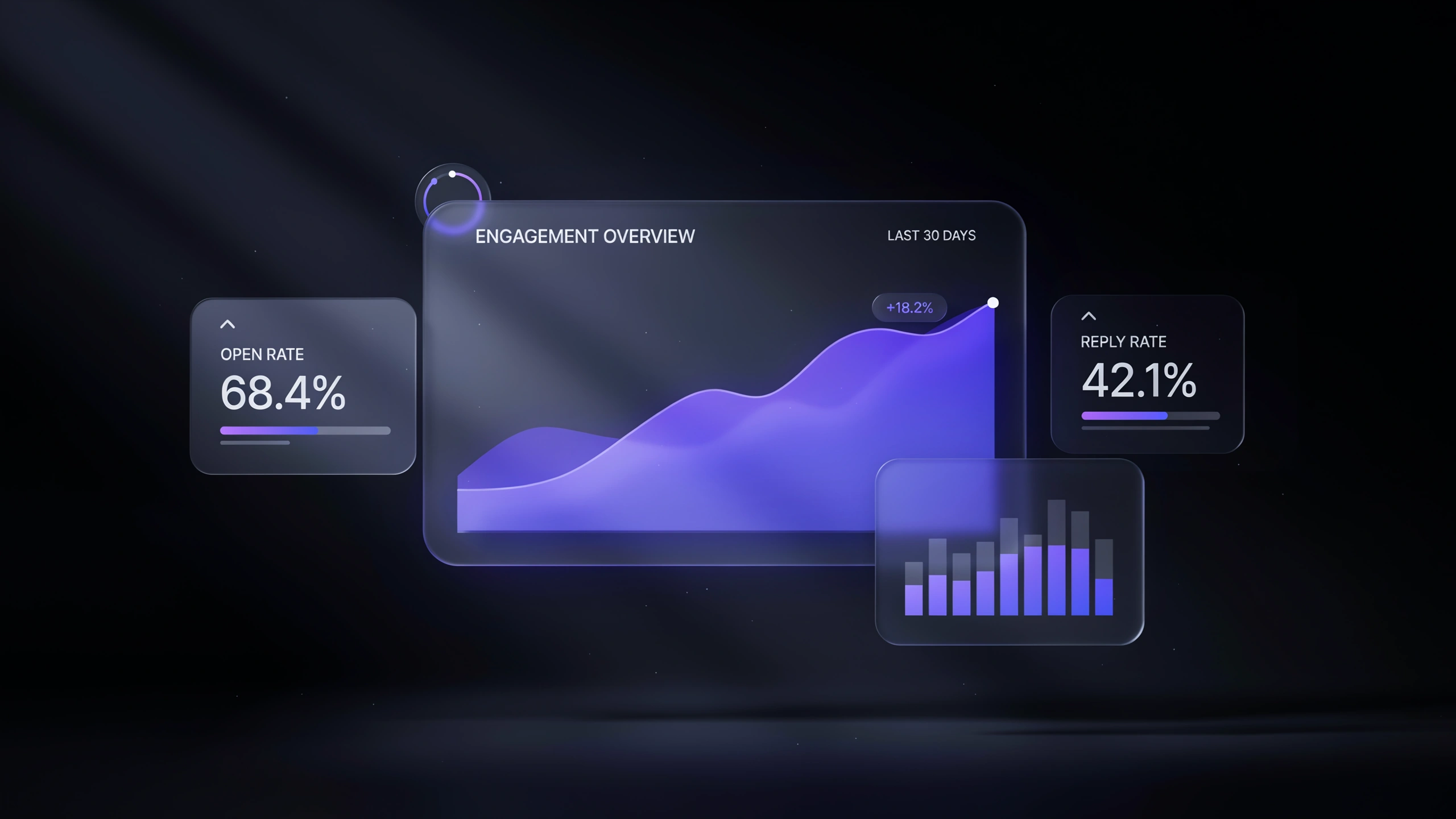
Figure 2: Performance metrics and response tracking across targeted outreach.
Critical Mistakes Founders & PR Teams Make (And How to Fix Them)
The scan, the score, the verification gate, and the hook are all learnable. What kills programs is not ignorance of the mechanics — it's a small set of recurring behavioral errors that survive even when teams know better. These are the five that show up in audit after audit.
Mistake 1: Pitching the milestone instead of the market shift
Funding rounds, product launches, and executive hires are internal events. They become news only when they explain something external: a pricing shift, a procurement breakdown, a regulatory gap. The default failure is leading with the announcement and expecting the reporter to infer the significance.
The fix — run the "so what, who cares, why now" pass before drafting. Write the milestone in one column. In the second column, write what changes for a buyer, a competitor, or a regulator because of it. In the third, write why that change is happening this quarter rather than last year. If the second and third columns are empty, the announcement is not pitchable yet — it needs a data point, not a better subject line. Harvard Business Review's work on executive narrative framing makes the same point in corporate communication: audiences act on consequence, not chronology.
Diagnostic: If your pitch would still make sense with a competitor's logo swapped in, it is not a pitch. It is a template with a merge field.
Mistake 2: Treating verification as a pre-send formality rather than a gate
Most teams verify after the list is built, which means verification becomes a filter on a bad list rather than a criterion for building a good one. Worse, many "verifications" are pattern guesses — firstname.lastname@outlet.com — dressed up as data.
The fix — make verification a gate that can veto a send. Verify at the address level (syntax, MX, SMTP where available, catch-all and role-account flags, domain bounce history) before a record can enter the queue. Hard thresholds: keep bounce rate under 2%; treat any campaign crossing 3% as an incident requiring list remediation before the next send. A single 4,000-send blast against a 20% stale list can take weeks of domain reputation repair, and the recipients who complain are, disproportionately, the exact beat reporters you needed.
Mistake 3: Measuring mentions instead of replies
Press-release syndication inflates mention counts beautifully while moving nothing. A dashboard reporting 90 mentions from three wire pickups measures distribution, not influence. Practitioner research catalogued by media professionals ranking outreach effectiveness and coverage measurement as persistent top challenges reflects exactly this: teams are instrumented for the wrong metric.
The fix — instrument the funnel, not the output. Track five numbers weekly: verified addresses, pitches sent, open rate, reply rate, and qualified conversations. Mentions are a downstream lagging indicator and often a rounding error. Reply rate is the only number that predicts next quarter's coverage, because coverage follows conversations and conversations follow replies. A team at 22% reply rate on 40 sends has a compounding asset; a team at 0.4% reply rate on 4,000 sends has a decaying one.
Mistake 4: Letting AI decide whether a pitch should exist
The genuinely dangerous AI failure in PR is not hallucination — it's the removal of the kill decision. When a workflow drafts 200 hooks and sends 200, the model has not researched anything; it has reformatted a press release 200 times at scale. That is the fastest possible route to a beat-wide reputation problem, because reporters on the same beat talk to each other far more than analytics dashboards suggest.
The fix — hard-code a kill rate target of 40–60% and review it monthly. If fewer than four out of ten drafted pitches are killed at human review, the review step has become a rubber stamp. Record every kill and its reason; over a quarter, that kill log encodes your organization's actual news judgment and is more valuable than any contact list you will ever buy.
Mistake 5: The follow-up treadmill and the recycled list
Two behaviors compound into deliverability damage and relationship loss simultaneously: sending touch four, five, and six to an unopened thread, and re-using the same reporter list across campaigns or clients without rebuilding the beat map.
The fix — codify three touches, then a 90-day archive. Touch one is the pitch. Touch two (72 hours) must contain new information — a second data cut, a new named source, a piece the reporter published since. Touch three (5 business days later) is one sentence and an offer to keep the material warm. Then stop. And rebuild the beat map every 30 days: outlets change editors, reporters change beats, and the 2026 readership picture tracked in the Reuters Institute Digital News Report shows desks consolidating coverage rather than expanding it, which accelerates reassignment.
The compounding rule: every correctly targeted, verified, evidence-carrying pitch makes the next pitch from that domain more likely to be opened. Every mistargeted blast spends that credit. Most programs are net borrowers against reputational capital they never measured.
The Comprehensive PR Execution Checklist
Use this as a working document, not a read-once list. Every unchecked box in Pre-Launch Prep is a defect that surfaces as a bounced send or a mis-framed hook three days later.
Phase 1 — Pre-Launch Prep (T-minus 14 to T-minus 7 days)
- Write 3–5 coverage territories as full sentences describing ongoing stories, not keyword strings.
- Confirm each territory has at least two specific articles published in the last 30 days — if not, the territory is a hope, not a beat.
- Run a recency-first discovery scan (category sweep, outlet sweep, competitor sweep, contrarian sweep) with a 14-day date filter.
- Score every candidate against the five-factor fit model (recency, depth, role, access pattern, contactability) and archive everything under 8/12.
- Vet the top 50 humans individually: byline continuity within 90 days, current assignment vs. stated bio, "now covering" signals, and source-quoting pattern.
- Verify every email address this quarter — syntax, MX, SMTP where supported, catch-all and role-account flags, domain bounce history.
- Remove all duplicates and any address that has hard-bounced in the last 12 months. No exceptions, no "retry."
- Build the Tier 1 (10–15) / Tier 2 (25–40) / Tier 3 (newsletters, podcasts, trade) split.
- Confirm sending-domain hygiene: separate domain per brand or client, SPF/DKIM/DMARC configured, warm-up completed.
- Prepare the asset set: dataset or cross-tabs, one named human source per tier with confirmed availability, methodology note, no attachments on first contact.
- Set the exclusive window if offering one: exactly one outlet, minimum 5–7 business days, embargo stated with date and time zone.
- Draft and internal-review the exit-ramp sentence — the routing instruction that converts a dead pitch into a referral.
Phase 2 — Outreach Execution (launch week)
- Write their thesis in one sentence, in your own words, for every Tier 1 target. If you can't, you don't understand the piece.
- Name the gap in each target article: an unsupported claim, an unquantified trend, or an unrepresented stakeholder.
- Select exactly one proof point per pitch — new to the reporter, numeric, attributable to a named dataset or source.
- Draft three subject lines per Tier 1 pitch; ship the one containing the reporter's own framing or a hard number; delete the other two.
- Run the human kill pass: read aloud, delete every sentence whose subject is your company. Expect a 40–60% kill rate on drafted hooks.
- Enforce length: 150–180 words, zero attachments, one link maximum (the dataset itself).
- Confirm send window: Tuesday–Thursday, 7:00–9:00 a.m. in the reporter's local timezone.
- Log every send with target article URL, timestamp, proof point used, verification status, and reviewer name — audit-grade traceability, especially for agency rosters.
- Monitor bounce and complaint rates hourly on launch day; pause the queue immediately if any segment crosses 2%.
Phase 3 — Post-Pitch Nurturing
- Touch 2 at 72 hours — new information only (second data cut, new named source, or something the reporter published since). Never "just bumping this."
- Touch 3 at 5 business days — one sentence, keep the material warm, no re-send of the original text.
- Stop after three touches. Set a 90-day calendar reminder and re-approach only with genuinely new published work to hook onto.
- Log every reply — including "not my beat" — and record who was named as the new owner. Route accordingly; that referral is worth more than the original send.
- Deliver promised material within 24 hours. Reporters' trust decays faster than their inboxes fill.
- Record replies, qualified conversations, and coverage in the same system, attributed back to the source article that justified the pitch.
- Review kill log + reply rate by tier monthly; adjust territory definitions, not just templates.
- Rebuild the beat map every 30 days and re-scan territory output. Anything older than 30 days is archival, not actionable.
- On placement: send one short thank-you, no ask attached, then do not pitch that reporter again for at least 60 days.
Frequently Asked Questions
Q: What makes a PR outreach platform the best one in 2025?
The best PR outreach platform in 2025 is the one whose journalist discovery is measured in days, not quarters, and whose email data is verified at the address level before you send. Everything else — UI, integrations, reporting polish — is secondary to those two gates.
Why recency outranks inventory: a contact record tells you what a reporter covered when the record was created; a live scan tells you what they published last Tuesday. The second is the only fact that makes a hook credible. Ask any vendor to show the most recent article they matched for a sample reporter, with a timestamp — if the answer is measured in months, you are buying an archive.
Why verification outranks volume: a million-record database at 30% staleness produces bounces, and bounce rates above roughly 2–3% begin degrading sender reputation across every future campaign. You are not buying contacts; you are buying the right to keep sending.
The practical test: pick 10 reporters you know cover your category. Run them through any candidate platform. The best pr outreach platform will surface their last 7–14 days of output and a verified line into each — without you touching a filter labeled "artificial intelligence."
Q: How much does a pr pitching platform cost, and is a contact-database subscription still worth it?
Pricing is almost always seat-based against a contact count, and for most founder-led teams the honest answer is that a large static database is not worth the line item. The math only works if you actually use discovery freshness and verification, which are the two things contact-count licenses are least built to deliver.
What to budget against instead: cost per verified, research-backed send and cost per qualified reply. A subscription at $6,000/year producing 400 sends and 8 replies costs $750 per reply. A leaner stack producing 40 sends and 11 replies at the same price costs roughly $545 per reply — and leaves your domain reputation intact, which is the asset that actually compounds.
The hidden cost line: deliverability repair. Recovering a domain after a high-bounce campaign can cost weeks of warm-up time and, in severe cases, a domain migration — an expense that never appears on a vendor invoice but lands squarely on the marketing budget.
Q: What reply rate should I realistically expect from journalists pitching software?
For cold outreach to a fit-scored, verified list with genuinely bespoke hooks, plan for a 15–25% reply rate and treat 30% as excellent. Anything advertised as routine above that almost certainly reflects warm relationships, an unusually responsive niche beat, or a definition of "reply" that includes auto-responders.
How the ranges actually break down: unverified bulk merge typically lands at 1–3%; a static-database template with first-name personalization at 3–6%; real-time discovery with article-level personalization at 8–15%; and Tier 1 exclusive offers with named-source access and verified inboxes in the 18–30% band. Warm referrals still crush everything at 40%+.
What moves the number: in a shrinking newsroom environment — with newsroom employment well below its 2008 peak — reporters triage harder and reply more selectively to anything that reduces their work. A pitch containing a new number, a named human source, and an exit ramp consistently outperforms one containing a better-written product description.
What destroys it: attachments on first contact, news@ aliases, fourth follow-ups, and identical hooks sent to three reporters on the same beat.
Q: Can AI-written pitches actually earn replies, or do journalists reject them?
AI-written pitches earn replies when the model is confined to reading and drafting, and get rejected when it is allowed to decide who gets pitched. The distinguishing variable is not whether AI was used — reporters cannot reliably detect that — but whether the pitch contains information that is new, specific, and verifiable.
Where AI genuinely wins: scanning hundreds of articles to extract sub-topics, ranking reporters by recency and depth of interest, drafting 40 openers tied to specific published pieces, and validating deliverability signals before send. That compresses research time from roughly 20 minutes to 3 per target.
Where it loses: templated cadence ("I hope this finds you well"), generic praise ("loved your recent piece"), confidently asserted statistics with no traceable source, and — most damaging — automated sends to unverified addresses. The evidence base is consistent: content carrying verified statistics earns about 37% more citations, and content citing authoritative sources gains around 40%. Journalists behave like citation systems, because a hard number is the cheapest fact they can verify and reuse.
The operating rule: AI drafts, a human kills. If your workflow sends everything it drafts, you are not running a pr pitching platform — you are running a formatting tool with a domain-reputation side effect.
Conclusion: Scaling Your Media Coverage with Pytch
The through-line of this entire guide is uncomfortable for the volume-selling side of the industry: coverage is won by knowing more about fewer reporters, sooner. Every metric that matters — reply rate, qualified conversations, placements per send, domain health — improves when discovery gets fresher and personalization gets deeper. Every metric degrades when a list gets longer.
That is a structural problem with static databases, not a criticism of the people using them. A database is a photograph of a newsroom that has since reorganized itself. It cannot tell you that a reporter published a piece on AI audit failures nine days ago and quoted two CFOs — which is precisely the sentence that turns a cold email into a source relationship. Real-time discovery can.
This is the workflow Pytch was built for. Pytch scans live news output at the outlet level through Google News and outlet-level sources, ranks reporters by what they published in the last week rather than by a taxonomy tag entered years ago, verifies email deliverability before anything enters the send queue, and uses AI to draft the opening around the specific article the reporter actually wrote — placing your proof point in the first two lines instead of the fourth paragraph. It does not remove judgment. It makes judgment affordable at 40 targets instead of 4,000.
Consider the comparison one final time, at the level that matters to a founder or an agency lead with a launch on the calendar:
| Static database workflow | Pytch real-time workflow | |
|---|---|---|
| Starting point | 800 tagged records | Articles published in the last 14 days |
| What you learn | The reporter's beat label | The reporter's current thesis |
| Email validity | Pattern-inferred | Verified before queue entry |
| Personalization depth | First name + outlet | Quoted thesis + new number + named source |
| Realistic reply rate | 1–6% | 15–30% on Tier 1 |
| Next quarter | Rebuild from damaged reputation | Re-pitch the same reporters with new evidence |
The 2025 operating principle in one line: stop buying contacts you'll never reach and start reading what fifty specific reporters published this week — then give each of them a reason to reply.
Your next step: run one real media search
You do not need a new retainer, a new database, or a new team. You need to see, with your own eyes, what real-time journalist discovery returns for your category — and how it compares to whatever list you are working from today.
Here is the 10-minute test. Go to pytch.cc and run a single search against your primary coverage territory — the one you wrote as a full sentence instead of a keyword. Look at three things:
- Recency — are the reporters returned publishing on your subject within the last 7–14 days, or does the trail go cold?
- Depth — do the matched articles engage the mechanism of your market, or just mention it in passing?
- Contactability — are you getting a verified line into each reporter, or a pattern you'll have to guess at?
Then pitch three of them. Not forty. Three, with a bespoke hook tied to a specific article, one new number, one named human source, and an exit ramp. Send them Tuesday morning. Whatever happens next will tell you more about your media strategy than any dashboard ever will — and if the reply lands, you'll know exactly which workflow to scale.
Run your first media search on pytch.cc — and find out what your beat looked like this week.