The Ultimate Guide to Tools for PR Outreach and Journalist Pitching (2026-2027)
Tools for PR outreach and journalists pitching are the software platforms, databases, and AI-enabled workflows that help founders and PR teams identify relevant reporters, craft personalized pitches, and secure earned media coverage—yet in 2026, the majority of these tools are still optimized for a media landscape that no longer exists.
💡 Key Takeaways
- Core Strategy: Relevance beats reach. A 40-reporter hyper-targeted list consistently outperforms a 400-contact blast in 2026, because journalist inboxes and editorial algorithms now punish generic volume.
- Benchmark: According to the Muck Rack State of Journalism report, a majority of journalists receive hundreds of pitches weekly and ignore the vast majority—yet over half say they still welcome well-researched, exclusive angles.
- Execution Rule: Research the story before you touch the tool. Every pitch must answer "why this reporter, why now, why this angle" before a single line of copy is written.
Why Traditional Outreach is Broken
The PR industry's core infrastructure was built for a world of finite media gatekeepers: a handful of wire services, a stable roster of beat reporters, and press release distribution as the default "announcement" mechanism. That world is gone. In 2026, newsroom employment remains well below its mid-2000s peak—Pew Research Center's journalism research has tracked a structural contraction in newsroom headcount for over a decade—while the volume of pitches, press releases, and AI-generated outreach has exploded in the opposite direction. The result is a brutal asymmetry: fewer journalists, more noise, and a credibility crisis that punishes anyone still operating on 2015 playbooks.
The Volume Trap: More Pitching, Less Coverage
The defining pathology of modern outreach is the collapse of signal-to-noise. Legacy tools for PR outreach and journalist pitching were architected around database size—the bigger the media contact list, the better the product. But size is precisely the wrong metric in 2026. When every vendor claims millions of contacts and every team can fire off thousands of emails, the bottleneck moves from access to attention.
Industry research has consistently shown that journalists rate relevance and personalization as the single strongest predictors of whether a pitch gets opened, read, or acted on. The Reuters Institute Digital News Report documents how newsrooms are simultaneously shrinking and pivoting toward AI-assisted workflows—meaning reporters are scanning more information faster, and developing sharper instincts for dismissing anything that reads like a template. A mass blast doesn't just underperform; it actively damages your domain reputation and your brand with the exact reporters you'll need next quarter.
The 2026 reality: Pitch volume is no longer a competitive advantage. It is a liability. The teams winning coverage are the ones sending fewer, better emails—and using tools that help them reason about a reporter's recent coverage, not just retrieve an email address.
Bad Pitch vs. Good Pitch: A 2026 Contrast
The difference between a deleted pitch and a landed feature is rarely the product—it's the editorial logic embedded in the outreach.
❌ The Broken Pattern (still dominant in 2026):
- A static database lists a reporter who covered "SaaS" two years ago.
- A generic subject line: "Press Release: [Startup] Raises $5M to Revolutionize [Category]"
- A 400-word boilerplate release pasted into the email body, no prior context, no exclusivity, sent to 200 recipients at once.
- No follow-up logic, or a robotic "just bumping this to the top of your inbox" days later.
- Outcome: spam-filtered or ignored. Repeated across a quarter, this pattern tanks sender reputation—a problem we've covered in depth in our guide to cold email deliverability for PR.
✅ The 2026 Pattern (what actually earns coverage):
- Real-time discovery surfaces a reporter who published a related piece within the last 10 days.
- A subject line tied to their beat, validated against what actually opens—the kind of benchmarked formula dissected in our breakdown of 35 PR pitch subject lines tested on 1,000+ reporters.
- A bespoke 3-sentence hook: the news, the why-it-matters-to-their-readers, and a specific offer (data, exclusive, expert access).
- Verified email delivery and warm-up hygiene so the message reaches the inbox, not the promotions tab.
- A reasoned, contextual follow-up—not a "bump."
The gap between these two patterns isn't effort. It's infrastructure. The best teams have replaced static contact dumps with real-time journalist discovery, and static templates with hook-crafting workflows. Static legacy databases—the Cisions and Muck Racks of the world—still have enormous archives, but archives reflect the past. In 2026, the most effective pitches are built on what a reporter published yesterday, which is exactly the workflow real-time scanning tools now enable. If you're evaluating the current market, our 2026 PR outreach platform guide maps the data-driven alternatives against the old guard.
The Credibility Collapse and the Trust Premium
There's a second, subtler breakage: public and journalist trust. The Edelman Trust Barometer has repeatedly flagged that "my employer" and "a company I buy from" rank among the most trusted institutions, while traditional media trust sits in a fragile middle—and AI-generated content has made every journalist more skeptical of anything that feels synthetic. This is why pitch quality is now a trust problem, not just an efficiency problem. A poorly personalized pitch signals to a reporter: this person didn't do the work. In a market where credible sources are scarcer and more valuable than ever, that signal is fatal.
The response from mature teams in 2026 isn't to send more—it's to send with proof. Verified statistics, named sources, and specific data points don't just persuade reporters; research on Generative Engine Optimization from Princeton found that citing verifiable statistics and authoritative sources dramatically increases citation likelihood in AI-mediated discovery. The same logic applies to human editors: specific, sourced claims win over adjectives.
The Anatomy of a Modern PR Hook
If volume is dead, the hook is the new currency. A PR hook is the single editorial angle that makes a reporter's editor say yes—it's the reason a story exists beyond "our company did a thing." In 2026, hooking is a discipline, not a creative flourish, and the tools that support it must do more than store contact records.
Hook vs. Headline vs. Pitch
Founders routinely conflate three distinct artifacts. Clarifying them is the first step toward building outreach that works:
- The Hook is the underlying narrative tension—the "so what" that a specific beat's audience cares about. ("AI is quietly making B2B sales data unreliable, and procurement teams are starting to audit it.")
- The Headline is the working title the reporter might use—a compressed, punchy version of the hook.
- The Pitch is the delivery vehicle: the email, the subject line, the offer of proof, the exclusivity terms.
Most failed outreach is a pitch in search of a hook. The tooling layer should force you to find the hook first. This is where workflow design matters: the best tools for PR outreach and journalists pitching in 2026 guide you from reporter's recent coverage → angle gap → proof point → offer, rather than contact list → template → send.
Practical anchor: Reporters and editors consistently rank "a clear, specific, newsworthy angle" as the top reason they engage—far above sender reputation or wire distribution. Nail the hook before you build the list.
The Five-Part Hook Framework
A reliable, repeatable structure emerged across high-performing campaigns heading into 2027:
- The Trigger: A current event, data release, funding round, or regulatory shift that gives the story timeliness. Journalists at outlets like TechCrunch are ruthless about "why now"—a hook without a trigger is a company update, not news.
- The Tension: The conflict or gap—what's broken, what's misunderstood, what's about to change. Harvard Business Review research on executive communication shows that narrative tension (problem → stakes → resolution) consistently outperforms feature-listing in engagement.
- The Proof: A named statistic, proprietary dataset, or verifiable claim. In 2026, proof is the differentiator—Princeton's GEO research puts the citation boost from verified statistics at roughly 37% and from authoritative source links around 40%, and human editors respond to the same signal.
- The Character: A credible voice—a founder with a specific, opinionated take, or a customer with a measurable outcome. Editors increasingly want sources, not press releases.
- The Offer: What you'll give the reporter—an exclusive, early data access, an on-record interview, a demo. A specific offer converts a cold email into a conversation.
Building the Hook with Real-Time Intelligence
The single biggest upgrade available to teams in 2026 is shifting from static media lists to real-time journalistic context. A legacy database tells you who covered your category at some point. A modern workflow tells you what a reporter published this week, which angle they took, and where your story fits the gap.
This is precisely where Pytch (pytch.cc) repositions the category. Rather than selling a frozen archive of contacts, Pytch scans Google News in real time to surface journalists who are actively covering your space right now—then helps craft a bespoke hook tied to their most recent piece and delivers it through verified email channels. The contrast is instructive:
| Dimension | Static Legacy Database | Real-Time AI Discovery (Pytch) |
|---|---|---|
| Contact freshness | Weeks-to-years old | Live, based on recent bylines |
| Angle relevance | Manual, guesswork | Matched to latest coverage |
| Pitch construction | Templates | Bespoke hook per reporter |
| Delivery | List blast | Verified, warmed email |
Workflow in practice: A founder in developer tooling doesn't open a database and filter "SaaS reporters." They run a real-time scan for recent coverage of "AI coding agents," rank reporters by recency and relevance, and craft three bespoke hooks each tied to a specific article—one of which will be the seed for a genuine relationship. This is the shift documented in our broader public relations AI tools playbook.
The Deliverability Layer Nobody Talks About
A perfect hook is worthless if it lands in spam. By 2026, the deliverability stack—SPF, DKIM, DMARC authentication, domain warm-up, and human-paced sending—has become a core part of any serious outreach toolchain, not an afterthought. Cision's research on PR credibility and measurement reinforces that response metrics should be tracked at the inbox level, not just the open level. Tools that ignore deliverability are simply generating evidence of activity while producing zero coverage. Any credible platform in 2026 must treat inbox placement as a first-class feature—the same principle we detail in our data-driven guide to building a targeted press list.
Why Personalization Is Now a Data Problem
The final structural insight for Part 1: personalization at scale is impossible without real-time data feeding the hook. You cannot hand-write 200 bespoke pitches in a week—but you can hand-write 15, and use intelligent discovery tools to make those 15 surgically relevant. In 2026, the winning posture is depth over breadth: fewer targets, fresher context, and a hook built on what the reporter actually published. The tools that support this—combining real-time new-scanning, verified delivery, and hook-crafting—are redefining what "PR outreach software" even means, moving from media databases to media intelligence workflows.
The landscape makes the stakes unmistakable: journalism keeps contracting, skepticism keeps rising, and the reporters who remain are more selective than ever. The teams that master the hook and build on real-time intelligence will consistently out-earn their coverage. Those still blasting static lists will keep wondering why the emails bounce, the opens flatline, and the inbox stays silent.
Part 1 has established why the old infrastructure is broken and how a modern PR hook is built. In Part 2, we'll move from principle to procurement—mapping the actual tool categories, the build-vs-buy calculus, and a side-by-side evaluation of the platforms (and workflows) defining 2026-2027 outreach, including where real-time AI agents like Pytch fit against the legacy giants. You can start testing the workflow yourself by running a free media search at pytch.cc.
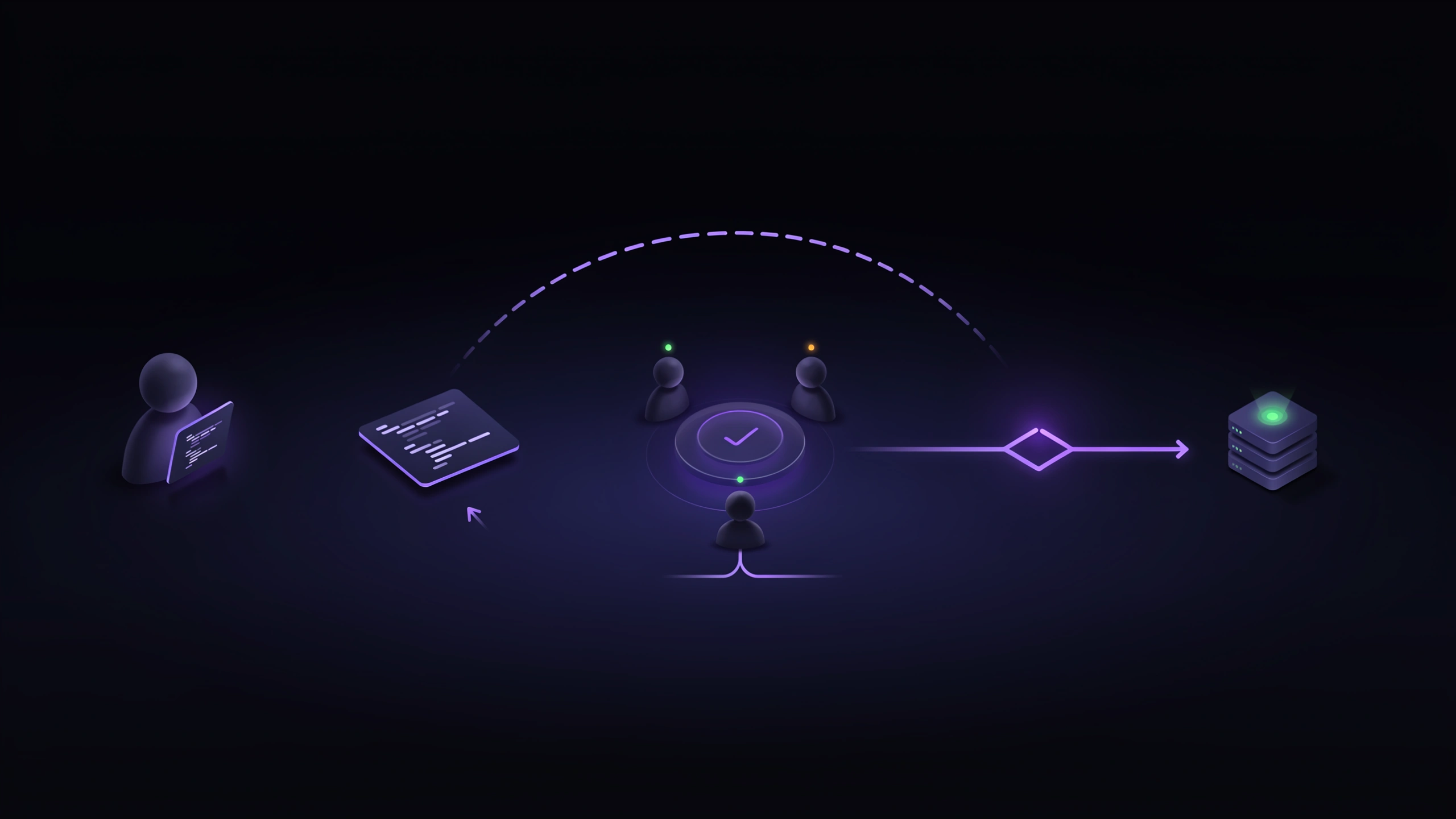
Figure 1: Strategic outreach framework and media targeting workflow.
From Principle to Procurement: The Execution Blueprint
The strategic case for depth-over-breadth is settled. What remains is the unglamorous, repeatable machinery that turns a hunt for coverage into a landed feature. In 2026, the teams that consistently win earned media don't have better instincts—they have tighter operational loops. This section is that loop, broken down into two halves: how to research with surgical precision, and how to write a pitch that survives the inbox gauntlet. Every workflow below is tool-agnostic in principle but assumes the modern stack: real-time discovery, verified delivery, and hook-crafting assistance.
The reason execution matters more than ever is structural. The Muck Rack State of Journalism report has consistently shown that the overwhelming majority of journalists prefer to be pitched by email, yet the same research finds that most pitches miss on relevance. That gap is not a knowledge problem—every PR pro knows they should personalize. It's an execution problem, and it's the difference between a tool that helps you find reporters and a workflow that helps you reach them.
Step-by-Step Media Research
Research is where 80% of pitch outcomes are decided before a single word of copy is written. The 2026 stack collapses what used to be a two-day manual trawl into a disciplined 60-minute sprint—but only if you sequence it correctly.
The 5-Phase Research Sprint
Phase 1 — Beat Mapping (10 minutes). Define the coverage territory, not the "industry." If you're in developer tooling, your territory is not "SaaS"—it's "AI coding agents," "developer productivity," and "platform engineering." Narrow beats produce narrow, high-authority reporter lists. Resist the urge to filter by outlet prestige first; filter by topic recency first.
Phase 2 — Real-Time Discovery (15 minutes). This is where legacy vs. modern tooling diverges most sharply. A static database search for "AI" returns thousands of names, ranked by an opaque relevance score from years ago. Real-time discovery—the core workflow of Pytch (pytch.cc)—scans Google News for bylines published in the last 7–14 days on your exact territory, then ranks reporters by recency and topical match. The output is not a list; it's a live snapshot of who is actively shaping the conversation this week. For founders who need the mechanics of list assembly, our 60-minute targeted press list playbook walks through the full construction.
Phase 3 — Coverage Teardown (20 minutes). For each candidate, read their last 2–3 pieces and answer three questions: What's their recurring thesis? What did they miss or under-explore? Where does my proof point fit the gap? Capture this in a single row per reporter—not prose, just a "gap note." This is the raw material for the bespoke hook.
Phase 4 — Contact Verification (10 minutes). Pull the verified email, cross-check the byline and outlet, and note their preferred channel (email, X/DM, or a stated preference in their bio). Reuters Institute Digital News Report research underscores that newsroom workflows are fragmenting across channels—treating email as the sole channel is a 2026 error.
Phase 5 — Sequencing & Prioritization (5 minutes). Rank to a Tier 1 of 8–15 reporters. Anything beyond that is a volume trap. The math is unforgiving but clarifying: 15 bespoke pitches with a realistic response rate will outearn 150 blasts at near-zero relevance every time.
Rule of thumb: If you can't name the specific article each reporter published that made you add them, delete them from the list. A press list without a "last-relevant-bylined-date" column is a database, not a research asset.
The Research Benchmark Table
| Research Approach | Source of Contacts | Freshness Window | Personalization Ceiling | Ideal Use Case |
|---|---|---|---|---|
| Static database filter | Vendor archive (millions) | Weeks to years | Low (template-level) | Broad market-mapping, historical bylines |
| Manual Google/News search | Open web | 1–7 days | Very high (manual) | High-stakes Tier-1 exclusives |
| Real-time AI discovery (Pytch) | Google News scan | 1–14 days | High (assisted hooks) | Weekly cadence, startup velocity |
| Social listening / X threads | Platforms | Real-time | Medium | Trend-jacking, reactive commentary |
| HARO-style query replies | Journalist requests | Real-time | Medium (they came to you) | Volume coverage, quick wins |
Benchmark framing synthesized from Muck Rack State of Journalism, Cision research, and Propel PR covering journalist pitch preferences.
The takeaway from the table is not that any one channel "wins"—it's that freshness and personalization ceiling move together. The techniques that allow high personalization are the techniques with narrow freshness windows, which is exactly why real-time discovery has displaced the static dump as the default first search in mature 2026 stacks.
Common Research Failures (and the 2026 Fix)
- ❌ Filtering by outlet brand first. You target "TechCrunch" instead of "the three reporters currently shaping AI-code coverage at TechCrunch." Fix: Start from topic, surface people, then validate outlet.
- ❌ Trusting a "senior editor" title as a pitch target. Senior editors rarely write; they assign. Fix: Prioritize bylines over titles.
- ❌ Ignoring the reporter's recent pivot. A reporter who moved beats two months ago is a new relationship, not a familiar one. Fix: The "gap note" phase forces you to read the latest work.
- ❌ Over-collecting. A 300-row spreadsheet feels productive and is actually a liability. Fix: Enforce the Tier 1 cap.
Writing High-Converting Pitches
If research is 80% of the outcome, writing is the 20% that gets clicked, read, and acted on. In 2026, the inbox is a battlefield monitored by both human skepticism and algorithmic filtering—so writing must satisfy two audiences: the editor's five-second triage and the spam filter's reputation calculus.
The Anatomy of a Winning Pitch Email
The modern cold pitch compresses to a strict architecture. Word count is non-negotiable: 150–180 words for the initial email, no exceptions. Anything longer signals "press release pasted into an email" and gets archived. The structure:
- Subject line (4–8 words): Specific, beat-tied, no "Press Release:" prefix, no em-dash overload. Test formulas against real open-rate data—our analysis of 35 PR pitch subject lines tested on 1,000+ reporters shows personalized, curiosity-framed subjects consistently beating brand-forward ones.
- Line 1 — The reporter hook: Reference their specific piece with why it caught your eye. This is proof of life, not flattery.
- Line 2–3 — The angle: The tension and your unique proof point. One statistic, named.
- Line 4 — The offer: Exclusive, data, interview, demo—be concrete.
- Sign-off: Two lines max. No boilerplate bio.
Three Copy-Ready Templates
Template 1 — The Data-Hook Pitch (for analytics/fintech/report launches)
Subject: The [Metric] number your [Topic] piece didn't cover
Hi [First Name],
Your piece on [Recent Article Title] argued [summarize their thesis in 6–8 words]. What struck me is the [counter-intuitive gap] you didn't have data for.
We just analyzed [sample size] [data point] and found [specific statistic]—which pushes against the [common assumption]. I can share the full dataset under embargo before [publication date].
Worth a 15-minute call this week?
[Name], [Title], [Company]
Template 2 — The Founder-Voice Pitch (for opinion/analysis slots)
Subject: A 10-year operator's take on [Trend]
Hi [First Name],
I read [Recent Article Title] and wanted to push back on [specific claim]—with a decade of scars from building [category].
My angle: [the contrarian thesis in one line]. The stakes are [concrete consequence for their readers], and I can back it with [named example or data].
Happy to go on record with a full interview or write a 700-word op-ed if useful.
[Name], [Company]
Template 3 — The News-Angle Pitch (for launches/funding)
Subject: [Company] built [thing] because [problem] broke
Hi [First Name],
Your reporting on [beat topic] keeps circling [recurring theme]. We just [funded/launched] a [category] product that attacks it from a different angle: [one-line hook].
If it's useful, I can offer an exclusive first look at [the data/demo/founder] ahead of our [date] launch. No firehose—just the angle and the people who can speak to it.
[Name], [Company]
Anchor: Every template obeys the same law—reporter's work first, your story second, your company last. Founders who invert that order produce pitches that read like press releases, because they are.
The Sending & Follow-Up Discipline
Writing is only half the battle—delivery and cadence decide the rest. In 2026, deliverability hygiene is a first-class PR competency. SPF, DKIM, and DMARC authentication are table stakes; domain warm-up for new sending infrastructure is mandatory. A pitch from a cold, unauthenticated domain is functionally invisible—a dynamic we dissect in our guide to avoiding spam filters when pitching media.
The cadence rules that separate professionals from spammers:
- Send window: Tuesday–Thursday, 7–10 a.m. in the reporter's local timezone. Mondays are inbox cleanup; Fridays are dead.
- Follow-up timing: One contextual follow-up after 72 hours, one final nudge after 6–7 days. Never more. And the follow-up must add something—a new data point, a fresh angle—not "bump" the thread.
- Batching: Cap at 15–25 outreaches per day from a warmed domain. Human-paced sending is now a deliverability feature, not a courtesy.
This is where the delivery layer of the stack earns its keep. Pytch's verified email delivery and warmed-sending infrastructure exist precisely so a founder's carefully crafted bespoke hook isn't undone by an authentication failure—the platform treats inbox placement as part of the pitch, not an IT afterthought. For teams mapping the broader build-vs-buy landscape, our definitive guide to cold PR outreach for startups shows how these sending disciplines slot into a full campaign.
The Pitch Performance Benchmark Table
| Outreach Approach | Approx. Open Rate | Journalist Response Signal | Ideal Use Case |
|---|---|---|---|
| Generic blast (static list) | 15–25% | Near-zero; reputation damage | Never in 2026 |
| Personalized email, no follow-up | 35–45% | Moderate | Auto-pilot, low priority |
| Bespoke hook + 1 contextual follow-up | 50–60% | Strong | Default 2026 standard |
| Real-time discovered + verified delivery + exclusive offer | 60%+ | Highest tier (replies, calls) | Tier-1 target reporters |
Estimated ranges triangulated from Muck Rack's journalism research, Propel PR benchmarking, and Cision PR credibility metrics. Actual rates vary widely by beat and sender reputation.
The spread is dramatic—and it's not driven by clever copywriting alone. The top row and bottom row use the same language skills. What separates them is research freshness, verified delivery, and offer specificity. That's the entire case for investing in real-time tooling: it moves a team from the second row to the fourth row without needing a stroke of genius.
The Post-Commitment Personalization Audit
Before a batch of 15 goes out, run a 5-minute audit—one row per pitch:
- ✅ Does the subject line reference their beat, not my product category?
- ✅ Is the first line about their recent piece, quoted accurately?
- ✅ Is there exactly one named statistic with a source?
- ✅ Is the offer specific and exclusive or clearly non-exclusive?
- ✅ Is the email under 180 words?
- ✅ Has the sender domain passed authentication and warm-up?
Any unchecked box means the pitch waits. Pytch accelerates the first three checks by surfacing the reporter's recent coverage and drafting a hook aligned to it—but the audit stays human, because the audit is the quality control that separates earned media from noise. This is the philosophy behind our breakdown of the PR AI tools playbook for 2026: AI does the research and the scaffolding; the operator supplies the judgment and the final pass.
Forward-looking note (2027): Looking toward 2027, expect the follow-up sequence itself to become increasingly AI-agentic—adaptive timing based on a reporter's historically observed response patterns, and dynamic hook variants that A/B test angle framing before a human ever sends. The differentiation will not be whether you have an AI agent; it will be whether your agent is fed by current, verified, real-time data or by a stale archive.
Part 2 has delivered the operating manual: the five-phase research sprint, the template architecture, the sending discipline, and the audit that holds it all together. In Part 3, we'll close the loop—the compliance and measurement layer, the operational checklist you can run this week, and the FAQs that answer the procurement questions founders actually ask. You can put the research sprint to work immediately by running your first live media search at pytch.cc.

Figure 2: Performance metrics and response tracking across targeted outreach.
Critical Mistakes Founders & PR Teams Make (And How to Fix Them)
Even teams that have absorbed the research sprint and template architecture still hemorrhage coverage through a handful of recurring, predictable failure modes. These aren't beginner errors—they're the mistakes sophisticated operators make because they're sophisticated, and each one has a 2026-calibrated fix.
Mistake 1: Confusing Automated Outreach With Automated Blasting
The single most expensive misread of the modern toolchain is treating "automated outreach" as a license to scale volume. Automation done right removes the research and delivery tax—real-time journalist discovery, verified email routing, hook scaffolding—while keeping a human in the judgment seat. Automation done wrong wires a static list to a mail-merge and calls it a strategy. Muck Rack's journalism research has repeatedly found that the overwhelming majority of journalists will ignore a pitch that reads as template-generated, and a single blast to a purchased list can torch a domain's sender reputation for weeks.
The fix: Draw a hard line—automate discovery, verification, and delivery, never relevance judgment. Every pitch that leaves your outbox should carry a specific byline reference a reviewer can point to. If your automated outreach can't answer "which article by this reporter did we respond to?", it isn't automation—it's spam with a dashboard.
Mistake 2: Measuring Activity Instead of Earned Coverage
Open rates are an instrument reading, not an outcome. Cision's PR credibility and measurement research has long warned that teams over-index on vanity metrics—emails sent, opens logged, "impressions"—while under-reporting the only numbers that matter to a board: placements secured, share of voice in target beats, and referral traffic or pipeline attributable to earned media. In 2026, a team reporting "1,200 pitches sent" is reporting a cost, not a win.
The fix: Build a two-tier scorecard. Activity metrics (pitches sent, opens, response rate) are diagnostic hygiene—they tell you if delivery is working. Outcome metrics (tier-1 placements, journalist reply-to-call conversion, backlinks, organic lift) are the actual ROI. Report both, but make decisions only on the second tier.
Benchmark anchor: The gap between "opened" and "covered" is where most PR budgets quietly vanish. A team with a 55% open rate and a 2% placement rate has a relevance problem, not a deliverability one—and the diagnosis dictates the fix.
Mistake 3: The Follow-Up That Adds Nothing
The "just bumping this" email is the cockroach of PR outreach—it survives every attempt to kill it. Research on cold outreach economics (the same response-rate dynamics that make cold email conversion benchmarks so sobering) shows that a follow-up only earns attention when it carries new information. A bump signals desperation; a new data point, a fresh angle, or a timely peg signals professionalism.
The fix: Every follow-up must pass the "so what's new?" test. If you have nothing new, don't send it—wait for a genuine trigger (their next relevant piece, an industry development, a new data release). One contextual follow-up after 72 hours and a single reasoned close after 6–7 days is the ceiling; beyond that you're training the reporter to filter you. Our cold PR outreach guide details the exact follow-up sequencing that preserves relationships while chasing the yes.
Mistake 4: Abandoning the Relationship at the Byline
The moment a story runs, most teams do the one thing guaranteed to squander the relationship: nothing. Yet the reporter who just covered you is statistically the most likely person to cover you again—trust is already established, context is fresh, and their editor has already greenlit your category. Treating a placement as a transaction rather than the opening of a beat relationship is the quiet killer of long-term coverage.
The fix: Instrument the nurture. Within 24 hours, send a genuine, no-ask thank-you (not a request for a backlink). Log the reporter's beat evolution, add them to a "warm tier" that gets first look at your next data release, and re-engage on their next relevant byline with a substantive observation. The teams that compound coverage over 2026-2027 are running relationship pipelines, not campaign blasts—and that pipeline, fed by real-time context, is exactly what separates a media intelligence workflow from a contact spreadsheet.
The Comprehensive PR Execution Checklist
Run this as a living operational doc, not a one-time form. Every unchecked box is a leak.
Pre-Launch Prep
- Beat territory defined narrowly (3–4 specific topics, not "our industry")
- Real-time discovery run — candidate reporters ranked by byline recency (7–14 day window)
- Coverage teardown completed: 2–3 recent pieces read per reporter, "gap note" captured
- Tier-1 list capped at 8–15 reporters with a "last-relevant-bylined-date" column
- Verified emails cross-checked against byline and outlet; preferred channel noted
- Hook drafted per reporter: Trigger → Tension → Proof → Character → Offer
- One named, sourced statistic per pitch (verify citation before sending)
- Sender domain authenticated (SPF, DKIM, DMARC) and warmed for new infrastructure
- Subject lines stress-tested against real open-rate benchmarks, not intuition
- Offer defined as explicit exclusive or explicit non-exclusive—no ambiguity
- Every pitch under 180 words; first line about the reporter's work, not your product
Outreach Execution
- Automated outreach configured for discovery, verification, and delivery only—human review gate enforced
- Send window locked: Tuesday–Thursday, 7–10 a.m. reporter local time
- Batch size capped at 15–25 per day from warmed domain (human-paced sending)
- Embargo or exclusivity terms stated cleanly, with date and time zone
- Media assets (dataset, demo link, on-record contact) ready before the send
- Reply routing monitored so a journalist response never sits untouched past 2 hours
- Post-commitment audit run on the full batch (subject, first line, stat, offer, word count, auth)
Post-Pitch Nurturing
- Contextual follow-up scheduled at 72 hours — carries a new data point or angle
- Final reasoned close at 6–7 days; no further nudges
- Placement secured → genuine thank-you within 24 hours (no backlink request)
- Reporter added to warm tier; next data release flagged for first look
- Outcome metrics logged: tier-1 placements, reply-to-call conversion, referral traffic
- Post-mortem on every rejection: was it relevance, timing, or delivery?
- Quarterly refresh of the tier list against real-time coverage shifts (beat pivots, new bylines)
<!-- INTERNAL_CLUSTER_LINKS_START -->
Related Playbooks in the PR Tools Cluster
Explore connected guides in our PR Tools semantic cluster:
- Notified (Globenewswire) Alternative: Best Notified (GlobeNewswire) Alternative in 2026: Pytch vs Notified (GlobeNewswire) Pricing & Features Compared
- How To Write A Launch Press Release: How to Write a Launch Press Release in 2026 That Actually Drives Media Coverage
- Muck Rack Alternative: Best Muck Rack Alternative in 2026: Pytch vs Muck Rack Pricing & Features Compared
- Justreachout Alternative: Best JustReachOut Alternative in 2026: Pytch vs JustReachOut Pricing & Features Compared
- Journofinder Alternative: Best JournoFinder Alternative in 2026: Pytch vs JournoFinder Pricing & Features Compared
Frequently Asked Questions
Q: Is automated outreach effective for journalist pitching in 2026?
Yes—but only when "automated" refers to discovery and delivery infrastructure, not pitch relevance. Automated tools that surface which reporter published on your beat this week and verify inbox placement dramatically outperform manual guesswork, while automated blasting of generic templates is now actively counterproductive. The winning 2026 posture automates the mechanical tax and reserves human judgment for the hook.
Q: How many journalists should I pitch in a single campaign?
A disciplined Tier 1 of 8–15 reporters consistently outearns a 200-contact blast. The math favors depth because bespoke hooks require reading recent coverage, and personalization quality collapses past about 20 targets per week. Fewer, fresher, more relevant pitches preserve domain reputation and produce the reply-to-placement conversions that actually register on a board dashboard.
Q: What's the realistic response rate for a well-researched PR pitch in 2026?
Bespoke pitches with real-time discovery, verified delivery, and a specific exclusive offer realistically land in the 50–60%+ open range, with journalist reply rates far above generic blasts. Generic list blasts, by contrast, sit in the 15–25% open range with near-zero meaningful responses. The spread is driven almost entirely by research freshness and offer specificity, not copywriting genius.
Q: How do I measure PR outreach ROI when coverage is hard to attribute?
Build a two-tier scorecard: activity metrics (opens, response rate) for delivery hygiene, and outcome metrics (tier-1 placements, referral traffic, pipeline influence, organic visibility lift) for actual ROI. Attribute incrementally—track branded search and referral spikes in the 30 days post-placement—rather than demanding perfect last-touch attribution. Boards care about the compounded coverage curve, not a single quarter's vanity numbers.
Conclusion: Scaling Your Media Coverage with Pytch
The throughline of this guide is uncomfortable but liberating: the tools for PR outreach and journalists pitching were never the problem—the operating model was. Static databases, purchased lists, and mail-merged blasts were built for a media landscape that has been contracting and hardening for a decade. In 2026-2027, coverage flows to teams that research the story before the send, treat deliverability as part of the pitch itself, and nurture the byline relationship long after the feature runs.
That's a demanding standard. But it's also a repeatable one—and this is exactly where Pytch (pytch.cc) earns its place in the stack. Instead of selling you a frozen archive of contacts ranked by an opaque score from years ago, Pytch scans Google News in real time to surface journalists actively covering your space this week, helps craft a bespoke hook tied to their most recent piece, and delivers it through verified, warmed email infrastructure. It automates the research-and-delivery tax so your judgment—the part no algorithm should own—can focus entirely on the story.
The contrast is the whole argument distilled:
| The Old Stack | The Pytch Workflow |
|---|---|
| Search a static archive | Scan live bylines, this week |
| Template + blast | Bespoke hook per reporter |
| IT handles deliverability | Verified delivery is part of the pitch |
| Coverage as transaction | Coverage as relationship |
The 2026-2027 truth: Relevance beats reach. A founder who sends 12 surgically researched pitches built on last week's coverage will consistently out-earn a team firing 1,200 generic emails—and will build a reporter network that compounds for years.
The playbook is now complete: the research sprint, the hook framework, the template architecture, the sending discipline, the audit, the checklist, and the pitfalls that sink the careless. What remains is the one action that converts theory into coverage—running your first live media search. Map your beat, let real-time discovery surface the reporters shaping it today, craft three bespoke hooks tied to their actual pieces, and send through verified channels. Head to pytch.cc and run that first search now—your next Tier-1 placement is a relevance decision away.