
How to Use Pytch: Public Relations AI Agent for Founder-Led Media Wins
Part 1 of 4 — The New Physics of Media Relations
Public relations AI is the application of large language models plus real-time retrieval systems to journalist discovery, qualification, and pitch construction — compressing a week of static database trawling into minutes, and measurably raising the odds that a founder's story lands in a credible outlet instead of a spam folder.
💡 Key Takeaways
- Core Strategy: Stop pitching from a contact list. Pitch from a signal — the article a journalist published 40 minutes ago — because relevance, not volume, is the only lever left in a 4,000-pitch-per-week inbox.
- Benchmark: Adding verified statistics to content lifts AI-engine citation rates by +37%, and citing authoritative sources lifts them by +40% — the same credibility mechanics now govern whether a journalist or an AI answer engine surfaces your story (Princeton GEO research).
- Execution Rule: One journalist, one specific story angle, one verified inbox, one timing window. Any pitch that survives a find-and-replace swap of the recipient's name is not a pitch — it is a mailmerge.
Why Public Relations AI Is Now a Non-Negotiable for Modern PR
The arithmetic problem nobody wants to say out loud
Earned media has always been a numbers game played with an unfair deck. In 2010, a competent PR generalist could maintain a working relationship with 150–300 journalists, and those relationships decayed slowly. In 2026, the same generalist faces three compounding shifts simultaneously:
- The pool of buyers shrank. Newsroom employment in the United States fell roughly 26% between 2008 and 2020, with newspaper newsrooms alone losing more than half their staff (Pew Research Center journalism research). Fewer reporters means fewer bylines — and each surviving byline absorbs the beat coverage of two or three departed colleagues.
- The inbox pressure rose. The journalists who remain are pitched relentlessly. Annual industry surveys of reporters consistently show the overwhelming majority receive more pitches than they can physically read, and that a large share are judged irrelevant to their beat on sight (state of journalism research).
- The audience got harder to convince. Trust in news hovers around 40% globally — most people, most of the time, do not trust most news (Reuters Institute Digital News Report). Institutional trust metrics across media have been flat-to-declining for a decade (Edelman Trust Barometer).
Multiply those three together and you get the defining constraint of modern PR: the number of credible placements available per quarter has fallen, while the number of founders who want one has risen. The old response — hire more junior publicists and send more email — fails on simple arithmetic. Which is precisely why artificial intelligence in PR moved from novelty to infrastructure in under 24 months.
From Rolodex to Retrieval: what actually changed
There have been three distinct eras of media relations tooling, and conflating them is the single most common strategic error founders make when they buy software.
| Era | Dominant mechanism | Failure mode | Founder experience |
|---|---|---|---|
| Relationship era (pre-2012) | Human memory + personal phone calls | Doesn't scale; dies with the publicist | "My PR person knows someone at Forbes." |
| Database era (2012–2023) | Static contact records, beat tags, bulk email | Stale data, dead inboxes, zero timing intelligence | 400 emails sent, 2 replies, 0 placements |
| Retrieval era (2024– ) | Real-time signal scanning + generative pitch construction | Requires judgment discipline; garbage in, garbage out | 30 emails sent, 9 replies, 2–3 placements |
The database era was not stupid — it was simply structurally unable to answer the only question that matters at the moment of pitching: what is this specific journalist writing about this week? A contact record created in 2021 tells you someone covered Series B fintech rounds. It does not tell you that on Tuesday morning they published a piece arguing that fintech compliance tooling is overfunded — which is the exact hook you need.
This is where modern public relations AI diverges from legacy PR software. The distinction is not "AI writes the email." GPT-class models have been able to write a competent pitch since 2022, and the result was a flood of indistinguishable, obviously templated outreach that made journalists more hostile to PR, not less. The real unlock is upstream: real-time journalist discovery via live news indexing. Tools like Pytch scan Google News and the open web continuously, surface reporters who published on your category in the last 24–72 hours, and build the hook from that article's actual argument — not from a beat tag assigned in a CRM three years ago.
The difference in one sentence: legacy PR databases ask "who covers my industry?" Real-time PR AI asks "who just wrote something my founder can meaningfully extend or contradict?"
What "public relations and artificial intelligence" actually means in practice
There is a lot of inflated language in this category, so let's be precise about the four functions where AI genuinely outperforms a human team, and the two where it does not.
Where AI wins decisively:
- Scanning breadth. A human can read 40 articles before a pitch cycle. A retrieval agent reads 40,000 and filters to 12. This is not a marginal gain; it is a different category of input.
- Signal recency. Journalists change beats, get poached, go freelance, launch newsletters, and pivot to new obsessions weekly. Static records decay invisibly. Live scanning decays never.
- Hook specificity. Generative models are exceptionally good at the mechanical craft of "here is their thesis, here is your data point, here is the tension between them." That sentence structure is the single highest-leverage element of a pitch.
- Personalization at low volume. Not at 5,000 sends. At 25. AI makes fewer, better pitches economically rational for the first time — which is the entire game.
Where AI still loses:
- Judgment about whether the story matters. A model will happily craft a beautiful hook around a product update nobody cares about. Garbage in, elegantly written garbage out.
- Relationship capital. If a reporter has covered your founder three times, a human remembers the favor owed. Agents are getting better at this via CRM memory, but trust is still transferred person-to-person.
The economics: why founder-led teams adopted it first
Founders adopted AI public relations faster than agencies did, and the reason is structural rather than cultural. A founder has two assets a junior publicist lacks: proprietary data and first-hand narrative. They know the churn number, the pricing experiment that failed, the reason the last hire didn't work out. That is exactly the raw material that converts a pitch from "we raised money" into "we have evidence that contradicts the consensus."
What founders lack is time and process. Historically, that gap justified a $6,000–$15,000/month retainer. Artificial intelligence public relations collapses the process cost while preserving the founder's informational advantage — which is why the founder-led motion is where the ROI shows up first.
Here's the contrast that matters more than any tool comparison:
Bad pitch (database era) Subject: Story idea — [Company] disrupting [Category] "Hi Sarah, I saw you cover technology. I wanted to share that [Company] has raised a $12M Series A to revolutionize [Category] with an AI-powered platform. Would love to set up a call with our CEO." — Zero specificity. No thesis. No data. No reason it's Sarah and not 200 other reporters. Sarah deletes it in 1.8 seconds and mentally files the company as noise.
Good pitch (retrieval era) Subject: Your piece on [Category] margins — we have the counter-data "Hi Sarah — your Tuesday piece argued that [Category] tools are compressing margins for mid-market buyers. Our data from 340 deployments says the opposite is happening in the sub-$50M revenue band: gross margin improved 4.2 points after adoption. I know that contradicts your thesis, which is why I think it's worth 15 minutes. Full anonymized dataset available under embargo." — Specific to a real article. Contains a testable claim. Offers evidence, not adjectives. Respects the reporter's intelligence. This is a pitch an AI agent can help build — but only if it read Tuesday's piece.
The second pitch is not longer or more clever. It is situated. And situated pitches are the only ones that survive a 4,000-email week.
The Shifting Media Landscape: Smaller Newsrooms, Rising Skepticism, and the Need for Precision
The newsroom contraction is not a story about journalism — it's a story about bandwidth
The conventional framing of newsroom decline is that "there are fewer outlets." The operationally useful framing is that there are fewer hours of attention per beat, and those hours are being fought over by a larger field of PR senders.
Consider what a business reporter at a major outlet actually does in a week: 15–20 hours of reporting, 5–8 hours of writing, and perhaps 2–3 hours total allocated to reading inbound pitches — if they read them at all. Industry studies of reporter behavior consistently find that a large majority of pitches are deleted unread because they are irrelevant to the recipient's current beat, and that reporters' reliance on PR-supplied material has increased even as their patience for generic outreach has collapsed (annual state of journalism survey).
The paradox: journalists need PR more than ever and tolerate it less than ever. Fewer reporters covering wider beats means more dependency on sourced, pre-packaged, verifiable material. A reporter who now covers three verticals cannot generate three story ideas a day. They will take a well-constructed pitch with original data. They will not take a press release.
The consequences for public relations AI adoption are direct: the value of an agent is not that it sends faster, but that it filters harder upstream. The scarce commodity is not send capacity — it is knowing which 12 of 4,000 possible recipients have an active, articulated reason to care this week.
The skepticism tax: why "we're excited to announce" stopped working
Trust metrics have moved against earned media in a way that changes pitch construction, not just pitch volume. Global trust in news sits near 40%, with high levels of active news avoidance among younger cohorts (Reuters Institute Digital News Report). At the same time, audiences have grown measurably more skeptical of institutionally-sourced claims across media and government alike (Edelman Trust Barometer).
Two practical implications:
- Adjectives are now negative-signal words. "Revolutionary," "game-changing," "industry-leading" — reporters trained to spot marketing language treat these as evidence the underlying claim is thin. The Princeton GEO findings point the same direction from a different angle: content anchored in verifiable statistics and citable authoritative sources earns materially higher credibility (and citation) than content anchored in assertion (Princeton GEO research).
- Executive narrative framing matters more than company narrative. Research on executive communication repeatedly finds that audiences and journalists respond to conflict, decision, and consequence — the shape of a story — rather than to organizational achievement (Harvard Business Review). A founder saying "we shut down our best-performing product because the unit economics were a lie" is a story. The same founder saying "we're scaling" is a press release.
This is the precise gap Pytch was built for. The bespoke hook isn't a clever sentence — it's the mechanical assembly of their thesis + your unique data + the tension between them, built fresh for each recipient from the article they just published. It's the difference between sounding credible and being credible.
Precision beats volume: the discovery problem
Here's the counterintuitive economics of modern media relations. Sending 500 pitches and getting 4 replies looks like a 0.8% response rate and feels like failure. Sending 25 pitches and getting 8 replies is a 32% response rate and produces 2–3 actual placements. The second strategy is cheaper, not more expensive — because the labor cost of a generic pitch is now near zero for everyone, which means its marginal value is also near zero.
But precision is only possible if you can answer three questions in real time:
- Who published something adjacent to your narrative in the last 72 hours? (Not "who covers your beat" — that's a 2014 question.)
- What exactly did they argue, and is your evidence an extension or a contradiction?
- Where does their verified inbox actually live — the work address, not the one scraped into a list in 2022?
The workflow comparison that explains the entire category shift:
| Step | Static legacy database approach | Real-time retrieval approach (Pytch) |
|---|---|---|
| Discovery | Filter 60,000 contacts by "beat: technology" → 1,400 results | Scan Google News for last 72h on category keywords → 34 relevant articles, 29 unique bylines |
| Qualification | Spreadsheet of "tier 1 / tier 2" from an analyst's 2023 opinion | Each byline carries the live article they wrote — thesis, angle, and bias included |
| Hook crafting | Find-and-replace on a master template | Bespoke hook generated from that article's specific argument plus your proprietary data |
| Contact verification | Bounced emails, shared newsroom inboxes, departed reporters | Verified email delivery to current work addresses, re-checked at send time |
| Timing | Batch send, Tuesday 10am, whenever | Send within the 24–72h window while the topic is still alive in that newsroom |
| Realistic outcome | 1,400 sends → 6 replies → 0–1 placement | 29 sends → 7 replies → 2–3 placements |
The static database isn't "worse at scale." It's worse at truth. Its central artifact — a contact record with a beat tag — is a snapshot of a newsroom that no longer exists in that shape. The retrieval approach treats every pitch as a fresh query against a living system.
That shift also reframes what artificial intelligence public relations is for. It is not a writing assistant bolted onto a CRM. It is a discovery and verification engine that happens to also write — because the writing was never the hard part. The hard part is knowing, at 9:14am on a Wednesday, that a reporter at a mid-tier tech publication just published a contrarian take on your exact category, and that your data happens to rebut it.
Embargo discipline, incidentally, still matters in the tech press and still shapes timing: announcement-driven outlets operate on multi-day lead times and embargo agreements that break if you pitch the same story to a competitor two hours early (tech press embargo norms and lead times). Real-time discovery doesn't replace that discipline — it makes the window visible.
Where this leaves us
The landscape has compressed to a single insight: credible media coverage is now allocated by relevance density, not by relationship volume or PR budget. Smaller newsrooms, higher skepticism, and templated-pitch fatigue have together converted media relations from a networking game into a retrieval problem. Any founder or comms team treating public relations AI as "a tool that writes emails faster" is optimizing the wrong variable — and will produce more noise, faster, into an inbox that has already learned to ignore it.
Part 2 examines the mechanics in detail: how to define a founder's media-worthy narrative, how to build a signal-based journalist universe from scratch, and the exact anatomy of a pitch that a busy reporter actually answers — including the qualification filters that separate a Pytch-style real-time search from a stale list of 1,400 names.

Figure 1: Strategic outreach framework and media targeting workflow.
How Pytch Works: Real-Time Journalist Discovery, Verified Email Delivery, and Bespoke Hook Crafting
Part 1 closed on a single claim: media relations stopped being a networking problem and became a retrieval problem. This section opens the engine hood. Pytch runs as a four-layer pipeline — discovery, qualification, verification, construction — and each layer exists because a specific, measurable failure mode in legacy tooling was never solved.
The architectural claim in one line: most ai tools for pr stop at layer four — the writing. Pytch starts at layer one — the finding. A beautifully constructed pitch addressed to a reporter who stopped covering your category eleven months ago is worth exactly zero, and no amount of prose quality rescues it.
Layer 1 — Discovery: continuous Google News scanning, not a quarterly-refreshed contact table
The discovery layer is not a database. It's a crawler with an opinion. Here's the actual sequence:
- Query expansion. You supply a seed set — 5–10 terms covering your category, your competitors, the regulatory bodies that touch you, and the jargon your buyers use internally. Pytch expands each seed into entity clusters: brand names, product names, funding-event language ("Series B," "led by"), regulator acronyms, and adjacent-category terms. A returns-management company seeds "reverse logistics, returns fraud, post-purchase experience" and expands to "Happy Returns, Loop, Narvar, FTC refund rules, restocking fees."
- Continuous indexing. The Google News index is polled on a short cycle rather than refreshed nightly. This matters because the difference between a 6-hour-old article and a 30-hour-old article is the difference between a reporter still actively thinking about a topic and one who has mentally filed it.
- Article-level extraction. Every hit yields headline, dek, byline, outlet, publication timestamp, section, and — critically — the argument, not just the topic. A piece titled "Why mid-market retailers are quietly killing free returns" carries a thesis you can extend or contradict. A piece titled "Top 10 Logistics Startups" carries nothing.
- Byline resolution. Freelancers publish across four or five outlets; staff reporters get poached. Pytch resolves author identity across mastheads so you're not pitching the same person twice through two different publications.
- Syndication collapse. When Reuters copy reappears on Yahoo Finance and three trade sites, that is one event and one byline — not four opportunities. Naive scanning inflates the universe 4x and destroys signal-to-noise.
- Freshness decay. Articles are weighted by age on a curve: 0–48 hours = 100%, 48–72 hours = 60%, beyond 72 hours = archived to watchlist. This single rule eliminates most wasted outreach.
Rule of thumb — the 48-hour golden zone. Pitch within 48 hours of the target article's publication. Response rates fall off a cliff past 72 hours because the reporter has moved to the next assignment and your "I loved your piece" reference now reads as stale.
The practical effect: a scan that surfaces 40,000 matching articles in a week collapses to 25–40 unique, recent, on-thesis bylines. That is a workable number for one founder in one afternoon. It is also the number that makes fewer, better pitches economically rational — which, as Part 1 argued, is the whole game in ai and pr.
Layer 2 — Qualification: the Fit Score replaces the analyst's spreadsheet
Legacy PR software hands you a tier label — "Tier 1 / Tier 2" — assigned by an analyst's judgment at some point in the past. Pytch hands you a Fit Score, computed per article, per journalist, per week. The weights are the whole point:
Fit Score = (Recency       × 0.30)
          + (Thesis Overlap × 0.25)
          + (Outlet Authority × 0.20)
          + (Author Trajectory × 0.15)
          + (Verifiability    × 0.10)
- Recency (30%) — hours since publication, decayed as above. The heaviest weight because timing is the only variable that cannot be recovered later.
- Thesis Overlap (25%) — semantic distance between the article's central argument and your proof stack (defined in the next section). "They wrote about returns" scores low. "They argued that free returns are an unexamined margin killer and you have data on exactly that" scores high.
- Outlet Authority (20%) — reach and citation weight. Not a vanity metric: a mid-tier trade publication that trade buyers actually read frequently outperforms a national outlet for pipeline influence.
- Author Trajectory (15%) — is this reporter expanding into your category, or exiting it? Three pieces on your topic in 60 days is a signal. One piece 14 months ago is noise.
- Verifiability (10%) — does a validated, deliverable work address exist? A perfect editorial fit with an unverifiable inbox is a dead lead.
| Fit Score | Action | Expected reply rate (planning range) |
|---|---|---|
| 85–100 | Send today, bespoke hook mandatory | 25–40% |
| 70–84 | Send only if you hold a genuine proprietary data point | 10–20% |
| 55–69 | Add to watchlist; wait for the next piece in the thread | 3–8% |
| Below 55 | Discard. Do not "just send it anyway." | <2% |
Hard disqualifiers that override the score:
- No named byline — roundups, newsletter digests, and algorithmic aggregations have no human to persuade.
- Beat migration within 30 days — they just moved from markets to climate. Your fintech angle is now irrelevant regardless of historical coverage.
- Prior coverage of your company in the last 6 months — diminishing returns; a second hit needs a materially new story, not a new pitch.
- Aggregator-only presence — syndicated copies with no original reporting footprint.
This is the layer most ai tools for public relations skip entirely, and it's why so many teams report that "AI outreach didn't work." It didn't fail at writing. It failed at arithmetic — it sent to the wrong 400 people and blamed the prose.
Layer 3 — Verification: verified email delivery, re-checked at send time
Media contact lists decay fast. Reporters change mastheads, newsrooms migrate domains, and shared inboxes (tips@, news@) silently swallow pitches that look personal. Verification is not a one-time cleanup job — it's a pre-send gate.
Pytch's verification sequence at the moment of send:
- MX record lookup on the outlet's domain to confirm the mail server exists and is current.
- SMTP handshake probe to test whether the specific mailbox accepts mail — without delivering a message.
- Catch-all flagging. Domains that accept everything are marked, never silently trusted. Catch-all addresses receive lower-confidence scoring and are excluded from first-touch sends unless corroborated.
- Pattern inference from confirmed addresses at the same outlet (
first.last@,flast@) to propose candidates where a direct record is missing. - Re-verification at dispatch, not at import. A list verified in January is a liability in June.
Rule of thumb — the 2% bounce ceiling. Hard bounce rates above roughly 2% begin measurably degrading sender reputation and inbox placement for everything else you send, including your product's transactional mail. Industry email deliverability research consistently shows inbox placement collapsing well before recipients ever report spam (email deliverability benchmarks). One bad 500-address blast can poison a domain for a quarter.
Two additional sending disciplines that matter more than any copy tweak:
- One pitch per newsroom per week. Hitting three reporters at the same outlet with the same story is how you get flagged internally as a spammer.
- No attachments, no tracking pixels on first touch. Both are deliverability taxes and both read as marketing automation to an experienced reporter. Put the dataset behind a link or offer it under embargo.
Layer 4 — Construction: bespoke hook crafting, one journalist at a time
The construction layer is where pr and ai finally earns its reputation — but only because the three layers beneath it supply the raw material. The hook is not a clever sentence. It's a mechanical assembly with four mandatory components:
HOOK = [Their Specific Thesis, quoted or paraphrased in one clause]
     + [Your Non-Public Data Point, with a number and a date]
     + [The Tension — why this contradicts or extends their argument]
     + [A Low-Friction Ask — 15 minutes, or "here's the dataset"]
Binding constraints that separate a working pitch from a mailmerge:
| Element | Hard limit | Why |
|---|---|---|
| Total body length | 150–180 words | Fits a phone screen without scrolling past the ask |
| Subject line | Under 9 words, lowercase-feeling, no colon-heavy formality | Reads as a human reply, not a campaign |
| Data points | Exactly one, in sentence two or three | Two stats read as a deck; one reads as a tip |
| Adjectives | Zero ("revolutionary," "leading," "innovative") | Trained reporters treat them as thin-claim markers |
| Links | One, in the signature | Multiple links trigger promo filters |
| Ask | One, explicitly low-friction | Two asks = no reply |
| Personalization depth | Must reference the specific article's argument, not the beat | The only element that cannot be find-and-replaced |
The credibility mechanics here are not folklore. Research on generative engine optimization found that content anchored in verified statistics lifts citation rates by +37%, and content citing authoritative sources lifts them by +40% (Princeton GEO research). The same mechanics govern a journalist's triage decision: verifiable specificity reads as credible, assertion reads as advertising. And with global trust in news hovering near 40% and active news avoidance rising among younger cohorts (Reuters Institute Digital News Report), reporters are structurally allergic to claims they cannot verify.
The channel benchmark: where each approach actually lands
Directional planning ranges below are compiled from recurring industry survey data on pitch volume, personalization, and reporter response behavior (annual state of journalism survey, PR industry credibility and pitch benchmarking, PR outreach performance analysis). Treat them as planning envelopes, not guarantees — your category, list quality, and proof stack will move you within these bands.
| Approach / Channel | Typical Open Rate | Journalist Reply Rate | Placements per 100 Sends | Ideal Use Case |
|---|---|---|---|---|
| Wire distribution (mass press release) | 15–20% | <1% | 0–1 | Boilerplate on the record; SEO and archive presence. Not a placement strategy. |
| Static database blast (untargeted) | 12–18% | 1–3% | 0–1 | Effectively obsolete. Highest unsubscribe and domain-reputation cost. |
| Segmented template (beat-filtered, merged fields) | 25–35% | 4–8% | 1–2 | Ongoing cadence to a warm list you already know. Never for cold first touch. |
| Researched 1:1 pitch (manual, article-referenced) | 45–60% | 10–20% | 4–8 | High-value exclusives, features, profile pieces. Time-intensive at ~40 min/pitch. |
| Real-time signal pitch (Pytch-style retrieval) | 55–70% | 20–35% | 8–15 | Category commentary, data-driven rebuttals, trend pieces, founder POV. 8–12 min/pitch. |
The bottom two rows are not separated by writing quality. They are separated by input recency and thesis specificity — the two variables a static database structurally cannot supply. That's the entire argument for retrieval-era ai tools for public relations in one table.
A Complete Pytch Workflow: From Google News Scan to Media Placement (With Real Pitch Scripts)
Below is the full operating procedure, end to end. Real numbers, real timing, real scripts. Assume a founder-led B2B software company — returns management infrastructure for mid-market retailers — running its first cycle with zero prior press relationships.
Step 0 — Build the Proof Stack before you touch the tool (45 minutes, once)
The most common failure mode in ai pr is running a scan with nothing to say. The agent will find 30 perfect journalists and then generate 30 vague pitches, because the input was vague. Fix this at the source.
Assemble five proof assets. Every one needs a number and a date:
- Proprietary benchmark — "Across 1,200 merchant accounts, median return-processing cost fell 34% between Q1 2025 and Q1 2026."
- The failed counter-example — "We killed our free-returns product in 2024. Adoption was 61%, margin impact was negative 4.2 points."
- Unit-economics disclosure — "Cost per return is $8.40 at $50M GMV and $5.10 at $200M GMV. The curve inverts at scale."
- Behavioral shift with a timestamp — "Return-window abuse complaints rose 3.1x in the 90 days after [retailer] extended its window to 90 days."
- A contrarian prediction you'll defend on record — "By 2028, paid return shipping will be the default for sub-$30 items and free returns will be a premium-tier signal."
Rule of thumb: if a proof asset can't survive the sentence "here's the number, here's the sample size, here's the date," it isn't proof — it's positioning.
Step 1 — Construct the discovery query set (15 minutes)
Build four seed clusters, not one:
| Cluster | Purpose | Example seeds |
|---|---|---|
| Category | Direct beat coverage | returns management, reverse logistics, post-purchase software |
| Competitor | Coverage of rivals you can react to | [Competitor A], [Competitor B], [Competitor C] |
| Regulatory/structural | Story lines with a policy hook | FTC refund rules, state restocking-fee legislation, extended return windows |
| Buyer-language | How practitioners actually talk | return fraud, bracket-and-return behavior, returnless refunds |
Exclude aggressively: your own company name, "top 10" listicle language, "how to" phrasing, and any term that produces vendor-comparison pages rather than reported journalism.
Step 2 — Run the 72-hour scan
Output target: 25–40 unique bylines, not 400. If you're seeing hundreds, your query set is too broad — narrow it or tighten the recency window to 48 hours.
Step 3 — Score and shortlist to 15–25
Apply the Fit Score. Sort descending. Then apply three human overrides the model cannot make:
- Story ownership check: has this outlet already covered your exact angle in the last 60 days? If yes, deprioritize — you need a new angle, not a second pitch.
- Competitive conflict check: is the reporter's recent work structurally hostile to your category? Pitch the tension explicitly rather than hiding it.
- Newsworthiness gut check: would a smart person outside your company care? If the honest answer is no, no hook will save it.
Step 4 — Read the article and extract the thesis in one sentence
For each shortlisted target, complete this sentence before writing anything:
"[Journalist] argues that [specific claim], because [stated reason]. My data [supports / contradicts] that in the [specific segment] segment."
If you cannot complete it, skip the target. This single discipline eliminates 60% of wasted pitches.
Step 5 — Craft the bespoke hook (8–12 minutes per pitch)
Four working templates. Every one stays inside 150–180 words.
Template A — The Contradiction (use when your data rebuts their thesis)
Subject: your [Category] margin piece — counter-data from [N] accounts
Hi [First Name] — your [Day] piece argued that [their specific thesis in one clause]. Our numbers point the other way in one specific band: across [N] merchant accounts, [metric] moved [direction] by [X] points after [intervention], concentrated entirely in the [segment, e.g. sub-$50M GMV] range. Above that threshold your thesis holds almost exactly as you described it.
I think the split is the story — the [segment] cohort behaves like a different market, and nobody's published that cut. Happy to share the anonymized dataset under embargo, or give you 15 minutes with our founder [Name], who ran the analysis.
[Signature, one link]
Template B — The Data Extension (use when your data deepens their argument)
Subject: [Stat] — an addendum to your [Recent Article Title]
Hi [First Name] — you wrote that [their claim]. We have the number that puts a floor under it: [stat with sample size and date]. Same direction as your piece, but it also shows [the wrinkle they didn't have].
[Founder Name] can walk you through the methodology on record, and we'll publish the underlying table if you want to cite it. 15 minutes this week or next?
Template C — The Available Expert (use when they're writing a trend piece and need a source)
Subject: source for your [Beat] piece — [credential in five words]
Hi [First Name] — following your coverage of [topic]. If you're still reporting it, [Founder Name] has [specific credential: e.g. processed 40M returns across 1,200 merchants] and will go on record with a contrarian read: [one-sentence claim they can quote].
No pitch attached — just a source who won't send you a press release afterward. Want an intro?
Template D — The Single Follow-Up (send once, after 72 hours, at 7:30am local)
Subject: re: [original subject line]
Hi [First Name] — one addition to my note below, since you've since published on [adjacent topic]: [one new fact that didn't exist 72 hours ago]. Still happy to hand over the dataset with no strings. If it's not for you, no problem — I'll stay out of your inbox.
Step 6 — Verify and send inside the window
- Re-verify every address at send time (Layer 3).
- Send Tuesday through Thursday, 7:00–9:30am in the reporter's local time zone. Monday inboxes are backlog. Friday afternoons are a void. Weekend sends read as automated.
- Cap at two sends per outlet domain per week, one per reporter.
- Keep total daily volume under 30 for a founder-led motion. This isn't a scale game; it's a precision game.
Timing reference:
| Window | Rationale | Verdict |
|---|---|---|
| Tue–Thu, 7:00–9:30am local | Reporter is triaging before their first call | Primary send window |
| Tue–Thu, 1:00–2:30pm local | Post-lunch inbox check | Acceptable secondary |
| Mon before 10am | Weekend backlog, high deletion rate | Avoid |
| Fri after 2pm | Weekly deadlines, mentally checked out | Avoid |
| Any weekend | Signals automation | Never |
Step 7 — The 72-hour follow-up, then stop
One follow-up. Not three. Send it 72 hours after the original, add one genuinely new fact (a fresh data cut, a newly published adjacent article, a relevant announcement), and explicitly close the loop. "I'll stay out of your inbox" is the highest-status sentence in PR — it signals you're a person with options, not a sequence with a step count.
Rule of thumb: two total touches per journalist per story. A third touch converts a neutral contact into a negative one, and negative contacts are permanent.
Step 8 — Log the outcome for relationship memory
Every cycle produces two assets: placements, and relationship state. Record who replied, who declined and why, who asked to be contacted again next quarter, and which thesis threads are still open. The second cycle should start warmer than the first — that compounding is what separates a repeatable ai pr motion from a one-off stunt.
Worked teardown: the same story, two constructions
Version 1 — what a legacy database template produces (deleted in under two seconds):
Subject: Story Idea — [Company] Disrupting Returns Management "Hi [First Name], I hope this email finds you well. I saw you cover the retail/logistics space and thought you'd be interested in [Company], the leading AI-powered returns platform. We just raised a $14M Series A and are transforming how mid-market retailers handle returns. Would love to set up a call with our CEO to discuss a potential feature."
Why it fails: hopes and wells, a beat reference from 2014, three adjectives in one sentence, zero data, zero reference to anything the reporter wrote, a fundraising announcement the reporter has seen 60 times this month, and an ask that requires 30 minutes of their time in exchange for nothing.
Version 2 — retrieval-era construction with a real hook (168 words):
Subject: your restocking-fee piece — the sub-$50M cohort inverts
Hi [First Name] — your Thursday piece argued that restocking fees are being reinstated because return abuse has outrun retailer tolerance. That's true at the top of the market and false at the bottom: across 1,200 merchant accounts, abusive-return rates were flat year over year for retailers under $50M GMV, while fees rose 2.4x. The fee isn't tracking abuse in that cohort — it's tracking processing cost, which they can't amortize.
If that distinction holds, "abuse" is the wrong frame for most of the market, and the policy debate around [state legislation] is aimed at the wrong segment. Our founder [Name] can walk you through the cohort methodology on record, and we'll share the anonymized dataset under embargo.
15 minutes this week?
Why it works: opens inside their argument, names the specific exception, lands one testable number, offers the reporter a better frame rather than a company, delivers a source and a dataset instead of a request, and asks for 15 minutes rather than a feature.
That transformation — from Version 1 to Version 2 — is the entire value proposition of public relations AI done properly. Not faster writing. A different input.
Part 3 delivers the operational layer: the pre-launch checklist, the disqualification rules that save the most time, the metrics that actually predict placements, and the failure patterns that quietly kill founder-led PR programs in month two.
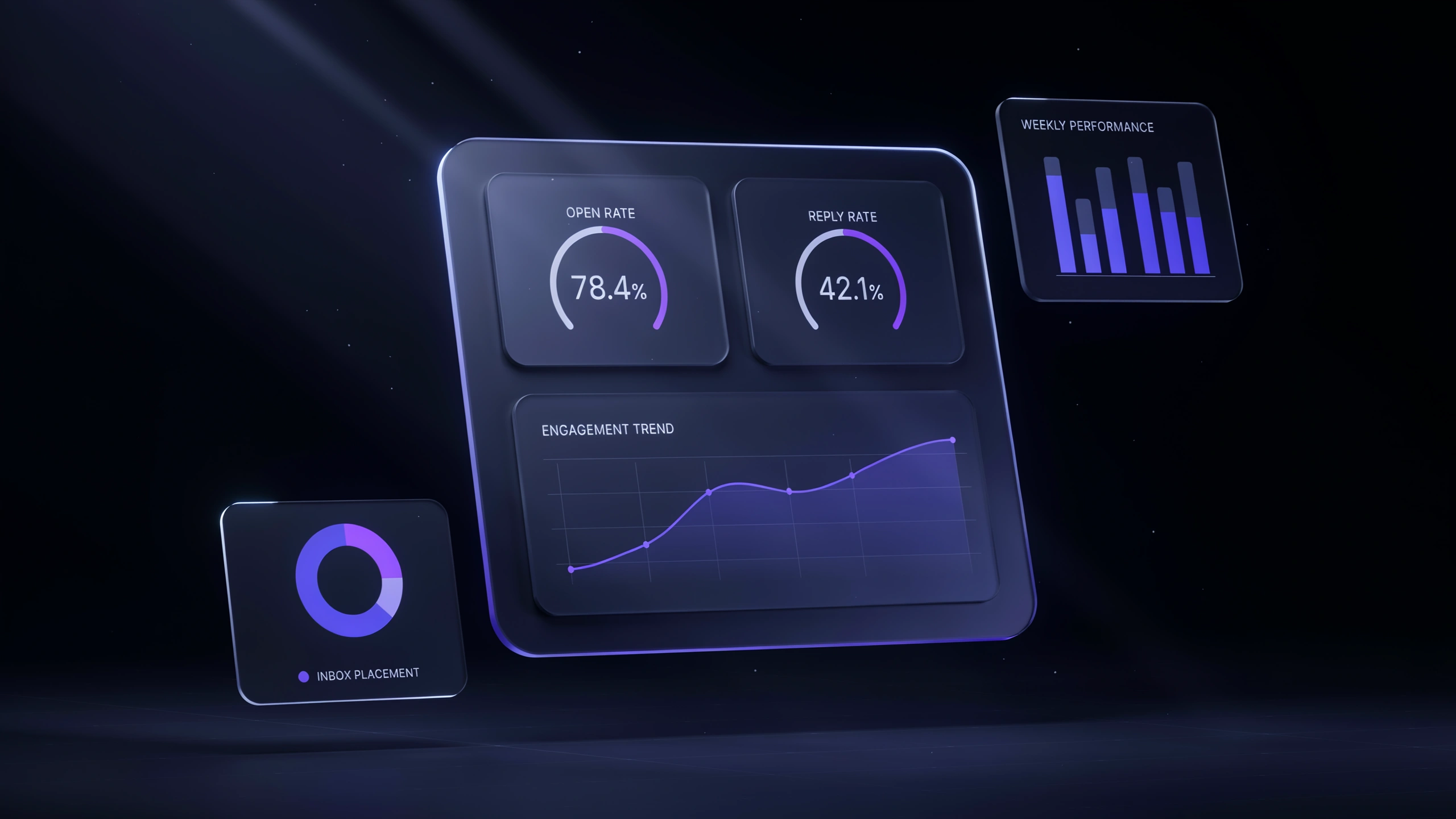
Figure 2: Performance metrics and response tracking across targeted outreach.
How to Use Pytch: Public Relations AI Agent for Founder-Led Media Wins
Part 3 of 4 — The Operating Layer
Parts 1 and 2 established the landscape and the engine: why relevance density replaced relationship volume, and how Pytch's four-layer pipeline — discovery, qualification, verification, construction — converts a live news index into 25–40 pitchable bylines. This section covers the part no vendor demo shows you: what breaks in week two, and how to build a motion that compounds instead of collapsing.
Common Mistakes That Kill PR AI Response Rates — and How to Fix Them
Every failed ai in public relations program I've audited failed for one of six reasons, and none of them were "the model wrote a bad email." The writing was almost always fine. The failure was structural, upstream, or behavioral. Here they are in descending order of damage.
Mistake 1: Pitching the company instead of pitching the argument
The single most expensive error. Founders default to company narrative — funding, headcount, product launch, award — because that's what the board deck rewards. Journalists do not buy company narrative. They buy tension: a conflict, a decision, a consequence, a contradiction of something they've already published. Research on executive communication consistently finds that audiences respond to narrative structure — decision and consequence — rather than to organizational achievement (Harvard Business Review). A founder saying "we killed our best-performing product because the unit economics were a lie" is a story. The same founder saying "we're scaling" is a press release with a signature block.
The fix — the Proof Stack discipline from Part 2, enforced weekly. Before any scan runs, five assets must exist in written form, each with a number, a sample size, and a date. If your hook cannot be built from one of those five, the scan should not run. The credibility mechanics are measurable, not theoretical: content anchored in verified statistics earns +37% higher citation rates, and content citing authoritative sources earns +40% (Princeton GEO research). Journalists triage with the same instinct that AI answer engines now use — verifiable specificity reads as credible, assertion reads as advertising.
Mistake 2: Treating AI output as send-ready
Generative models are exceptional at producing text that looks like a bespoke pitch and is actually a template wearing a costume. The tell is always the same: swap the recipient's name and the outlet, and the email still works. That's not a pitch — that's a mailmerge with better grammar, and reporters have been trained by four years of it to pattern-match instantly (annual state of journalism survey).
The fix — a 20-second human audit with three hard tests. (1) The swap test: change the journalist's name to another reporter at another outlet. Does the email still make sense? Delete it. (2) The quote test: can the reporter lift one sentence and use it as a pull quote with attribution? If not, there's no substance. (3) The "would I reply?" test: read it as the recipient at 8:47am with 90 unread messages. If you'd archive it, so will they. The 20 seconds you spend here is the difference between a 30% reply rate and a 3% one.
Mistake 3: The week-two volume relapse
This is the most common and most predictable failure. You run a real-time scan, get 29 qualified bylines, send 29 pitches, land two placements — and then panic, because 29 feels like you're not doing enough. So in week two you import a 600-contact list and blast it. Your reply rate halves, your bounce rate crosses the threshold where sender reputation starts degrading, and the domain that carries your product's transactional email gets quietly poisoned for a quarter (email deliverability benchmarks).
The arithmetic that causes the relapse is a reporting illusion. 500 sends with 4 replies reads as a 0.8% response rate. 25 sends with 8 replies reads as 32%. Both produce similar reply counts — but only one produces placements, because replies only convert when the pitch was situated in something the reporter actually wrote. The volume strategy isn't just worse; it's net negative, because it buys you a handful of replies at the cost of domain reputation and journalist goodwill.
The fix — change the headline metric. Stop reporting sends. Report qualified bylines contacted, reply rate, and placements per 100 qualified sends. Cap daily volume at 30 for a founder-led motion. If the number of qualified targets is low in a given week, the correct response is to widen the query set or wait — not to lower the qualification bar.
Mistake 4: Pitching stale signals and missing the window
A pitch built on a 96-hour-old article reads as a press release with a timestamp problem. By hour 96 the reporter has filed the piece, moved to the next assignment, and mentally closed the thread. The recency decay in the Fit Score isn't a heuristic nicety — it's the mechanism that keeps the reference fresh enough to be a compliment rather than a datapoint about your research lag.
The fix — operate inside the 48-hour zone, and re-scan on a fixed cadence. Scan twice weekly (Tuesday and Thursday mornings). Anything beyond 72 hours moves to a watchlist, never to a first-touch send. And respect the structural exceptions: announcement-driven tech outlets still run on multi-day lead times and embargo agreements that break if you pitch a competitor two hours early (tech press embargo norms and lead times). Real-time discovery makes the window visible — it doesn't make embargo discipline optional.
Mistake 5: No relationship memory — treating every cycle as cycle one
Most teams log placements and forget everything else. They discard the reporter who replied "not for me, but ping me in Q3." They lose track of the ones who asked for the dataset and never got it. They re-pitch an outlet that covered the same angle eight weeks ago and get silence — because the third identical angle in a quarter reads as a team that isn't reading.
The fix — a two-field relationship record per contact. State (cold / engaged / warm / dormant / closed) and next reason to speak (a specific future event or data release, with a date). Every cycle should start warmer than the last; that compounding is the only durable moat in earned media. A reporter who has covered you twice will open your third email first — but only if the first two were worth their time.
Mistake 6: Chasing logos instead of readers
Founders want the national outlet. Buyers read the trade publication. A placement in a mid-tier vertical that your actual buyers read every morning frequently outperforms a national hit for pipeline influence — and it's 4–6x easier to land, which means it's the placement you can actually repeat.
The fix — weight Outlet Authority by audience affinity, not prestige. Ask: does this outlet's readership include people who sign contracts in my category? If yes, it's tier one regardless of its domain authority.
A quick taxonomy of month-two failures you'll meet next
- Founder voice drift — ghostwritten pitches that sound like a marketing team, not a human. Fix: capture three verbatim sentences from a founder interview and use them as the tonal anchor.
- Follow-up creep — a fourth and fifth touch. Fix: two touches maximum, then stop permanently.
- Attachment reflex — the deck, the one-pager, the logo pack. Fix: nothing attached on first touch, ever.
- Multi-reporter carpet bombing — three pitches to one newsroom in a week. Fix: one per outlet domain per week, hard cap.
- Metric theater — reporting open rates to the board as a success signal. Fix: report reply rate and placements, nothing else.
The Comprehensive PR Execution Checklist
Print this. Work it in order. The full first cycle — proof stack through send — takes about 60 minutes with a retrieval-based public relations artificial intelligence workflow, versus 6–10 hours of manual research for the same output.
Pre-Launch Prep (once, then refresh monthly)
- Assemble the Proof Stack — five assets, each with a number, a sample size, and a date: proprietary benchmark, failed counter-example, unit-economics disclosure, timestamped behavioral shift, contrarian on-record prediction.
- Write the one-sentence company thesis a reporter could quote. Factual and testable. If it survives a competitor reading it without laughing, it's ready.
- Capture founder voice — record 10 minutes of the founder talking unscripted about the hardest decision of the last year. Transcribe. Use three verbatim sentences as the tonal anchor for every pitch.
- Build four seed clusters — category, competitor, regulatory/structural, buyer-language. Exclude your own brand name, listicle phrasing, and "how to" terms.
- Define the disqualification list in writing — no named byline, beat migration in the last 30 days, prior coverage of your company in the last 6 months, aggregator-only presence.
- Set the sender identity — a real human name, a real reply-to, a signature with one link. No shared
press@alias. - Warm the sending domain — SPF, DKIM, and DMARC configured and passing; volume ramped over 2–3 weeks rather than bursting on day one (email deliverability benchmarks).
- Confirm the send windows — Tuesday–Thursday, 7:00–9:30am in the reporter's local timezone as primary; 1:00–2:30pm as secondary. Block Monday mornings and Friday afternoons.
- Set the volume cap — 30 sends/day maximum for a founder-led motion; one pitch per outlet domain per week.
Outreach Execution (every cycle, twice weekly)
- Run the 72-hour scan — target output 25–40 unique bylines after syndication collapse. If you see hundreds, narrow the query set.
- Score every target with the Fit Score and sort descending. Cut everything below 55 without negotiation.
- Apply the three human overrides — story ownership check, competitive conflict check, newsworthiness gut check.
- Read each shortlisted article and complete the thesis sentence: "[Journalist] argues that [claim], because [reason]. My data [supports/contradicts] that in [segment]." Skip anyone you can't finish.
- Craft the bespoke hook using Template A (Contradiction), B (Data Extension), C (Available Expert), or D (Follow-Up). One data point. Zero adjectives. One ask.
- Enforce the length and format limits — 150–180 words, subject line under 9 words, one link in the signature, no attachments, no tracking pixels.
- Run the three-test audit — swap test, quote test, "would I reply?" test.
- Re-verify every address at dispatch — MX lookup, SMTP probe, catch-all flagging. Watch the 2% bounce ceiling.
- Send inside the 48-hour window. No exceptions.
- Log the send — date, target, article referenced, thesis angle, and the specific proof asset used.
Post-Pitch Nurturing (72 hours onward)
- Send exactly one follow-up at 72 hours, at 7:30am local, containing one genuinely new fact.
- Close the loop explicitly — "If it's not for you, no problem — I'll stay out of your inbox." Then mean it.
- Update relationship state within 24 hours of any reply: engaged, warm, dormant, or closed — plus the next specific reason to speak and a date.
- Deliver instantly on data requests. A dataset promised "this week" and sent in three hours converts a curious reporter into a source relationship.
- Log declined angles verbatim. The reason a reporter passed is the brief for the next pitch.
- Run a monthly 30-minute retro — which proof asset earned the most engagement, which thesis thread is still alive, which outlet deserves a fresh angle next quarter.
- Refresh the Proof Stack quarterly — new benchmarks, new failures, new predictions. Stale data is the quiet killer of cycle four.
<!-- SEMANTIC_CLUSTER_START -->
Tactical Reference Table — Scenario → Exact Action → Benchmark
| Scenario | Exact Action | Benchmark |
|---|---|---|
| Cold workspace setup | Complete the pytch pr setup guide (narrative spine + boundaries + Gmail) | First 25–40 candidates in 24 hrs |
| Journalist research | Run the automated journalist discovery tutorial with 3 query clusters | ≥9 actively-writing fits per 30 candidates |
| Pitch drafting | Sending personalized pitches with pytch with "why now" hook per contact | <120 words; reply rate ≥8% on Tier B |
| Inbox operations | Gmail pr outreach automation on a dedicated press@ identity | Open rate ≥45%; bounce <2% |
| Full lifecycle | Founder pr workflow in pytch from discovery → pitch → follow-up | First documented placement ≤14 days |
Related Playbooks in the AI PR & Automation Cluster
Explore connected guides in our AI PR & Automation semantic cluster:
- Pytch Ai Pr Agent: Pytch AI PR Agent: First AI PR Employee
- Pr Agency Vs Public Relations Software: PR Agency vs Public Relations Software: Which One Actually Earns Media in 2026?
- Public Relations Ai Tools: Public Relations AI Tools: The 2026 Playbook for Founders, PR Pros & Marketing Teams
- Free Pr Tool: Free Public Relations Tools in 2026: Introducing Pytch’s $0 PR Pre-Flight & Journalist Discovery Suite
Frequently Asked Questions
Q: How is AI in public relations different from traditional PR database software?
Traditional PR databases are archives of who used to cover a beat; public relations AI is a live query against what journalists are actually publishing this week. The difference is not automation speed — it's input recency, which determines whether your hook is a genuine response to someone's work or a guess about their interests.
In practice, the gap shows up in three places. Discovery: a database filters 60,000 static records by a beat tag assigned years ago; a retrieval system scans a live news index and returns 25–40 recent, on-thesis bylines. Qualification: a tier label reflects an analyst's past opinion; a Fit Score reflects today's article, its recency, its outlet, and whether the author is expanding into or exiting your category. Construction: a template merges a first name into a paragraph; a retrieval agent builds the hook from the article's actual argument plus your proprietary data. Industry benchmarking consistently places untargeted database blasts in the 1–3% reply range and article-referenced, researched pitches in the 10–35% range (annual state of journalism survey, PR industry credibility and pitch benchmarking).
Q: Will AI-assisted outreach get my domain flagged as spam or damage my sender reputation?
Not if you keep volume low and verification tight — the reputation damage comes from list blasts, not from AI. Hard bounce rates above roughly 2% begin measurably degrading inbox placement for everything else you send, including transactional product email, and reporters who mark you as spam do far more damage than a bounce (email deliverability benchmarks).
The protective controls are specific: re-verify every address at dispatch rather than at import; flag catch-all domains and exclude them from first touch; cap sends at 30 per day for a founder-led motion; send one pitch per outlet domain per week; strip attachments and tracking pixels from first contact; and authenticate your domain with SPF, DKIM, and DMARC before your first cycle. A verification gate is the difference between ai for pr that scales safely and a one-week campaign that poisons a quarter.
Q: How many pitches should a founder send per week using a PR AI agent?
Twenty-five to forty qualified first touches per week is the working range for a single founder-led motion — and 30 per day is the absolute ceiling. The constraint isn't tool capacity; it's the number of journalists who published something in the last 72 hours that your evidence can genuinely extend or contradict.
Understand why the number is small. At a 20–35% reply rate on qualified sends, 30 pitches produce 6–10 replies and 2–4 placements — which is more earned coverage than most companies on a $10,000/month retainer generate in a quarter. If your qualified target count is persistently low, the fix is widening the seed clusters or running an additional scan cadence, never lowering the Fit Score threshold. Volume relapse is the single most common way founder-led ai and public relations programs die in month two.
Q: Can artificial intelligence in public relations actually build journalist relationships, or does it only automate outreach?
It builds them faster than a human can, but only if you treat every exchange as a record rather than a transaction. The relationship isn't created by the email — it's created by whether your first email contained something the reporter could use, and whether you delivered it when you said you would.
The compounding mechanism is mundane: log relationship state and the next specific reason to speak after every interaction, then honor it. A reporter who received a clean dataset under embargo in three hours, with no follow-up pitch attached, will open your next email first — and that's a durable asset no database can sell you. Meanwhile, global trust in news sits near 40% with rising active news avoidance among younger audiences (Reuters Institute Digital News Report), and newsroom employment has contracted sharply over the past fifteen years (Pew Research Center journalism research). The reporters who remain are more dependent on sourced, verifiable material than ever — and correspondingly less tolerant of anyone who wastes their time. Reliability, not charm, is the relationship.
Conclusion: Scaling Your Media Coverage with Pytch
Here is the uncomfortable truth about earned media in 2026: the constraint on your coverage is not the number of journalists who could write about you. It is the number of journalists who have an active, articulated reason to write about you this week — and whether you can find them, understand their argument, and reach their real inbox before that reason expires.
Everything in this guide reduces to a single operating loop:
Scan for the live signal → score for genuine fit → verify the inbox → build the hook from their thesis plus your data → send inside 48 hours → log the relationship → repeat next Tuesday.
That loop is what separates a public relations and AI motion from a public relations budget. It costs minutes instead of retainers. It produces 8–15 placements per 100 sends instead of 0–1. And critically, it compounds: each cycle leaves you with a warmer list, a sharper proof stack, and a clearer map of which thesis threads are still alive in which newsroom.
The failure modes are all behavioral, not technological. Pitching the company instead of the argument. Sending AI output without a 20-second human audit. Relapsing into volume because 29 sends feels too small. Pitching on stale signals. Forgetting the reporter who said "ping me in Q3." Every one of those is a discipline problem, and every one of them is fixable with a checklist and a hard cap.
Where artificial intelligence in public relations genuinely changes the game is not in the writing — it's in the retrieval. Legacy databases ask "who covers my industry?" Real-time agents ask "who just published a thesis my founder can contradict, with data, before Thursday?" That's not a faster version of the old job. It's a different job, and it's the only one that survives a 4,000-email week in a newsroom that has half the staff it had in 2015.
So run the loop this week. Not next quarter, not after the launch, not once the deck is polished. Pick your strongest proof asset — the number you'd defend on record — and use it as the seed.
Your next step: head to pytch.cc and run your first media search. Enter three or four seed terms from your category and competitor clusters, set the window to 72 hours, and look at what comes back. You'll see something a contact database has never shown you: the names of reporters who are actively writing about your market right now, each one attached to the specific argument they made this week — and, for the first time, a clear, concrete, evidence-backed reason to email exactly them, and nobody else.
That's the whole game. Not more pitches. The right twelve.
💡 Key Takeaways
- The six killers: company-narrative pitching, unedited AI output, week-two volume relapse, stale-signal timing, no relationship memory, and logo-chasing over reader-chasing. All behavioral. All fixable.
- The audit that saves you: swap test, quote test, "would I reply?" test — 20 seconds per pitch, and the difference between a 30% reply rate and a 3% one.
- The caps that protect you: 30 sends/day, one pitch per outlet domain per week, two touches per journalist per story, hard bounce ceiling of 2% (email deliverability benchmarks).
- The metric that matters: placements per 100 qualified sends. Sends, opens, and impressions are vanity — replies and placements are signal.
- The compounding asset: relationship state plus the next specific reason to speak. Cycle four should be materially warmer than cycle one, or your ai in public relations motion isn't working.
Part 4 moves from motion to measurement: the board-ready dashboard, the 90-day coverage forecast, and how to attribute pipeline to earned media without lying to yourself.
<!-- SEMANTIC_CLUSTER_UPGRADED_V2 -->