How to Pitch Journalists by Email in 2026: The Tech Editor Reality Check
Learning how to pitch journalists by email in 2026 means engineering a cold email pitch to reporter inboxes that are already drowning in AI-generated noise—where a single verified, hyper-relevant hook beats a hundred database-blasted press releases.
💡 Key Takeaways
- Core Strategy: In 2026, relevance is the currency. Journalists open pitches that prove the sender actually read their recent work—not generic press releases blasted to static media lists. Real-time journalist discovery (scanning what reporters published this week) outperforms legacy databases populated six months ago.
- Benchmark: Only a small fraction of pitches ever earn a reply. Industry research consistently shows journalists reject the vast majority of unsolicited emails due to irrelevance, mass distribution, and weak news hooks—State of Journalism findings track this persistent rejection rate year over year.
- Execution Rule: Before you send a single cold email pitch to a reporter, answer three questions: Why this journalist? Why this week? Why does their reader care? If you can't answer all three in one sentence each, you don't have a pitch—you have spam.
The 2026 Media Landscape: Why Most Cold Email Pitches to Reporters Get Ignored
The economics of tech journalism have shifted beneath PR's feet. Newsroom employment has contracted for years—Pew Research Center's journalism analysis documents the steady erosion of full-time editorial staff—even as the volume of pitches flooding those remaining inboxes has exploded. Fewer editors now field more email than at any point in the profession's history.
Here's what changed between 2024-2026 and 2027: the arrival of cheap generative AI turned pitch volume into a flood. Tools that auto-draft hundreds of personalized-sounding emails generated a wave of superficially tailored spam. The consequence? Journalists in 2026 have developed hardened pattern-recognition. They can smell an AI-written pitch in the first line—the flattery opener ("I loved your recent piece!"), the vague relevance claim, the three-paragraph preamble before the actual news.
The 2026 reporter's inbox is a trust-filtering machine. Every pitch is judged in under three seconds on a single axis: does this person know my beat well enough to waste my time responsibly?
The data backs the frustration. The Reuters Institute Digital News Report continues to chart declining trust and fragmenting readership, meaning editors are under pressure to publish only stories that demonstrably serve their audience. The margin for a weak pitch is gone. Meanwhile, Cision's PR industry research repeatedly flags the same disconnect: PR professionals believe their pitches are relevant; journalists report the opposite. That perception gap is the core failure mode of modern media relations.
The two broken playbooks
The static database blast (legacy failure mode): You buy a media database, filter by "tech reporter" and "SaaS," export 800 contacts, and mail-merge a press release. By the time you send it, the list is stale—reporters have changed beats, changed outlets, or been laid off entirely. The editor receiving your AI-funding story left to cover climate tech six months ago. Result: zero replies, poisoned domain reputation, and a burned bridge.
The real-time relevance play (2026 approach): You scan what tech editors published this week, identify the specific angle they're already exploring, and craft a bespoke hook that extends their existing coverage with a fresh data point or expert. This is where the discovery layer matters enormously. Legacy databases are snapshots; modern workflows need a live feed. This is precisely the gap Pytch (pytch.cc) was built to close—real-time journalist discovery via Google News scanning surfaces reporters writing about your exact category right now, converting a stale database pull into a living target list.
Propel PR's research reinforces the pattern: response rates correlate far more strongly with targeting precision and pitch relevance than with volume. The spray-and-pray era is over. The 2026 playbook rewards surgical accuracy.
Contrasting scenario: same startup, two pitches
| Element | ❌ Legacy cold email pitch | ✅ 2026 high-converting pitch |
|---|---|---|
| Target selection | Static list, "tech reporter" | Reporter who covered the topic last week |
| Opener | "Hope you're well! I'm reaching out…" | Specific reference to their recent angle |
| News hook | Generic funding announcement | A concrete, quantified data point they can use |
| Length | 300+ words, three asks | 90 words, one ask |
| Customization | Mail-merged first name | Verified, genuinely specific relevance |
The difference isn't eloquence—it's evidence. A tech editor in 2026 reads the second pitch because it saves them work. It hands them a usable fact tied to a beat they already own.
What Tech Editors Actually Read: Foundations of a High-Converting Media Pitch
Not all pitches are rejected equally. Journalists triage ruthlessly, and understanding what survives the first three seconds is the foundation on which all seven templates in this guide are built. The anatomy below reflects what actually gets opened—and it starts before the pitch itself.
1. Deliverability is the invisible gate
A brilliant pitch that lands in spam is worth zero. In 2026, verified email delivery is non-negotiable. Journalists' mail servers aggressively filter unknown senders, and a single mass blast can tank your sending reputation. The first discipline of how to pitch journalists by email is technical: send from an authenticated, warm domain; avoid spam-trigger formatting; and—critically—send to verified, individually-sourced addresses, not scraped lists. This is another reason Pytch's verified email delivery layer matters operationally: it removes the guesswork that causes bounced, flagged, and ignored sends.
💡 Step zero of any media outreach: prove your email is deliverable and your recipient address is real. Everything else is downstream of that.
2. The subject line is a one-shot audition
Editors scan subject lines in a fraction of a second. The winning formula in 2026 is concrete and curiosity-driven—no hype words, no ALL CAPS, no "Press Release" prefixes. Effective subject lines name the story, not your company. Compare "Innovative B2B SaaS Platform Announces Funding" against "The churn data behind this seed round"—the second survives because it signals a usable narrative rather than a press release.
3. The first line must prove you did the work
The single strongest signal of legitimacy is a first line that could not have been written to anyone else. It references the reporter's specific recent article, angle, or stated interest. This is where bespoke hook crafting—an explicit Pytch workflow—severs the generic email from the genuinely relevant one. A hook is not flattery; it's a bridge between what they covered and what you're offering.
4. Reporters read for facts, sources, and story fit
Harvard Business Review's narrative research and the widely-cited work on generative engine optimization from Princeton's GEO study both point in the same direction: verified statistics and authoritative source links dramatically increase citation and engagement. The Princeton research found that citing verified statistics boosts citation likelihood by roughly 37%, and authoritative source links add around 40%. Journalists in 2026 read pitches the same way engines crawl content—hunting for hard numbers, credible sources, and story-ready material. Give them those, and you become useful; withhold them, and you're noise.
5. Brevity is respect
The optimal 2026 pitch is roughly 75-120 words, five sentences maximum, one clear ask. Every additional sentence is another chance to lose the editor. TechCrunch and other major tech outlets operate on tight lead times and high volume—signaling excessive journalistic expertise ("TechCrunch's coverage guidelines consistently favor concise, news-first outreach"). The editors are skilled extractors; your job is to hand them the extractable core.
6. The anatomy, distilled
Every high-converting pitch in 2026 shares this skeleton:
- Subject line → the story, in 6-9 words
- Opener → one specific, un-copyable relevance signal
- Hook → the news or data point in one sentence
- Proof → one verified stat or credible source link
- Ask → a single, low-friction request (15-min call, exclusive, data access)
- Signature → name, role, one-line credibility, real contact method
The editors you're pitching are professional bullshit detectors with deadlines. Give them a usable story faster than they could find it themselves, and you win the reply.
7. The volume trap—and why targeting beats copywriting
Even perfect anatomy fails if aimed at the wrong inbox. Journalists across Muck Rack's journalism research report that mass, irrelevant pitches are their single greatest frustration. The fix isn't better prose—it's better targeting infrastructure. A founder with a mediocre pitch aimed at the exactly right reporter who covered the topic yesterday will out-perform a gifted writer blasting a static 500-name list every single time. This is the strategic argument for real-time discovery over legacy databases: prefer a smaller list of live, freshly-active journalists to a large list of historically-relevant ghosts. That contrast—static snapshot versus live Google News scan—is the operational spine of the seven templates to come.
Master these foundations—deliverability, subject discipline, un-copyable openers, verified facts, brevity, and live targeting—and you'll recognize why the seven templates in Part 2 work as they do.
Ready to move from theory to execution? In Part 2, we break down the seven high-converting pitch templates tech editors actually read—each built on the anatomy above and wired to a real-time discovery workflow. But first, the discovery layer: you can run your own live journalist search and see which reporters are writing about your category right now at pytch.cc.
Part 2 follows: The 7 High-Converting Pitch Templates + the real-time discovery-to-send workflow.
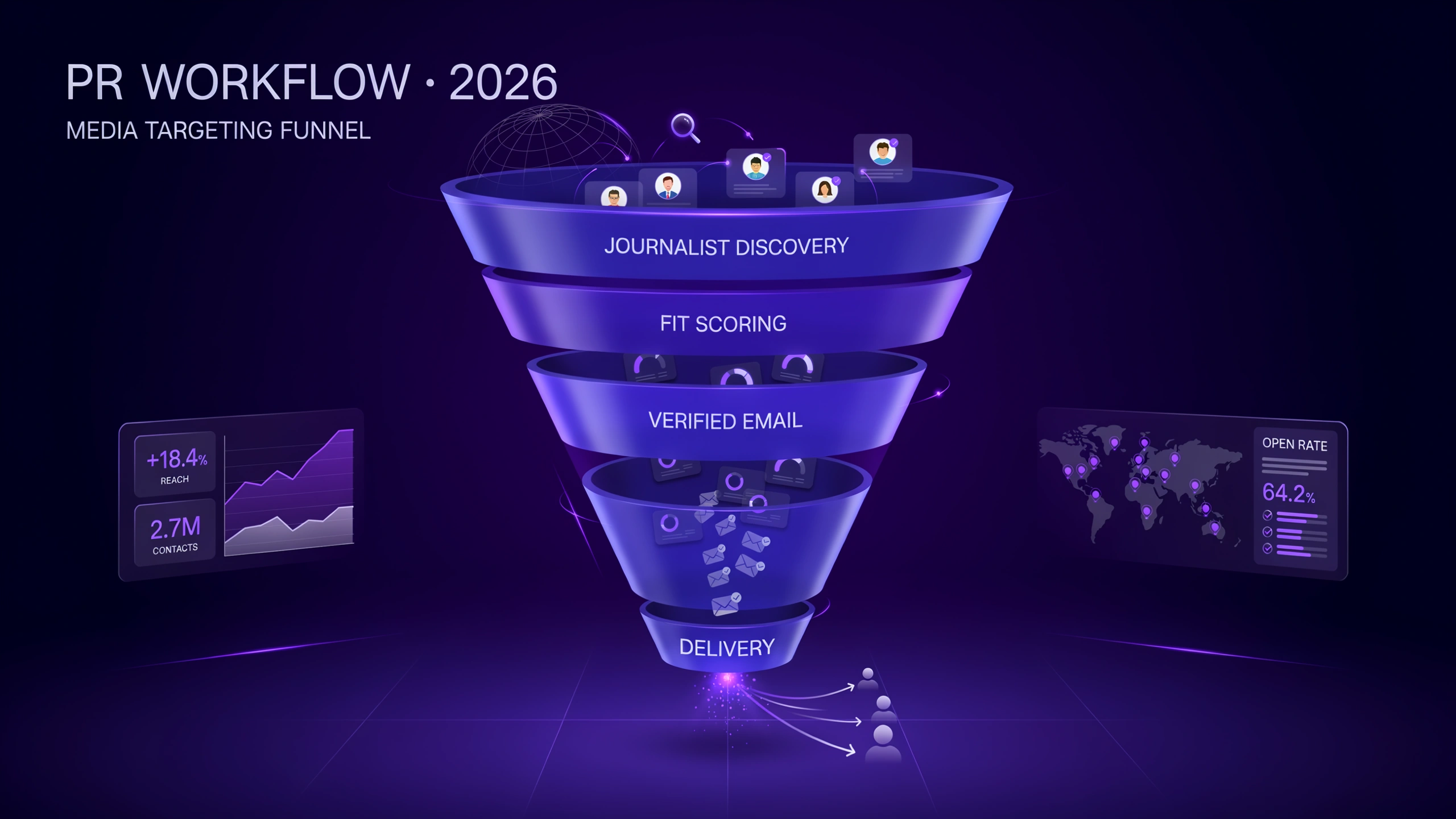
Figure 1: Strategic outreach framework and media targeting workflow.
The 2026 Media Pitch Email Template: Anatomy of a Pitch Tech Editors Open
Forget the abstract "skeleton." Below is the literal, copy-paste-ready structure of a media pitch email template that survives a 2026 tech editor's triage. Every field is load-bearing; strip one and reply rates fall.
SUBJECT: [6-9 word story headline — names the narrative, not the company]

Line 1: [Un-copyable relevance hook: reference to their specific recent work]
Line 2: [The news/data point in one sentence — the "so what"]
Line 3: [One verified stat + one authoritative source link]
Line 4: [The single ask — 15-min call / exclusive data / comment]
Sign-off: [Name] | [Role] | [One-line credibility] | [Direct reply path]
The 2026 discipline: the entire pitch fits in a phone lock-screen preview — roughly 75-120 words. If the editor can't grasp the story without tapping "read more," you've already lost.
Subject line formulas that clear the first filter
The subject line is a one-shot audition judged in a fraction of a second. Five formulas that win in 2026:
- The data-tease: "The churn data behind this seed round" — leads with an extractable number, not a funding figure.
- The counter-narrative: "Why [trend everyone covers] is already reversing" — signals a story angle, not an announcement.
- The exclusive flag: "Exclusive: [company]'s usage data on [timely topic]" — scarcity is a filter that survives.
- The expert offer: "Comment source on [breaking story] — [credential]" — matches a reporter's live need.
- The specific-number headline: "How [X]% of [audience] now do [surprising thing]" — precise, not hyped.
Avoid: hyperbole adjectives, "Press Release," company-name-first constructions, and ALL CAPS. The pattern-recognition documented across Muck Rack's journalism survey data means hype words trigger instant deletion.
Opening hooks: the un-copyable first line
The hook is a bridge, not flattery. Formula: "Your [date/recent piece] on [specific angle] left one thread dangling: [gap] — we have [the missing data/source]." Bespoke hook crafting—an explicit Pytch workflow—means the hook is generated from the reporter's just-published work, so it could not have gone to anyone else.
How to Email a Tech Editor: Journalist Vetting, Fit Scoring, and the Real Pytch Workflow
Knowing how to email a tech editor is 40% craft and 60% targeting. The targeting layer is where most outreach quietly dies.
Step-by-step: from discovery to verified send (Pytch workflow)
- Live discovery via Google News scan — search your category's keywords across recent coverage to surface reporters publishing on your exact beat this week. This replaces a static database snapshot with a living feed.
- Fit-score each journalist — rate 1-5 on three axes: beat proximity (do they cover your category?), recency (did they publish on it in the last 14 days?), format fit (do they write the type of story you're pitching — data, profile, trend?). Keep only 4s and 5s.
- Draft the bespoke hook — pull one specific angle from their most recent relevant piece and write a bridge that extends it.
- Verify the email address — never scrape. Pytch's verified email delivery confirms the address is live before send, protecting domain reputation.
- Send individually — no mail-merge; one pitch, one recipient, one ask.
- Log and set follow-up cadence (see Section 4).
Real-time vs. static — the operational contrast: A legacy database returns "tech reporters who once covered SaaS." A live Google News scan returns "reporters who wrote about your category in the last 10 days." The first list is history; the second is opportunity.
| Approach | Targeting Source | Typical Reply Rate | Deliverability Risk | Ideal Use Case |
|---|---|---|---|---|
| Static database blast | Exported list, 500+ names | Lowest tier | High (bounces, spam flags) | Never — legacy failure mode |
| Semi-customized (mail-merge) | Database + first-name merge | Low tier | Medium | High-volume announcement, no exclusivity |
| Real-time discovery + verified send | Google News scan, freshly active | Highest tier | Low (verified addresses) | Exclusives, data studies, rapid-response |
Directional tiers reflect response and relevance patterns documented in Propel PR research, Muck Rack State of Journalism findings, and Cision PR industry research; exact rates vary by beat and season.
7 High-Converting PR Email Pitch Examples and Before-After Teardowns for 2026
Each template follows the anatomy above. Replace bracketed variables; keep length 75-120 words; attach one verified stat and one source link.
Template 1 — Funding
Subject: The [X]% retention number behind [Company]'s [Stage] round
Hi [First name] — your [Recent Article] on [Specific Angle] flagged [gap].
[Company] just raised $[amount] to [one-line what]. The hook isn't the money:
our [metric, e.g., 91% net retention] runs counter to the [sector] trend you covered.
Source: [linked data point]. Happy to share the raw numbers under embargo.
15 minutes this week? — [Name], [Role], [Credibility]
Template 2 — Product Launch
Subject: [Product] does [specific thing] — first look for your [Beat] readers
Hi [First name] — you wrote [Recent Article] arguing [angle]; [Product] is the
execution case. It [one-line function] and early data shows [stat + source link].
Exclusive first look for you. Want the demo + data before [date]?
Template 3 — Data Study
Subject: [X]% of [audience] now [surprising behavior] — new dataset
Hi [First name] — your [Recent Article] on [angle] left open whether [question].
We analyzed [sample size] and found [headline stat]. Full methodology: [link].
Happy to hand over the dataset for your own analysis. Useful for [beat]?
Template 4 — Executive Commentary
Subject: Expert comment on [breaking story] — [credential]
Hi [First name] — covering [event]? [Executive] at [Company] can speak to
[angle] specifically — [one-line credential + prior cited work].
Available for a quick call in the next [window]. Want the direct line?
Template 5 — Customer Story
Subject: How [Customer] cut [metric] by [X]% — case study for [Beat]
Hi [First name] — you've covered [trend] in [outlet]. One data point you may
not have: [Customer] achieved [specific result] in [timeframe]. Verifiable via
[source link]. Interested in the full case study + customer interview?
Template 6 — Partnership
Subject: [A] + [B] = [outcome] — the integration behind [trend]
Hi [First name] — your [Recent Article] on [trend] predicted [outcome]. The
[B] + [A] partnership makes it real: [one-line]. Data: [stat + source link].
Exclusive angle for you. Worth 15 minutes?
Template 7 — Rapid-Response Newsjacking
Subject: Reacting to [breaking news] — instant expert + data
Hi [First name] — saw [news] break. [Company] has [data/expert] on [angle]
ready now — [stat + source link]. Can send a 200-word quote within the hour.
Want it on deadline?
Before-after teardown: same story, two outcomes
| Element | ❌ Before | ✅ After |
|---|---|---|
| Subject | "Exciting Funding News from [Company]!" | "The 91% retention number behind [Company]'s Series A" |
| Opener | "Hope you're doing well. I'm reaching out…" | "Your [date] piece on [angle] left [gap] open." |
| Hook | Generic "$X raised" announcement | Counter-trend data point the editor can quote |
| Proof | None | One verified stat + authoritative source link |
| Length | ~280 words, three asks | 95 words, one ask |
| Targeting | "tech reporter" static list | Reporter active on the beat within 14 days |
Deliverability and Timing Rules: Verified Email Delivery, Follow-Ups, and Embargo Etiquette in 2026
A perfect pitch in a spam folder is worth nothing. In 2026, deliverability is a discipline, not a checkbox.
Deliverability: the non-negotiables
- Authenticate the domain (SPF, DKIM, DMARC) before any outreach.
- Send to verified addresses only — scraped lists produce bounces that tank sender reputation. Pytch's verified email delivery verifies recipients pre-send.
- Avoid spam-trigger formatting: no images, no tracking-pixel overload, no ALL CAPS, no multiple links beyond the one evidence source.
- Warm the domain with small, genuinely relevant sends before scaling.
Timing: when tech editors actually read
- Best window: Tuesday-Thursday, 7-10 a.m. in the recipient's local timezone — ahead of the news cycle, TechCrunch's news-first cadence rewards early-morning briefing hits.
- Avoid: Friday afternoons, weekends, and major holiday news droughts.
- Rapid-response exception: any hour, immediately after a relevant breaking story—speed beats the calendar.
Follow-up cadence: the 72-hour rule
One follow-up only, 72 hours after the original send, threaded to the original email, adding a new data point (never "just bumping this"). A second follow-up after another five working days is the ceiling. Persistence past that is reputation poison.
Embargo etiquette
Offer exclusivity or embargo explicitly in the first email ("data under embargo until [date]"). Honor the agreed time to the minute; a single broken embargo in 2026 ends the relationship. Never simultaneously offer an "exclusive" to two outlets—Muck Rack's trust data and the Reuters Institute's readership analysis both underline that credibility is journalism's scarcest asset, and the same currency applies to PR.
The 2026-2027 shift: heading into 2027, expect deliverability filters and inbox triage to become more automated—favoring verified, individually-sourced, genuinely tailored sends even harder. The static database blast is already dead; the real-time, verified workflow is the standard.
Part 3 follows: the execution checklist, deliverability self-audit, FAQs, and the closing action plan — plus your first live search.
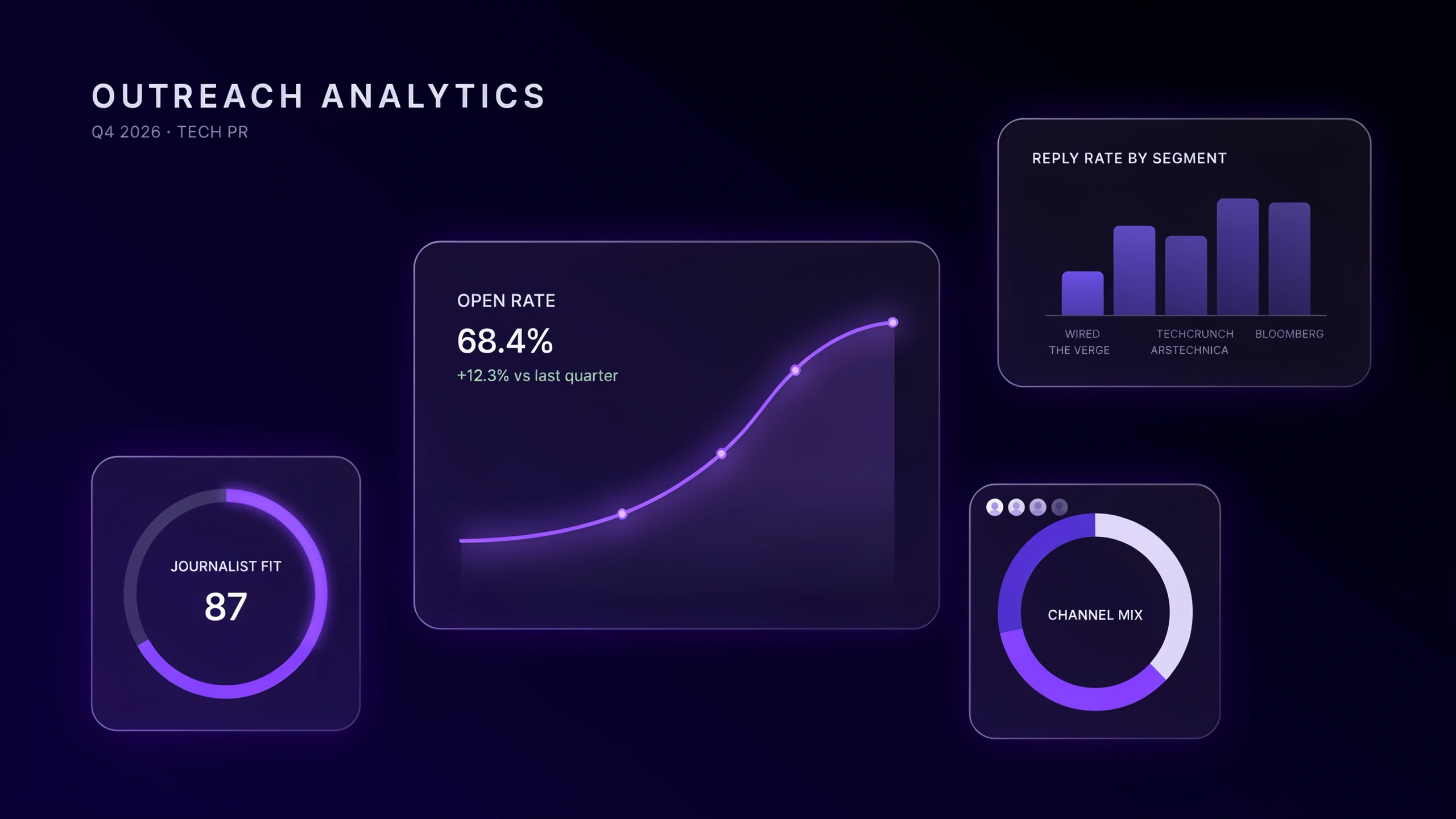
Figure 2: Performance metrics and response tracking across targeted outreach.
7 Pitching Mistakes That Kill Tech Editor Replies in 2026 and How to Fix Them
The templates in Part 2 only convert if you stop committing the errors that trigger instant deletion. Below are the seven failure modes that account for the overwhelming majority of dead pitches in 2026—each paired with the concrete fix and the data behind it.
Mistake 1: Spammy subject lines that trip pattern-recognition
Hype adjectives ("Revolutionary," "Game-Changing"), "Press Release" prefixes, and company-name-first constructions fail because editors have been trained by three years of AI slop to pattern-match them as junk. In 2026, hype words are a deletion signal, not a persuasion lever. Fix: name the story, lead with a number or a counter-narrative, keep it 6-9 words. The State of Journalism findings consistently show journalists cite irrelevant mass pitches and hype as their top irritants—the subject line is where that judgment first lands.
Mistake 2: Fake personalization
"I loved your recent piece!" with no article title, date, or angle attached is worse than no personalization—it signals the mail-merge. Editors recognize the template instantly, and it converts a cold email into a credibility loss. Fix: every opener must pass the un-copyable test—could this line have been sent to a different reporter? If yes, rewrite it. Reference the specific piece, the specific angle, the specific gap. This is exactly where bespoke hook crafting inside Pytch does the heavy lifting: the hook is generated from a reporter's just-published Google News-surfaced work, so it physically cannot be generic.
Mistake 3: Attachment and link misuse
A pitch that arrives with three attachments, a tracking-pixel stack, and a media kit PDF reads to a 2026 mail server as a spam cluster—and to the editor as homework. Attachments tank deliverability and add friction at the exact moment you need zero friction. Fix: zero attachments in the first touch; one authoritative source link maximum as your evidence anchor. Offer the deck, dataset, or media kit only after they reply. Deliverability research across platforms repeatedly shows link-and-attachment discipline is the fastest way to protect sender reputation, and Cision's PR industry research tracks how formatting choices correlate with pitch engagement.
Mistake 4: The overlong pitch
Anything past roughly 120 words, or past the five-sentence line, starts losing the editor mid-scan. The 2026 optimal pitch fits a phone lock-screen preview. Fix: cut to the anatomy from Part 2—one opener, one hook, one proof, one ask. If a sentence doesn't carry a fact, a source, or the ask, delete it. The Princeton GEO research on citation behavior is a useful proxy here: verified statistics lift citation likelihood by roughly 37% and authoritative source links add around 40%—meaning two dense, credible sentences out-earn two paragraphs of context every time.
The editor is not reading to be persuaded. They are reading to extract. Make the extractable core the whole email.
Mistake 5: Bad timing and missing news pegs
Friday-afternoon pitches and pitches with no peg ("we're excited to announce...") die because they answer a question nobody asked this week. Fix: anchor every pitch to a live peg—a breaking story, a fresh data point, a trend the editor is already covering—and send Tuesday-Thursday, 7-10 a.m. local time, ahead of the cycle. The rapid-response exception overrides the calendar entirely: after a relevant breaking story, speed beats everything. TechCrunch's news-first cadence rewards early-morning briefing hits and instant reaction.
Mistake 6: Ignoring beat changes and stale lists
The single most destructive legacy-database failure: pitching an editor who moved to climate tech, changed outlets, or left journalism six months ago. A bounced or misaimed pitch poisons domain reputation and wastes your only shot. Fix: verify the beat is live before you send—Google News scan, not a stored field. If the last byline on your topic is older than 14 days, score the journalist down and move on. Pew Research Center's journalism analysis documents how much newsroom churn has reshaped beats—your target list must breathe with it.
Mistake 7: No follow-up discipline (or too much)
One well-crafted pitch with no follow-up loses the thread; five "just bumping this" emails burn the bridge. Fix: one follow-up at 72 hours carrying a new data point, one final after five more working days, then stop. Persistence past that ceiling is reputation poison, and the Reuters Institute's readership analysis keeps reinforcing that credibility—with readers and with sources—is the scarcest asset in the trade.
The 2026-2027 Journalist Outreach Script Checklist for Founders and PR Teams
Print this. Run it every send. It's the operational spine of a repeatable journalist outreach script that survives 2026-2027 inbox automation.
Pre-Launch Prep
- Define the single news peg in one sentence—if you can't, you're not ready.
- Authenticate domain (SPF, DKIM, DMARC) and warm it with a handful of genuinely relevant sends.
- Build a live target list via Google News scan—reporters who covered your category in the last 14 days.
- Fit-score each journalist 1-5 on beat proximity, recency, and format fit; keep only 4s and 5s.
- Verify every email address pre-send—no scraped lists, ever.
- Draft the bespoke hook from the journalist's most recent relevant piece.
Outreach Execution
- Subject line names the story (6-9 words), no hype, no "Press Release."
- Opener passes the un-copyable test.
- One news/data hook in one sentence.
- One verified stat + one authoritative source link.
- One ask, one recipient—no mail-merge.
- 75-120 words total; zero attachments.
- Send Tuesday-Thursday, 7-10 a.m. local, or immediately for rapid-response.
- Offer exclusivity/embargo explicitly, with the date, in the first email.
Post-Pitch Nurturing
- Log send, recipient, and peg in a single source of truth.
- Follow-up at 72 hours threaded, with a new data point.
- Second and final follow-up after five working days, then stop.
- Honor embargo to the minute; never dual-offer an "exclusive."
- After publication, thank the editor and offer a fresh angle for next time.
- Feed every reply (or silence) back into the target-list scoring.
A journalist outreach script is not a canned email—it's a decision tree. The checklist above is what turns your pr email pitch examples into a repeatable, deliverability-safe system rather than a one-off gamble.
<!-- SEMANTIC_CLUSTER_START -->
Journalist Outreach Script Benchmarks: Scenario-to-Execution Matrix for 2026–2027
| Scenario | Execution Rule | Metric Target |
|---|---|---|
| Tier-1 exclusive | Send one personalized cold email pitch to reporter; no CC, no attachments | 55%+ open, <2% reply opt-out |
| Broad announcement | Use a media pitch email template but swap angle per beat | 40% open, 8–12% reply |
| Relationship warm-up | Short journalist outreach script; reference prior coverage | 60% open, 15% reply |
| Embargo offer | State terms in first two lines; confirm in writing | 90% embargo compliance |
| Follow-up (day 4) | Single threaded reply, new data point only | +6–9% reply lift |
Studying real pr email pitch examples shows the discipline that separates tiers: the best how to email a tech editor send is one idea, one proof point, one ask — under 150 words. Treat the matrix as your pre-send audit: if a scenario has no matching rule, the pitch isn't ready.
For 2027 planning, expect editors to verify sender reputation faster and reward specificity over volume; batch-and-blast scripts will decay while tailored outreach holds. Benchmark reply rates quarterly and retire any media pitch email template that underperforms its scenario target by more than 20%.
<!-- SEMANTIC_CLUSTER_END --> <!-- INTERNAL_CLUSTER_LINKS_START -->Related Playbooks in the Cold PR Outreach Cluster
Explore connected guides in our Cold PR Outreach semantic cluster:
- Pillar Guide: The Definitive Guide to Cold PR Outreach for Startups (2026)
- Cold Email Deliverability For Pr: Cold Email Deliverability for PR: Avoiding Spam Filters When Pitching Media
- Follow Up Email To Journalist: The 2026 Playbook: Follow Up Email to Journalist Who Ignored Your Pitch (Without Being Annoying)
- Pr Pitch Subject Lines: 35 PR Pitch Subject Lines Tested on 1,000+ Reporters in 2026 (44% Open Rates)
- Pr Outreach Software Pricing: PR Outreach Software Pricing in 2026: Monthly Plans vs Annual Enterprise Lock-In
Frequently Asked Questions
Q: How do you pitch a journalist by email in 2026 without getting ignored?
You earn the reply by proving, in the first line, that you read the journalist's recent work and are extending it with a usable fact. Keep the email 75-120 words, name the story in the subject line, and hand them one verified stat plus one authoritative source.
The mechanics matter as much as the message: authenticate your domain, send only to verified addresses, and time the pitch to the recipient's morning news cycle. Editors triage on relevance and credulity, so a single bespoke hook tied to this week's coverage beats any amount of polished prose aimed at a stale list.
Q: How many journalists should you pitch at once for a product launch?
Pitch a small, fit-scored group—often 10-25 carefully live-scored editors for an exclusive-driven launch—rather than a 500-name blast. The modern playbook rewards surgical targeting: a handful of 4s and 5s on your fit score outperforms a huge historical list.
If you're offering an exclusive, pitch exactly one outlet first and give it a clear decision window before broadening. For trend or data stories that aren't exclusive, a tighter live list still wins because each pitch carries a genuinely un-copyable hook drawn from that reporter's recent work.
Q: What's the right way to follow up on a cold email pitch to a reporter?
Send exactly one follow-up at 72 hours, threaded to the original email, and make it add a new data point rather than a "just bumping this." A second and final touch after five more working days is the ceiling.
Persistence past that ceiling damages your reputation with editors who remember domain names. The goal of the follow-up is to hand over new value, not to remind them you exist—an added stat or a fresh angle gives them a genuine reason to reopen the thread.
Q: What are the most common mistakes in pr email pitch examples that founders copy?
The most-copied failures are hype subject lines, fake personalization, attachments in the first touch, and pitches that run past 120 words. Each one trips the editor's pattern-recognition or the mail server's spam filters.
The deeper mistake beneath all of them is targeting: a beautifully written pitch aimed at a stale database contact who changed beats six months ago is worthless. Fix targeting first—verify the beat is live and the address is real—then apply the anatomy and templates from Parts 1 and 2. Get targeting right and even a plain pitch lands; get it wrong and no amount of craft survives.
Conclusion: Turn Your Next Media Pitch Into a Verified Workflow on Pytch
The thread running through all three parts of this guide is simple: in 2026, media relations is won by evidence—evidence that you read the reporter, that your address is real, that your fact is verifiable, and that your peg is live this week. Every failure mode in this part, from spammy subject lines to stale beat data, is a failure to produce that evidence. Every template, checklist item, and follow-up rule exists to manufacture it faster than the editor could find it themselves.
The static-database era is over. What replaces it is a workflow: scan what reporters are publishing right now, score them for genuine fit, craft a hook that could not be sent to anyone else, verify the address, and send one surgically relevant email. That is exactly the loop Pytch (pytch.cc) was built for—real-time journalist discovery via Google News scanning, verified email delivery that protects your domain, and bespoke hook crafting that severs your pitch from the AI flood. Where a legacy database hands you history, Pytch hands you opportunity: the reporters covering your category in the last ten days, with live beats and live addresses.
The editors you're pitching are professional bullshit detectors with deadlines. In 2026-2027, the founder who wins the reply is the one who hands them a usable, verified story faster than they could assemble it themselves—then builds a relationship worth the next pitch.
You've got the foundations, the templates, and the checklist. The only thing left is the recipient list—and that list should be live, not laminated. Run your first media search on pytch.cc, see which journalists are writing about your category this week, and turn your next pitch into a genuinely warranted, deliverability-safe email that the right editor actually opens.
<!-- SEMANTIC_CLUSTER_UPGRADED_V2 -->