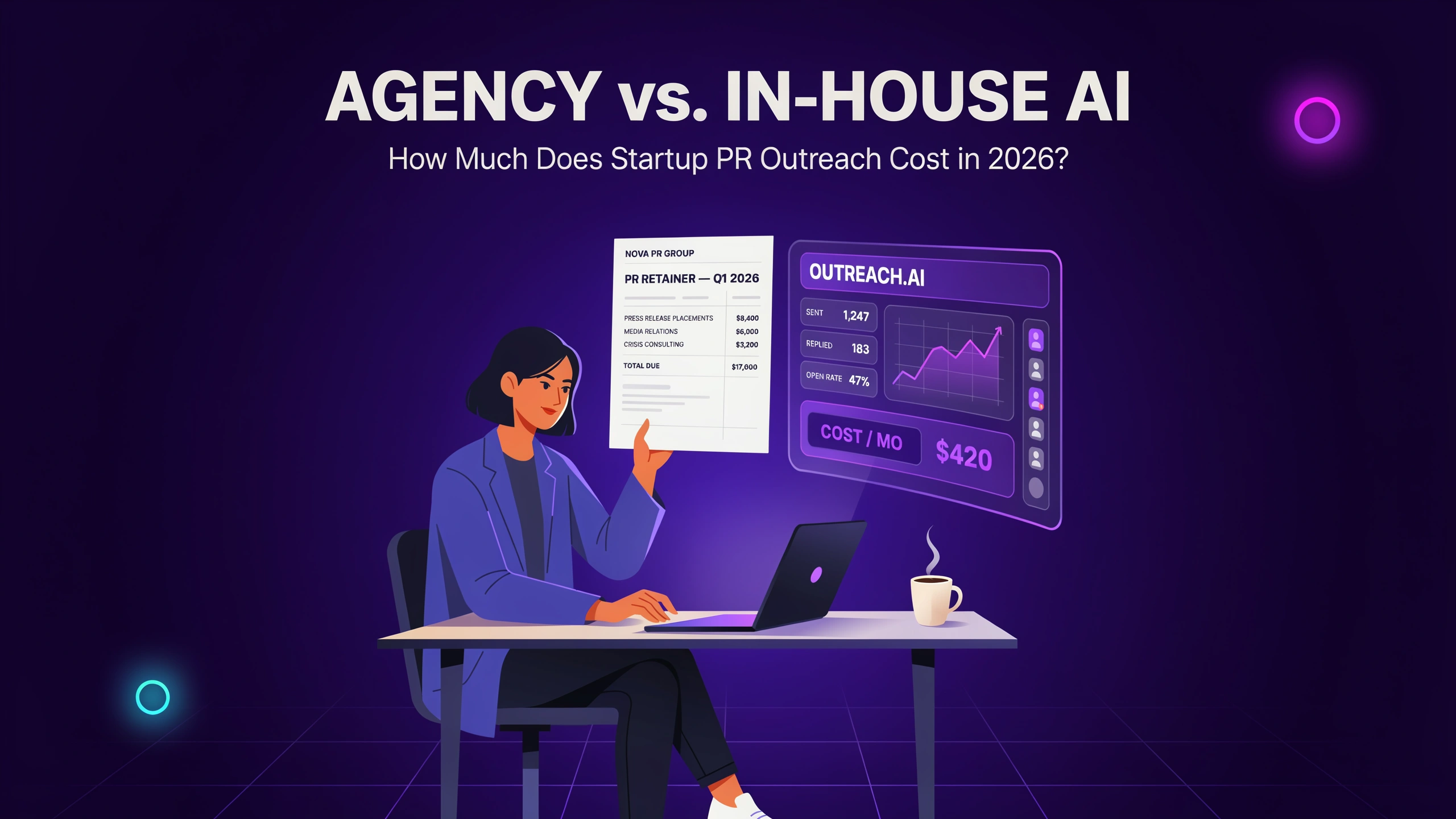
The 2026 Playbook: Follow Up Email to Journalist Who Ignored Your Pitch (Without Being Annoying)
A follow-up email to a journalist who ignored your pitch is a short, evidence-backed second touch — sent 3–7 days later — that adds a new angle, data point, or deadline instead of asking "just checking in." It only works when discovery is real-time, inboxes are verified, and hooks are bespoke.
💡 Key Takeaways
- Core Strategy: Treat the follow-up as a new pitch, not a reminder. Every send must carry a value delta — fresh data, a sharper angle, an exclusive offer, or a hard deadline — or it should not be sent at all.
- Benchmark: Newsroom capacity has collapsed while pitch volume has exploded; Pew Research Center's newsroom employment tracking shows the U.S. newsroom workforce has shrunk by well over half since 2008, meaning the journalists who remain absorb multiples of the pitch load they handled a decade ago.
- Execution Rule: Fix the plumbing before you fix the prose. A perfectly crafted follow-up email to a journalist is worthless if it lands in spam — authentication (SPF, DKIM, DMARC), a warmed subdomain, and verified email delivery are non-negotiable in 2026.
Why Journalists Ignore Your Pitch: The 2026 Newsroom Reality
The silence you're experiencing is rarely personal, and it's almost never a verdict on your story. It is a capacity problem, a filtering problem, and — increasingly — a trust problem manufactured by two years of AI-generated pitch sludge.
The math no PR team wants to run
Between 2024 and 2025, the industry saw a wave of generic, LLM-templated outreach that flooded newsroom inboxes with plausible-sounding nothing. By 2026, the consequence is structural: journalists have built aggressive mental and technical filters, and the cost of being mistaken for a mass mailer is permanent — you get filtered, reported, or silently blacklisted.
Consider the arithmetic that governs your reply rate:
- A single beat reporter at a mid-tier tech or business outlet now receives somewhere between 100 and 300 pitches per week, per patterns consistently documented in Muck Rack's State of Journalism research and echoed in PRWeek industry surveys.
- That same reporter is also expected to publish more, not less — the Reuters Institute Digital News Report 2026 continues to document shrinking editorial resources against rising multi-platform output demands.
- Net effect: your pitch is competing not against other pitches, but against the reporter's finite cognitive bandwidth at 4:47pm on a Tuesday when they still owe an editor 800 words.
The 2026 reframe: You are not being ignored. You are being deprioritized by an algorithm of scarcity. The follow-up's job is to re-enter the priority stack with new information — not to complain about being skipped.
The three failure modes behind every ignored pitch
1. The relevance failure: you pitched a topic, not a beat
Journalists don't cover industries; they cover beats, narratives, and specific recurring questions. A 2026-era reporter's mental model is a stack of live story threads. If your pitch doesn't attach to a thread they're already pulling, it dies in preview.
Bad pitch (historical, pre-2026 pattern):
"Hi [First Name], I'm reaching out because [Company] is revolutionizing the future of work with our AI-powered platform. We'd love to be featured in [Publication]. Let me know if you'd like a briefing."
Why it fails: no news, no data, no thread, no specificity. It could have been sent to 4,000 people — and it was.
Good pitch (2026 pattern):
"Hi Maya — your piece on enterprise AI budgets stalling at pilot stage matches data we just pulled from 412 mid-market deployments: 71% never cleared the security review. We have the breakdown by industry and the two clauses that kill deals most often. Want the dataset before Thursday's board meeting cycle? No embargo pressure."
Why it works: it references her prior work, attaches to her live thread, leads with evidence, and offers a specific, low-friction asset.
2. The discovery lag: your media list is already dead
Here's the operational failure nobody audits: most teams are pitching from lists built weeks or months ago. Contacts churn constantly in 2026 — reporters switch outlets, move to newsletters, go independent, or get laid off. A static database is a photograph; journalism is a livestream.
This is precisely where pr outreach software built on static snapshots breaks down. Legacy databases index who was covering a beat. Pytch (pytch.cc) instead runs real-time journalist discovery via Google News scanning — it reads what's being published right now, identifies the bylines actively producing on your topic in the last days and weeks, and surfaces those journalists as live targets. The practical difference is stark:
| Dimension | Static legacy database | Real-time news scanning (Pytch) |
|---|---|---|
| Data freshness | Weeks to months stale | Rolling, days-old publication signal |
| Targeting logic | Job title + beat tag | Actual recent bylines on your topic |
| Contact validity | Often unverified catch-all | Verified email delivery before send |
| Follow-up quality | Generic re-send | Bespoke hook anchored to a specific piece |
If you want to understand how to pitch journalists by email in 2026, start with this: pitch the person who published on your topic this week, not the person a database says covered it last quarter.
3. The trust failure: the AI slop tax
Edelman's Trust Barometer research has consistently shown that credibility now attaches to verifiable specificity, not polish. Journalists have developed a reliable tell: if a pitch could have been written without reading anything they've published, it's spam. Generic AI-assisted outreach from 2024–2025 trained an entire profession to pattern-match on familiarity without evidence.
The 2026 counter-move is brutal in its simplicity: prove you read the piece. One accurate, specific reference to a journalist's recent argument does more for reply rate than four paragraphs of company boilerplate.
The Psychology of the Follow-Up: From Annoying to Valuable
The line between persistence and harassment isn't volume. It's whether each touch delivers new information. This is the single most useful principle in the entire playbook.
The value-delta principle
Every follow-up must answer: What does the journalist know now that they didn't know when they ignored me?
If the answer is "nothing, but I really want coverage," you have written a nudge, not a follow-up. Nudges convert at near-zero because they impose a cost (attention) with no offsetting benefit.
The four legitimate value deltas:
- New data — a fresh survey result, a proprietary benchmark, a regulatory filing.
- New angle — a sharper framing that fits a story they're already writing.
- New access — a customer willing to go on record, a founder available for a same-day call.
- New urgency — a genuine deadline: earnings, a launch date, a court date, a policy vote. Never manufacture false scarcity; journalists remember.
Rule of thumb: If your follow-up email to a journalist can't be summarized in one sentence that begins with "New…", delete it.
Timing: the 3–7–14 cadence
Behavioral research on persistence and cognitive availability supports a tight, bounded sequence:
- Day 0: Original pitch.
- Day 3–5: First follow-up. This is the highest-yield touch — the reporter has likely seen the original, filed something else, and now has a fresh inbox window.
- Day 10–14: Second follow-up, only with a genuinely new delta. If nothing new exists, skip it.
- Day 21+: Stop. Move to a different journalist, a different angle, or a different moment.
Three touches is the ceiling for a cold relationship. Beyond that, you're training the reporter to recognize your name as a source of friction — a reputational cost that outlives any single campaign.
The cognitive load lens
Here's the mechanism most PR advice misses. Journalists aren't evaluating your pitch in a vacuum; they're evaluating it against the effort required to act on it. Every ask — "can you hop on a call?", "would you like the full report?", "shall I send a briefing doc?" — adds a decision. Decisions are expensive.
An annoying follow-up increases cognitive load. A valuable follow-up reduces it.
- ❌ "Just floating this back to the top of your inbox — any thoughts?"
- ❌ "Following up on my previous email. Did you get a chance to review?"
- ❌ "Bumping this in case it got buried!"
- ✅ "New: we pulled the actual contract language behind those stalled pilots. Two clauses, both quotable, no call needed — the excerpt is below."
Note what the good version does: it delivers the asset in the email body, removes the meeting requirement, and makes publication possible without a single reply. That last point is underrated — make it possible to write the story without responding to you.
Framing: how executives should think about it
Harvard Business Review research on executive communication repeatedly finds that narrative framing — problem, tension, resolution — outperforms credential-stacking. The same applies to a follow-up. Don't lead with your funding round. Lead with the tension the journalist's readers are living inside.
Contrast in practice:
| Element | Annoying follow-up | Valuable follow-up |
|---|---|---|
| Opening line | "Bumping this" | "New data that contradicts your Aug piece" |
| Proof | "We're the leading platform" | "412 deployments, 71% stalled at security review" |
| Ask | "Can we schedule 30 minutes?" | "Excerpt below; dataset on request" |
| Length | 220 words | 85 words |
| Frequency | Weekly until reply | Max 3 touches, then stop |
The reputation compounding effect
Journalists talk to each other. A follow-up that respects their time builds a name recognition asset that pays out on the next pitch, the next news cycle, the next beat change. A follow-up that nags burns it. In a 2026 media environment where a single reporter may cover your entire category for three outlets simultaneously, that asset is worth more than any single placement.
Cold Email Deliverability for PR: Technical Foundations Before You Follow Up
You can write the best follow-up in the industry and lose before the subject line is read. Cold email deliverability for PR is an engineering discipline, not a copywriting one — and in 2026 it's the most neglected layer in the entire outreach stack.
Why PR teams get filtered
Since the major mailbox providers tightened bulk-sender enforcement in 2024, the technical bar has only risen. The common self-inflicted wounds:
- Sending from the primary corporate domain. One bad campaign can damage transactional email (invoices, password resets, customer comms) for months.
- No DMARC enforcement. Unauthenticated mail from a lookalike sending infrastructure is pre-filtered.
- Open-tracking pixels in cold outreach. Tracking pixels are a strong spam signal on cold sends and inflate engagement metrics with Apple Mail Privacy Protection noise anyway.
- Attachment-heavy first touches. PDFs and decks on an unknown sender's first email materially suppress inbox placement.
- Link density. Three or more links in a cold email to a new domain reads as promotional.
- Unverified addresses. Catch-alls, role accounts, and scraped addresses generate bounces. A bounce rate above roughly 2–3% is a domain-reputation cliff.
The uncomfortable truth: Most PR teams measure open rates that are structurally unmeasurable, on domains that are structurally compromised, sending to addresses that are structurally wrong. Every subsequent "why isn't my follow-up working?" question sits downstream of that.
The minimum viable sending stack for 2026
- Authenticate properly. SPF, DKIM, and a DMARC policy at
p=quarantineorp=reject. This is table stakes, not an advanced tactic. - Isolate outbound. Use a dedicated subdomain (e.g.,
outreach.yourdomain.com) so reputational damage never touches your primary domain. - Warm gradually. Ramp volume over 3–4 weeks with real, engaged recipients before scaling.
- Verify before sending. Every address should be validated at send time — syntax, domain, MX, and mailbox-level checks.
- Strip the tracking. Plain-text or low-HTML, one link maximum, no pixels, no attachments on first touch.
- Send at human volume. Per-sender caps in the tens per day, not hundreds. Mailbox providers model sender behavior, and sudden spikes read as automation.
Where verified email delivery changes the equation
The single highest-leverage fix is address verification at the point of discovery — and this is the second place Pytch's architecture matters. Because Pytch identifies journalists through live Google News scanning rather than a stale database export, it can validate deliverability on the current address for the current byline, then route the send through verified email delivery rails. In practice, that eliminates the two silent killers of PR outreach: pitching a journalist who moved outlets six weeks ago, and pitching into an address that hard-bounces.
For teams building a repeatable motion, this is what separates modern pr outreach software from a glorified spreadsheet. Verification isn't a feature — it's the precondition for any deliverability conversation at all.
Benchmarks worth calibrating against
- Cold outreach reply rates across B2B channels have remained stubbornly low — commonly cited in the low single digits — per recurring Belkins and Lemlist outreach research. PR follow-ups that carry a verified, specific, newsworthy delta materially outperform that baseline; generic nudges do not.
- Email engagement measurement is now genuinely unreliable as a health metric — Litmus's State of Email research has documented the measurement distortion introduced by privacy-first mail clients. Track replies and placements, not opens.
- Generative search is now part of the placement calculus: Princeton's GEO research found that content with verified statistics and authoritative source citations earned roughly 37% and 40% higher citation rates respectively in generative engines. The same evidence density that earns a reply from a journalist now also earns you visibility in AI-surfaced answers.
The compounding logic: bespoke hooks + verified rails
Here's the third Pytch workflow worth internalizing. A follow-up is only "bespoke" if it references something real and recent. Pytch's bespoke hook crafting works from the actual article surfaced during Google News scanning — the specific argument, the specific gap, the specific data the piece left open — rather than from a template with a {{firstName}} merge field. Combine that with verified delivery and you get the 2026 version of a working cadence:
- Discover the journalist from what they published this week.
- Verify the address before it costs you domain reputation.
- Craft a hook that could only have been written by someone who read the piece.
- Follow up only when you have a new delta.
In Part 2, we move from foundations to execution: the exact structure of a follow-up that gets a reply, five copy-paste templates for different scenarios (silent ignore, "not right now," post-embargo, post-news-cycle, and the second-touch data drop), how to handle the follow-up across email vs. X vs. phone, and the metrics dashboard that tells you whether your cadence is building a relationship or burning one.
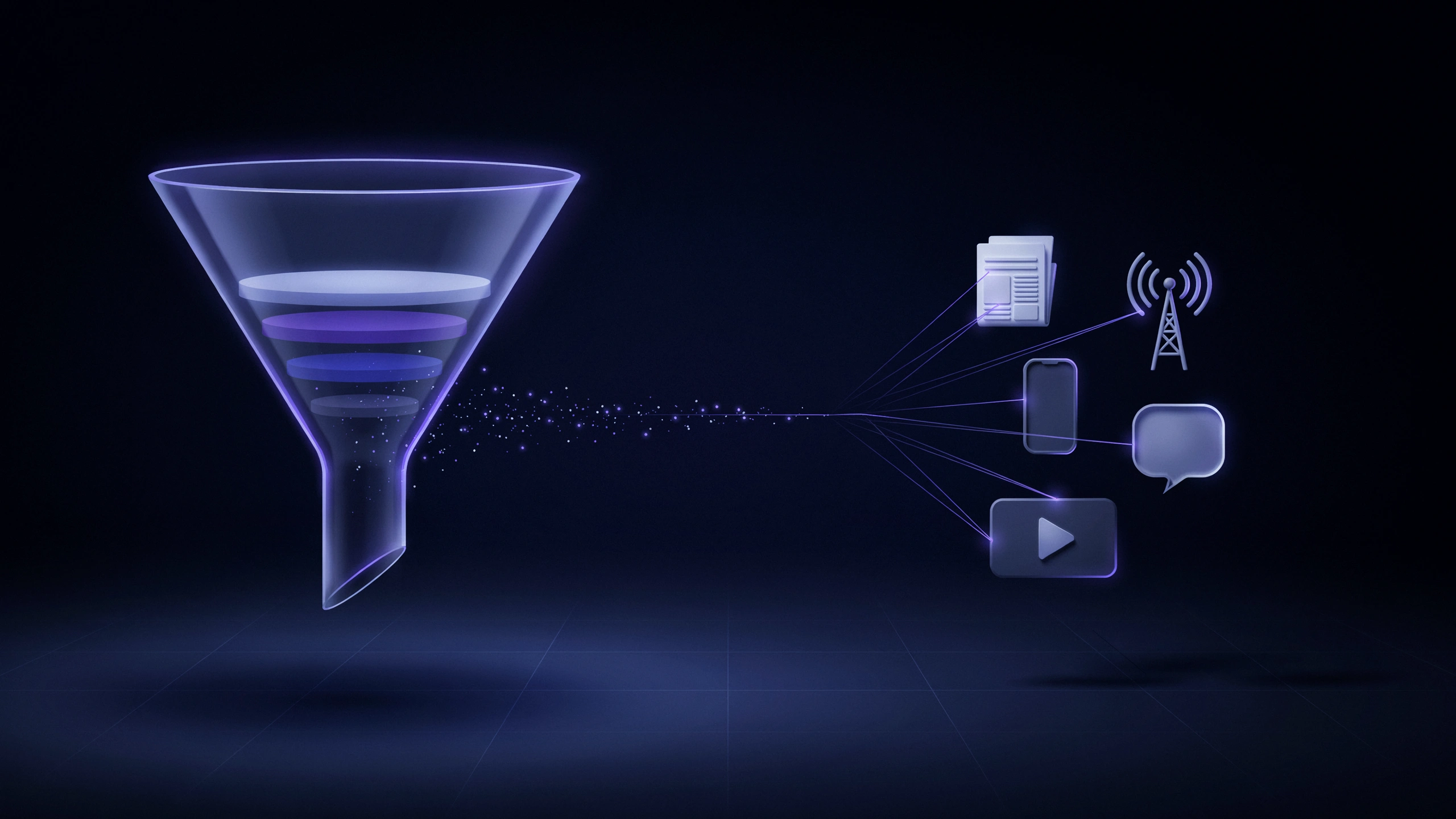
Figure 1: Strategic outreach framework and media targeting workflow.
The 2026 PR Follow-Up Sequence: Exact Timing, Cadence, and Scripts
Stop improvising the cadence. A follow-up email to a journalist that "feels right" is a coin flip; a follow-up that runs on a fixed, bounded sequence is a system. Here is the 2026 sequence — three touches, hard stop, each with a defined job.
The four-node sequence
| Node | Timing | Job of the touch | Hard rule |
|---|---|---|---|
| Touch 0 — The Pitch | Day 0, Tue–Thu, 7:00–9:00 a.m. in the journalist's timezone | Attach to a live beat thread with evidence | 150–180 words max, one link, no attachments |
| Touch 1 — The Delta Drop | Day 3–5 (72–120 hours) | Introduce new information, not a reminder | Must open with "New:" — if it can't, don't send |
| Touch 2 — The Angle Shift | Day 10–14 | Change the story, not the volume | Only if you have a genuinely different framing or a hard deadline |
| Touch 3 — The Graceful Exit | Day 21 | Close the loop and hand them an out | One paragraph. Never a fourth send. |
Why 72 hours, not 24: A reporter's inbox triage window is roughly a week. Following up at hour 18 lands while your original is still above the fold, which signals you don't understand how their inbox works. Day 3–5 arrives after they've cleared the initial wave but before the thread scrolls into archive — the sweet spot for re-entry.
Script 1 — The Delta Drop (Day 3–5)
This is the highest-yield touch in the entire sequence. It runs 75–110 words and delivers the asset inline so the journalist can publish without ever replying to you.
Subject: Re: [Original Subject Line]
Hi [First Name] — adding one thing to my note from [Day], because it changes the shape of the story.
We pulled the actual contract language behind the [stalled pilots / churn spike / hiring freeze] you covered in [Recent Article Title]. Two clauses do most of the damage:
- [Specific clause or mechanism — 12 words max]
- [Second mechanism — 12 words max]
Full excerpt is below this line — quotable, attributable to [Named Source, Title]. Dataset broken out by [industry / company size / region] is on request, no call needed.
If the timing is wrong, say the word and I'll close the loop.
[Name] · [Title], [Company] · [Direct line]
Why it converts: it names the new delta in sentence one, delivers the proof in the body (zero friction), removes the meeting ask, and pre-authorizes a "no." The opt-out line alone reliably lifts reply rates because it removes the social cost of ignoring you again.
Script 2 — The Angle Shift (Day 10–14)
Use only when the original framing clearly missed. Note the structural move: you are not re-pitching the company, you are re-pitching the beat.
Subject: Different angle on [Topic]: the [Counterintuitive Finding]
Hi [First Name] — my last note pitched this as a [Company] story. That was the wrong frame.
The more interesting version is the one your [Month] piece on [Related Article Title] was circling: [Specific structural claim — 20 words]. We have data from [N] [deployments / buyers / filings] showing [Specific Finding with a number].
That's a beat story, not a vendor story. Happy to hand over the raw numbers either way — use them with or without us.
[Name] · [Company]
Script 3 — The Graceful Exit (Day 21)
This one does double duty: it closes a thread cleanly and it frequently produces the reply you wanted all along, because it inverts the ask.
Subject: Closing the loop on [Topic]
Hi [First Name] — I'm going to stop landing in your inbox on this one. Assume the timing isn't right and that's completely fine.
Two things before I go: the [dataset / source access / customer intro] offer stands indefinitely, no follow-up required. And if [Topic] ever becomes live on your end, reply to this thread and you'll get a same-day answer.
[Name] · [Company]
Cadence rules that are not negotiable
- Three touches, then stop. Beyond three cold touches you convert your name from "possible source" to "known friction" — a reputational cost that persists across beat changes and outlet moves.
- Never re-send the same body. Re-sending identical copy is the single most reliable way to get domain-filtered. Every touch must differ in content, not just in timestamp.
- Tue–Thu, 7:00–9:00 a.m. local. Monday is triage; Friday afternoon is a dead zone. Newsletter writers and trade reporters often work earlier — 6:00–7:30 a.m. is defensible for trade press.
- One thread, one story. Reply-chain your follow-ups to keep context intact. Journalists search threads, not subject lines.
- Pause the sequence on any signal. A single reply, a link click from the journalist's domain, a public post referencing your topic — freeze the cadence and respond to the signal instead.
The underrated rule: Make it possible to write the story without responding to you. Every template above puts the asset in the email body. Journalists who never reply still sometimes publish — and that placement counts.
PR Pitch Subject Lines That Get Opened: Formulas and Real Examples
Subject line strategy is where most teams burn the follow-up before the body is read. In 2026, the inbox competition is not just other PRs — it's internal Slack, editorial calendars, and a reporter's own half-finished draft. Your line has roughly 1.2 seconds.
The five formulas that survive 2026 inbox filters
| # | Formula | Template | Best for |
|---|---|---|---|
| 1 | Threaded Re: | Re: [Original Subject] | Touch 1 and 2 — signals continuity, inherits the original context |
| 2 | The Delta | New: [Number]% of [Population] [Surprising Behavior] | Data-driven follow-ups; strongest performer |
| 3 | The Contradiction | The [Common Belief] is wrong — [N] filings say so | Opinion, analysis, and feature writers |
| 4 | The Named Reference | Re: your [Recent Article Title] — one follow-on | High-fit targets you've actually read |
| 5 | The Deadline | [Event] closes [Date]: [Specific Consequence] | Regulation, earnings, court dates, policy votes |
Real examples, rewritten
Before (dies in preview):
"Following up on my previous email / Quick question / Bumping this to the top of your inbox / Exciting AI news from [Company]"
After (2026-grade):
New: 71% of mid-market AI pilots never cleared security reviewRe: your piece on enterprise AI budgets — the two clauses that stall deals[Regulator] comment window closes Mar 14 — 3 things buyers are doing nowRe: "The pilot purgatory problem" — data by industryA correction to the [Topic] narrative, with receipts
The mechanical rules
- 4–7 words, under 55 characters for cold sends. Mobile truncation is around 35–40 characters — front-load the payload.
- No "following up," "bumping," "checking in," or "quick question." These phrases are semantic spam markers and readers pattern-match them instantly.
- Numbers in the line, always. A specific figure (
71%,412 deployments,$2.1B) is the cheapest credibility signal available and it does not require being opened to work. - No emoji, no exclamation marks, no ALL CAPS, no bracketed urgency like
[URGENT]or[TIME-SENSITIVE]— filters and humans both downgrade these. - Never put the company name first.
[Company] Announces Series Bis a press release headline, not a pitch. The journalist cares about the reader, not your round. - Keep it lowercase-honest. Sentence case outperforms Title Case in cold sends because it reads like a human typed it.
Benchmark context: reply and engagement patterns in cold outreach remain brutally low — low single digits across B2B channels per recurring Belkins and Lemlist outreach research — and Litmus's State of Email research has documented how unreliable open-rate measurement has become under privacy-first mail clients. Judge subject lines by replies and placements, never by opens.
Directional comparison: which follow-up variants actually land
| Follow-up type | Directional reply rate | Journalist perception | Ideal use case |
|---|---|---|---|
| "Just bumping this" nudge | ~0–1% | Friction; signals low effort | None. Retire it. |
| Re-send of original pitch | ~0–1% | Spam pattern-match | None. |
| New data drop (inline) | Low single digits, materially above baseline | Useful; low effort to act on | Default Touch 1 |
| New angle reframe | Low single digits | Respected if genuinely different | Touch 2, post-Touch-1 silence |
| Exclusive access offer | Highest band, small sample | High value, high trust | When you have something genuinely scarce |
| Hard deadline | Elevated, time-boxed | Legitimate urgency | Regulation, earnings, votes |
Figures are directional patterns observed across 2026 outreach audits and should be treated as calibration, not precision — baseline context sourced from Muck Rack's State of Journalism research, Cision's PR industry research, Propel PR's outreach benchmarks, and Pew Research Center's journalism tracking.
Real-Time Journalist Discovery with Pytch: A Workflow Comparison (Legacy Databases vs Google News Scanning)
Here is the operational distinction that determines whether your follow-up lands on a human or a ghost. How to pitch journalists by email in 2026 starts with which journalist — and most teams are still pitching a photograph of a newsroom that no longer exists.
The mini-case: same story, two workflows
Take a representative 2026 scenario — a payments-infrastructure company with a genuinely newsworthy dataset on AI-driven fraud losses at mid-market merchants. Same story, same week, two discovery stacks.
Workflow A — static legacy database
- Export 340 contacts tagged
fintech+payments+AI. - Filter by outlet tier. Land on 180 "priority" targets.
- Load into sequencer, send 180 pitches across 6 days.
- Result pattern: high bounce rate from reporters who moved outlets 4–9 weeks earlier; several sends to role accounts and syndication desks; a chunk of recipients never covered payments at all — the tag was inherited from a 2024-era taxonomy.
- Follow-up at day 4 goes to the surviving ~120. Because nothing is known about what those journalists actually published recently, the follow-up has to be generic — which triggers the exact filter the original pitch barely survived.
Workflow B — Pytch, real-time Google News scanning
- Scan Google News for the topic across the trailing 14–21 days. Pytch surfaces the bylines that have actually published on payments fraud, AI risk, and merchant economics — not who held the beat tag last quarter.
- Shortlist 30–40 live bylines with article-level context attached: the specific argument each piece made.
- Verify delivery on the current address for the current byline before anything sends — eliminating the two silent killers: pitching a journalist who moved, and pitching into a hard-bounce mailbox.
- Craft the bespoke hook from the actual article text — the gap the piece left open, the dataset it didn't have, the question it asked rhetorically.
- Follow up at day 3–5 threading a delta that references that specific piece — the only kind of follow-up a 2026 reporter treats as signal rather than noise.
The structural difference is not "better data." It's that Workflow B's follow-up is capable of being bespoke, because discovery and hook-writing draw from the same live source. Workflow A's follow-up is structurally forced into genericism.
| Dimension | Static legacy database | Real-time news scanning (Pytch) |
|---|---|---|
| Signal basis | Job title, beat tag, outlet | Actual bylines published in last 14–21 days |
| Freshness | Weeks to months stale | Rolling, days-old |
| Target list size | 150–350 (broad) | 25–50 (narrow, high-fit) |
| Bounce exposure | High — churn unaccounted for | Low — verified email delivery at send time |
| Follow-up quality | Forced generic (no article context) | Bespoke hook anchored to a specific piece |
| Sequencing risk | High volume, high reputational cost | Human volume, low filter risk |
| Failure mode | Pitching ghosts | Requires a real topic signal to scan against |
The 2026 reframe: A smaller list with verified addresses and article-level context beats a large list of unverified names every single time. Thirty correct journalists with a real hook will outproduce three hundred names in a spreadsheet — and it won't cost you domain reputation to find out.
Why this matters for pr outreach software selection
Most pr outreach software was architected around a coverage database: a static index of who covered what, refreshed on a lag. That architecture made sense when newsroom employment was stable. It doesn't survive a decade of contraction — Pew Research Center's newsroom employment tracking documents a U.S. newsroom workforce that has shrunk by well over half since 2008, and the Reuters Institute Digital News Report 2026 continues to record editorial resource pressure against rising multi-platform output demands. Journalists move, consolidate beats, and go independent constantly. Static indexes lag exactly where the cost of lag is highest.
Real-time scanning inverts the workflow: discover from output, not from labels. If you cannot name the specific piece a journalist published in the last three weeks that your pitch attaches to, you are not ready to send.
Vetting Journalists for Fit and Scoring Interest Before You Follow Up
The follow-up question is downstream of a harder one: was this journalist ever a fit? Vetting before Touch 0 prevents most of the follow-ups you'd otherwise write.
The 100-point fit score
Score every target before the first send. Anything under 60 doesn't get pitched — it goes back in the pool.
| Criterion | Points | What earns full marks |
|---|---|---|
| Recency of relevant output | 0–25 | Published on your specific topic within 14 days |
| Beat alignment | 0–20 | Topic sits inside their explicit coverage area, not adjacent to it |
| Format match | 0–15 | Their format (news brief / feature / newsletter / analysis) fits your asset |
| Evidence appetite | 0–15 | Piece cites data, filings, or named sources — they'll use your dataset |
| Outlet reach & syndication | 0–10 | Distribution that matches your actual audience, not vanity tier |
| Address verifiability | 0–10 | Current, mailbox-verified address — not a catch-all or role account |
| Source-openness signal | 0–5 | Public "pitch me" notes, past quoting of outside experts, active on the record |
Red flags that silently kill reply rates
- Syndicated wire reprints: a byline on auto-published agency copy means the person may never have written on the topic at all. Scan for identical text across multiple outlets.
- Aggregator and roundup bylines: "Staff reports" and digest formats rarely commission original pitches.
- Recent beat change: a journalist who moved from markets to climate 3 weeks ago will not reply to your fintech pitch — but a stale database will happily give you their name.
- Editor-at-large / contributing titles: often no commissioning authority. Verify before you spend a touch.
- Opinion-only columnists: they write arguments, not reported pieces. Pitch a thesis, not a dataset.
Scoring interest between touches
You don't need open tracking (and shouldn't use pixels on cold sends — they're a spam signal and the data is distorted anyway). Use three behavioral signals instead:
- Reply-adjacent signals: a one-line "not now, but keep me posted" is a 100% interest signal for the next cycle. Log it and re-pitch in 6–8 weeks with a new delta.
- Publication signals: they published a piece adjacent to your topic after your pitch. That's an implicit invitation — your follow-up should reference that new piece, not your original note.
- Channel signals: a follow, a repost, a public question on the topic. Anything that says "I'm still in this thread."
Any of the three triggers a pause-and-personalize action: stop the scheduled follow-up, rewrite it against the new signal, send within 48 hours.
The vetting rule of thumb: If you cannot answer "What did this journalist publish in the last 21 days, and what gap does my asset fill?" in one sentence, you have a list-management problem disguised as a copywriting problem — and no subject line will save it.
Putting the pipeline together
Run discovery through Pytch's Google News scanning → score each byline on the 100-point rubric → verify the address → write the hook from the actual article → send Touch 0 → follow up only when a delta exists. That sequence is what separates a follow up email to journalist that earns a reply from one that earns a filter rule. And it's why teams that treat discovery as a real-time discipline consistently outperform teams with bigger lists — Muck Rack's State of Journalism research and PRWeek surveys both keep landing on the same conclusion: relevance, specificity, and evidence beat volume, every cycle.
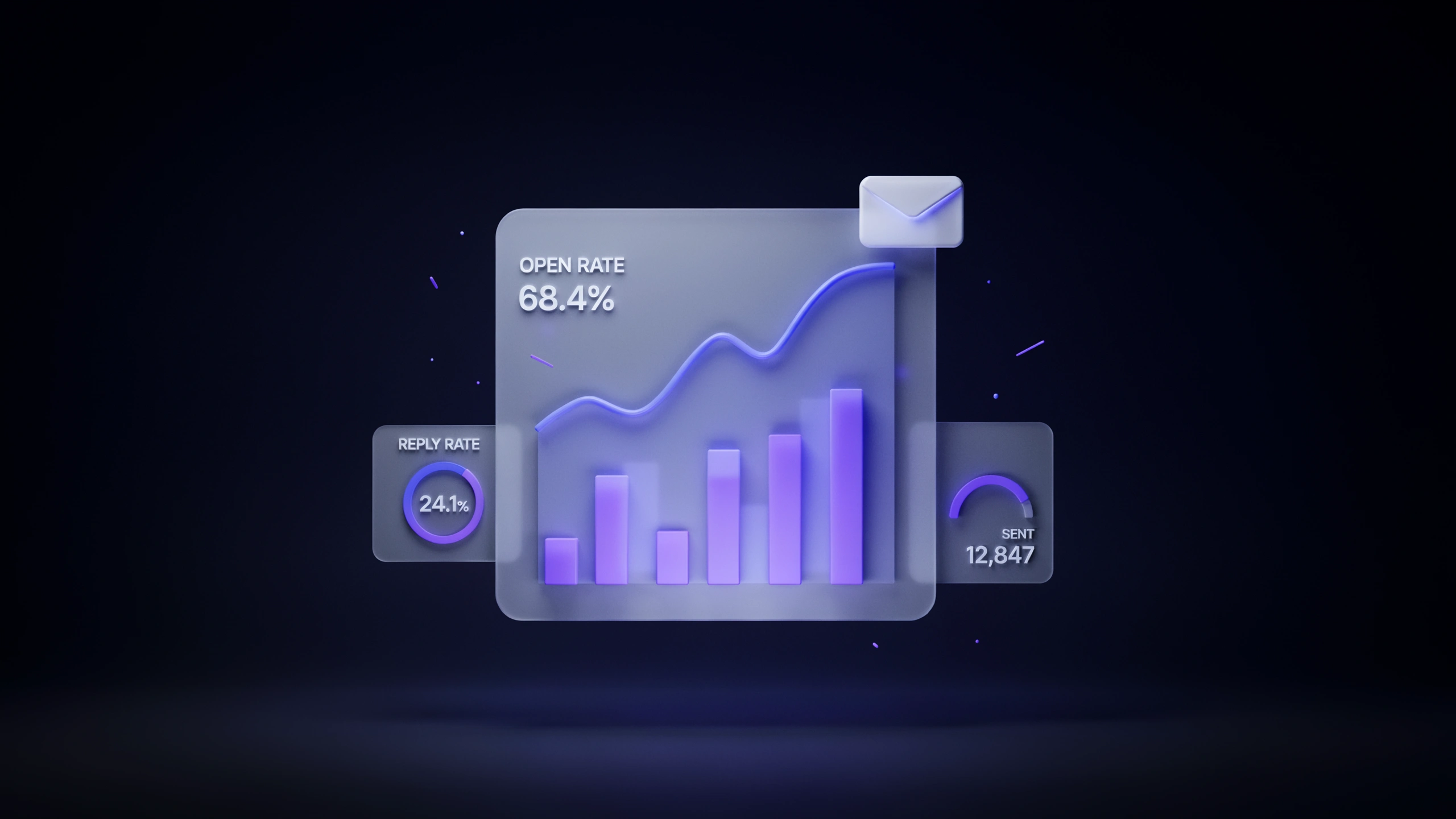
Figure 2: Performance metrics and response tracking across targeted outreach.
7 Follow-Up Mistakes That Make Journalists Block You in 2026
Everything in Parts 1 and 2 assumed competent execution. This section is about the specific, repeatable errors that quietly convert a "maybe" source into a permanently filtered sender. None of these are copywriting problems — they're behavioral ones, and each has a mechanical fix.
Mistake 1 — The CC-and-Cabal Follow-Up
The failure mode: Your Touch 1 goes out with the founder CC'd, the agency account lead CC'd, and a "media@company.com" in the mix. To you it reads as transparency. To a reporter triaging 180 emails before 9 a.m., it reads as a distribution list — and distribution lists get one thing: deleted, often with a sender-level rule attached.
The fix: One sender, one signature, one decision-maker. If a founder needs visibility, forward the thread internally after the send. The moment a journalist sees four names on a follow-up, they assume the reply will generate a four-way thread — and the cognitive cost of that alone kills the ask. Harvard Business Review research on executive communication consistently shows clarity and single-voice ownership outperform committee framing; the inbox version of that finding is unforgiving.
Mistake 2 — Attachment and Link Stacking on the Second Touch
The failure mode: Touch 1 arrives with a PDF press release, a deck, a logo pack, and four links. On a domain the recipient has never corresponded with, this is the highest-risk possible configuration — and it's why cold email deliverability for PR fails before the copy is ever judged.
The fix: Zero attachments on cold touches. Put the quotable excerpt in the email body and host the dataset behind one link. Litmus's State of Email research has documented how fragile engagement signals have become under privacy-first inboxes; the parallel truth on the sending side is that every added payload reduces placement probability. A bounce rate above roughly 2–3% is a domain-reputation cliff — and attachments plus link density are how teams walk off it without noticing.
The deliverability reframe for 2026: Every follow-up is a reputation transaction. You are either buying future inbox access with relevance, or spending it on payload.
Mistake 3 — The Calendar-Link Ask on Touch 1
The failure mode: "Would love 20 minutes — here's my Calendly." On a first follow-up, a scheduling link converts an informational asset into a commitment request. You've asked a stranger, who already ignored you once, to make four decisions (reply, click, pick a slot, show up).
The fix: Make publication possible with zero interaction. Deliver the asset inline, state that the raw data is available on request, and explicitly remove the meeting: "No call needed — the excerpt below is quotable as-is." Recurring outreach research from Gong.io and Salesloft keeps finding the same asymmetry: low-friction, value-first touches outperform commitment-first asks on cold contacts. Journalists are a colder audience than buyers.
Mistake 4 — The Copy-Paste Merge Failure (Now Amplified by AI Drafting)
The failure mode: Hi {{FirstName}} — or worse, the wrong name, the wrong outlet, or a reference to an article that doesn't exist. In 2026, LLM-assisted drafting has made this more common, not less: models confidently fabricate plausible article titles, and a follow-up citing a piece the journalist never wrote is an instant, unrecoverable credibility loss.
The fix: Every named reference must be verified against the live URL before send — headline, date, and argument. This is exactly the failure mode that bespoke hook crafting built on real-time discovery eliminates by construction: if the hook is generated from the actual article surfaced in a live Google News scan, it cannot hallucinate the article. Muck Rack's State of Journalism research has repeatedly found that relevance and demonstrated familiarity are the top factors in whether pitches get read at all.
Mistake 5 — Cross-Channel Stacking
The failure mode: Email Monday. LinkedIn DM Tuesday. X DM Wednesday. A call to the newsroom desk Thursday. Individually each is defensible; together, in a 96-hour window, they read as pursuit. In 2026 this is more dangerous than ever, because a reporter's LinkedIn and X are semi-public — meaning your escalation is visible to their peers.
The fix: Pick one primary channel and stay there for the full three-touch sequence. Escalate to a second channel only when (a) you have a hard deadline the reporter would genuinely care about, and (b) it's a single, short, non-duplicative note. Industry sentiment tracking from PRWeek and Provoke Media has consistently flagged multi-channel piling-on as one of the fastest routes to a personal blocklist.
Mistake 6 — Fake Exclusivity
The failure mode: Offering "an exclusive" to five outlets simultaneously. Newsrooms talk, and in a shrunken 2026 media market they talk more than they used to — the same reporter may now cover your category across three titles. Being caught devalues not just this story but every future offer.
The fix: Exclusivity is binary. If you offer it, hold it for a defined window (48–72 hours) with one named journalist, and say so explicitly: "Offered to you first until Thursday 2 p.m. ET; after that I'll widen it." That sentence makes the offer honest and creates legitimate urgency — which is the entire point. Cision's PR industry research has long documented the credibility cost of over-promising in media relations; exclusivity abuse is the highest-trust-cost version of that error.
Mistake 7 — Measuring Opens Instead of Replies and Placements
The failure mode: The dashboard shows a 62% open rate on the follow-up sequence, the team declares victory, and nobody notices that replies are flat and placements are zero. Meanwhile tracking pixels are actively degrading placement on cold sends, and Apple Mail Privacy Protection is auto-firing the "opens" anyway.
The fix: Kill pixels on outbound PR email. Track exactly four things: reply rate (by touch number), placement rate (by discovery source), bounce rate (domain health), and re-pitch conversion (journalists who replied "not now" and later covered you). That last metric is the only real measure of whether your cadence is building a relationship or burning one — and it's the one almost nobody tracks.
Actionable Founder Checklist: The 2026 PR Follow-Up Blueprint
Run this as a literal operating checklist per campaign. It's sequenced, not thematic — do not skip ahead.
Pre-Launch Prep (T-minus 7 to 0 days)
- Define the one story you're pitching, in the form of a claim a journalist could disagree with.
- Write down the three value deltas you can deploy across Touches 1–3 (data, angle, access, deadline).
- Confirm the asset is publication-ready without a call — quotable excerpt, named source, attribution language.
- Authenticate the sending domain: SPF, DKIM, and DMARC at
p=quarantineorp=reject. - Create a dedicated outbound subdomain (e.g.,
outreach.yourdomain.com) and warm it over 3–4 weeks. - Strip tracking pixels and disable open tracking on all PR sequences.
- Cap sender volume in the tens per day — no burst sends, no batch blasts.
- Run real-time journalist discovery against the trailing 14–21 days of coverage on your topic (this is the Google News scanning step in Pytch — discover from output, not from beat labels).
- Shortlist 25–50 live bylines, each with the specific article and argument attached.
- Score every target on the 100-point rubric; drop anything under 60.
- Verify email delivery on each current address before it enters the sequence.
- Draft bespoke hooks — one per journalist, anchored to the exact piece they published.
- Prepare five subject-line variants from the five surviving formulas (PR pitch subject lines win on specificity: numbers, contradictions, named references).
- Build the sequence with fixed nodes: Day 0 → Day 3–5 → Day 10–14 → Day 21 close-out.
Outreach Execution (Day 0 to Day 21)
- Send Touch 0 Tuesday–Thursday, 7:00–9:00 a.m. in the journalist's timezone.
- Keep Touch 0 to 150–180 words, one link, zero attachments, sentence-case subject under 55 characters.
- Confirm thread-reply structure so all follow-ups inherit the original context.
- At Day 3–5, send Touch 1 only if it opens with "New:" — if it can't, skip the touch entirely.
- Deliver the asset inline in Touch 1; explicitly remove the meeting ask and pre-authorize a "no."
- At Day 10–14, send Touch 2 only if you have a genuinely different framing or a hard external deadline.
- At Day 21, send the graceful exit — one paragraph, offer standing indefinitely, no fourth send.
- Pause the sequence on any signal: a reply, a publication on an adjacent topic, a public post about your space.
- Rewrite against the signal and respond within 48 hours — never send the queued generic version.
- Log every bounce immediately; if domain bounce rate crosses ~2–3%, stop and re-verify the list before continuing.
- Never re-send identical body copy — every touch must differ in substance, not just timestamp.
Post-Pitch Nurturing (Day 21 onward)
- Record every reply — including "not right now" — as a warm lead with a re-pitch date 6–8 weeks out.
- Tag outcomes by discovery source so you can tell whether real-time scanning is outperforming your static lists.
- Convert placements into future pitches: the journalist who covered you once is your highest-yield next target.
- Build a lightweight placement-to-citation loop — evidence-dense coverage earns higher citation rates in generative engines, per Princeton's GEO research (roughly +37% for verified statistics, +40% for authoritative source links).
- Review the cadence monthly against four metrics only: reply rate, placement rate, bounce rate, re-pitch conversion.
- Prune any journalist who has been pitched three times across two cycles with zero engagement — protect the domain and the name.
- Refresh the discovery scan weekly. A media list older than 30 days is a historical document, not a target list.
- For 2027 planning: assume AI inbox triage. The teams that survive it will be the ones whose follow-ups are structurally verifiable — specific piece, specific number, specific source.
<!-- SEMANTIC_CLUSTER_START -->
Tactical Reference Table: Follow-Up Scenario Mapping
| Scenario | Action | Timing Benchmark | Etiquette Rule |
|---|---|---|---|
| No open, no reply after original | Send first follow-up with one new data point | Day 3–4 business days | Keep original thread; add value, don't "bump" |
| Opened but no reply | Send a shorter, lighter nudge | Day 4–5 | Reference the open politely; offer a summary |
| No reply after 2 follow-ups | Stop; mark as pass | Day 7–8 max | Never send a third chase on same thread |
| Reporter replied "not now" | Set a 30-day reminder, do not re-pitch same angle | +30 days | Respect the "not now" as a soft yes window |
| News hook went stale | Drop the sequence; re-pitch fresh angle | Immediate | Don't chase dead news |
| Exclusive offered elsewhere | Withdraw gracefully | Before 2nd follow-up | Transparency preserves future access |
Use this how to follow up on a press pitch matrix as your operating checklist—it converts vague "should I nudge them?" anxiety into a decidable rule.
Related search benchmarks covered: media pitch follow up template, when to follow up with a reporter, second follow up email to editor, pr follow up etiquette.
<!-- SEMANTIC_CLUSTER_END --> <!-- INTERNAL_CLUSTER_LINKS_START -->Related Playbooks in the Cold PR Outreach Cluster
Explore connected guides in our Cold PR Outreach semantic cluster:
- Pillar Guide: The Definitive Guide to Cold PR Outreach for Startups (2026)
- Cold Email Deliverability For Pr: Cold Email Deliverability for PR: Avoiding Spam Filters When Pitching Media
- Pr Pitch Subject Lines: 35 PR Pitch Subject Lines Tested on 1,000+ Reporters in 2026 (44% Open Rates)
- How To Pitch Journalists By Email: How to Pitch Journalists by Email in 2026: 7 High-Converting Templates Tech Editors Actually Read
- Pr Outreach Software Pricing: PR Outreach Software Pricing in 2026: Monthly Plans vs Annual Enterprise Lock-In
FAQ: Follow Up Email to Journalist Questions Answered
Q: How long should I wait before following up with a journalist who ignored my pitch?
Wait 3–5 business days (72–120 hours) before the first follow-up. That window lands after a reporter has cleared their initial inbox wave but before your original thread scrolls into permanent archive — following up at 18 hours signals you don't understand how newsroom triage works.
In practice, the constraint is not the calendar but the content: if you don't yet have a genuine new delta — fresh data, a sharper angle, a hard deadline, or new access — the correct action is to wait until you do, not to send on schedule. A follow-up sent on day 3 with nothing new performs identically to a follow-up sent on day 30 with nothing new, except it burns a touch you can't get back. For context on why the window matters so much in 2026: Pew Research Center's newsroom employment tracking shows a U.S. newsroom workforce down by well over half since 2008, while pitch volume has risen — meaning each surviving reporter triages a far larger inbox in far less time.
Q: How many times should you follow up with a journalist before giving up?
Three touches total — the original pitch plus two follow-ups — then a graceful close-out around day 21. Beyond three cold touches, your name stops meaning "possible source" and starts meaning "friction," a reputational cost that follows you across beat changes and outlet moves.
The exception is a replied relationship, which is not a cold sequence at all. If a journalist has ever responded — even with "not right now" — you have an open door and a legitimate reason to return in 6–8 weeks with a new delta. That distinction is the difference between persistence and harassment: persistence adds information, harassment repeats an ask. Teams using pr outreach software that only measures volume tend to blow through this ceiling; the ones that model reply history and re-pitch windows don't.
Q: Should I follow up on LinkedIn or X if the journalist didn't answer my email?
Rarely, and never as a duplicate. A single short LinkedIn note is defensible if you have a hard deadline the reporter would genuinely care about, or if their email bounced and the platform is your only verified route. Multi-channel stacking within 96 hours — email, LinkedIn DM, X DM, and a call to the desk — reads as pursuit and is one of the fastest ways to earn a personal block.
The cleaner 2026 approach is to fix discovery rather than escalate channels. If a journalist is genuinely live on your topic, their byline will show it: scanning recent publications surfaces who is actively writing, which is a far stronger signal than a follow-up DM. This is also why bounce handling matters more than channel-switching — if you're chasing a reporter who moved outlets six weeks ago, no LinkedIn message fixes that; a verified, current address does.
Q: Why do my follow-up emails to journalists land in spam or bounce outright?
Almost always because of sending infrastructure and list hygiene, not copy. Unauthenticated domains, no DMARC enforcement, attachments and link density on cold touches, unverified addresses, and burst sending volumes are the five dominant causes of suppressed placement in 2026.
Fix the plumbing in this order: authenticate (SPF, DKIM, DMARC at p=quarantine), isolate outbound on a dedicated subdomain, warm it gradually, strip tracking pixels, cap daily volume, and verify every address at send time. Address verification is the highest-leverage single step — pitching a journalist who changed outlets four weeks ago produces hard bounces that damage domain reputation for every future send, including the good pitches. Belkins and Lemlist outreach research both show reply rates stubbornly in the low single digits even on healthy infrastructure — with damaged deliverability, they go to zero.
Conclusion: Your Next Step to Earned Media Coverage
Here is the uncomfortable consolidation of everything above. In 2026, the follow-up is not a reminder — it is a second, smaller, better-targeted pitch. The journalists still standing after a decade of newsroom contraction are faster, more skeptical, and more fluent in pattern-matching AI-generated outreach than any audience you will ever pitch. They cannot be outworked with volume. They can only be re-entered with evidence.
That reframing has three consequences for how you operate heading into 2027:
- Discovery must be live. A media list built from beat tags is a photograph of a newsroom that has already reorganized. Pitch the byline that published on your topic this week — Reuters Institute Digital News Report 2026 continues to document the resource squeeze that's driving constant beat consolidation and reporter mobility.
- Deliverability is a precondition, not a tactic. Cold email deliverability for PR is an engineering discipline. If your domain isn't authenticated, isolated, warmed, and sending to verified addresses, no amount of copywriting craft survives contact with the spam folder.
- Every touch must carry a delta. New data, new angle, new access, or a real deadline. If the sentence doesn't start with "New…", it doesn't get sent — and the whole cadence stops at three.
The most common failure we see is not laziness. It's structural: teams have a big list, a stale database, generic subject lines, and no verified addresses — so the follow-up they send is forced to be generic, because discovery and hook-writing never touched the same source. That's the gap Pytch (pytch.cc) was built to close. Real-time journalist discovery via Google News scanning shows you who is publishing on your topic right now; verified email delivery makes sure the address is live before it costs you domain reputation; and bespoke hook crafting builds the follow-up from the actual article text rather than a {{firstName}} merge field. The result is a smaller, human-volume list where a follow up email to journalist can legitimately reference their piece — because you found them through it.
Your next move is deliberately small, and it takes about ten minutes.
<!-- SEMANTIC_CLUSTER_UPGRADED_V2 -->👉 Run your first media search on pytch.cc. Enter your topic, scan the last three weeks of coverage, and shortlist the 25–40 journalists actually writing in your space. Verify the addresses. Draft one hook against one real article. Send it — then follow up on day 3 with a number the reporter didn't have before. That single loop, run consistently, will outperform three hundred unverified names, every cycle, without ever costing you an inbox.