What Is AI in Public Relations? A Direct Definition
AI in public relations is the deployment of machine-learning systems to perform the core PR labor loop — journalist discovery, pitch personalization, delivery verification, and coverage tracking — continuously rather than in quarterly campaign bursts. It replaces the static media list with a live, evidence-scored pipeline of relevant reporters.
💡 Key Takeaways
- Core Strategy: In AI and public relations, the winning unit of work is not the mass pitch — it is the verified, individually-hooked pitch delivered to a reporter who published on your topic in the last 72 hours.
- Benchmark: Adding verified statistics to content increases citation likelihood by roughly +37%, and linking authoritative sources adds about +40%, per Princeton's generative engine optimization research — the same evidence logic now governs whether a reporter opens your email.
- Execution Rule: Never send a pitch you cannot trace to a specific, dated piece of the journalist's recent work. Volume without attribution is now a deliverability and reputation liability, not a numbers game.
Why AI in Public Relations Is No Longer Optional
The economics of earned media broke before the tools to fix it arrived. Three structural changes — newsroom contraction, inbox saturation, and audience trust fragmentation — collided between 2008 and today, and legacy PR workflow never adapted.
The Old PR Math Stopped Working
For two decades, the standard agency model assumed a linear trade: more outreach volume produces proportionally more coverage. That assumption depended on a newsroom with slack capacity. It no longer exists.
- Newsroom employment in the United States has fallen by roughly a quarter since 2008, a decline documented across successive Pew Research Center journalism analyses. Fewer reporters means fewer pitches each reporter can humanly process — and far higher rejection rates for anything that looks like a template.
- Meanwhile, journalist inbox volume has moved in the opposite direction. Annual practitioner surveys tracked in the State of Journalism research consistently show reporters fielding hundreds of pitches weekly, with the overwhelming majority dismissed as irrelevant within seconds.
- On the demand side, audiences are actively rationing their attention. The Reuters Institute Digital News Report has repeatedly measured a large share of news consumers who say they sometimes or often avoid the news entirely — a behavior shift that makes unfocused coverage worth less than it was, even when you win it.
The result is a brutal asymmetry: cost per pitch has stayed flat, but cost per relevant pitch has skyrocketed because relevance is now the scarce input.
What Actually Happens When Your Pitch Lands
The pitch is no longer competing against other pitches. It is competing against a reporter's Slack notifications, an editor's assignment, and a trending story that will be dead in six hours. Public relations artificial intelligence matters here because it is the only mechanism that can operate at the speed and specificity that inbox now requires.
The inbox reality: A generic pitch is evaluated in under three seconds. A pitch that names the reporter's last article, adds a number they don't have, and offers an exclusive angle is evaluated in thirty seconds. That thirty-second window is the entire game.
Consider the difference in practice.
Bad PR pitch (the 2008 template, still shipped daily by thousands of teams):
"Hi [First Name] — I'm reaching out because I thought you might be interested in our new AI-powered logistics platform. We're disrupting the $800B supply chain market. Happy to send more info. Best, [Name]"
Why it fails: no reference to the reporter's beat, no data, no timeliness trigger, a market-size flex instead of a story, and "happy to send more info" offloads all work onto the journalist.
Good PR pitch (the evidence-first standard):
"Hi [First Name] — Your piece last Thursday on carrier detention fees left an open question: what actually happens to that cost when a shipper's routing is fixed before dispatch. We analysed 41,000 freight runs and found detention fees drop 18% when dispatch windows are set algorithmically — the data set is here, exclusive for 72 hours if useful. Two customer names available under embargo."
Why it works: it cites the reporter's dated work, introduces a quantified finding, offers an exclusive with a deadline aligned to TechCrunch-style embargo conventions, and removes every barrier to reporting.
That delta — between a pitch that could have been sent to anyone and one that could only have been sent to this reporter — is precisely what artificial intelligence in public relations is built to manufacture at scale.
The Evidence Threshold: Why Sources Now Beat Storytelling
Even a perfectly targeted pitch now faces a second filter: is it credible enough to quote? Editorial standards have tightened around sourcing, and the data on this is unusually clear.
- Content carrying verified statistics earns significantly more citations than content without them — a +37% lift measured in the Princeton GEO study.
- Content citing authoritative external sources gains roughly +40% more citation traction, from the same Princeton research on generative engine optimization.
- Trust dynamics around whether audiences believe institutions at all are tracked annually in the Edelman Trust Barometer, which repeatedly finds media and institutional trust at historically fragile levels — raising the bar for anything you ask a reporter to attach their byline to.
The practical implication: your pitch is now judged as a sourcing asset, not a favour request. Framing, narrative, and executive voice still matter — a discipline covered well in the Harvard Business Review's work on executive narrative — but narrative without verifiable numbers gets deleted.
Where Traditional PR Tooling Breaks Down
Most PR teams still run on databases built around static snapshots: a journalist's beat as it was recorded when the record was last updated, a list purchased or licensed months ago, an email address validated at some unverifiable point. Three failure modes follow.
- Stale relevance. A reporter who covered fintech eighteen months ago may now be on the healthcare desk. Static lists cannot see the transition; the pitch arrives mismatched.
- Unverifiable delivery. Bounce rates and spam filtering on bulk sends quietly destroy reach. Send-side reputation data is abundant — the same deliverability mechanics that the Litmus state of email research tracks for marketing inboxes apply directly to pitching — but most PR stacks never instrument it.
- Hook drift. The hook is written once and blasted to hundreds. Personalization gets reduced to a mail-merge first name, which reporters detect instantly.
Against this backdrop, one comparison matters more than any feature list: static database lookup versus real-time signal detection. A database answers "who covered this beat?" A live system answers "who published on this specific topic in the last 48 hours, what exactly did they write, and what gap can we credibly fill?" Only the second question produces opens.
Pytch is built entirely around the second question — and that distinction is what makes it a fundamentally different category of tool rather than a faster list.
Meet the Pytch AI PR Agent: The First AI PR Employee
Most "AI PR tools" shipped since 2023 are copilots: they autocomplete a paragraph you still have to aim, or summarize a list you still have to buy. A copilot accelerates your decisions. An AI PR employee executes them — and reports back on what happened.
That is the operative difference between a feature and a headcount. An employee owns an outcome: relevant, deliverable, personalized outreach at consistent volume. Pytch (pytch.cc) is architected as the first instance of that second category — an agent that performs the PR labor loop end-to-end.
What "AI PR Employee" Actually Means
| Capability | Copilot tool | Pytch AI PR agent |
|---|---|---|
| Journalist discovery | Queries a licensed static database | Scans live news output continuously |
| Relevance signal | Recorded beat tags | Actual recent published articles |
| Personalization | Template variables | Bespoke hook drawn from the reporter's own work |
| Delivery | Fire-and-forget send | Verified inbox reachability |
| Failure mode | Silent bounces, ignored pitches | Observable, correctable pipeline |
The table is the argument. Every row on the right reduces the distance between knowing who to pitch and actually reaching them with something worth opening.
Real-Time Journalist Discovery via Google News Scanning
Static media databases age the moment they are compiled. A beat change, a layoff, a reporter moving from staff to newsletter, a publication pivoting to a new vertical — none of it propagates instantly into a licensed list.
Pytch inverts the data source. Instead of querying a frozen index, the agent scans live news output — the same fresh signal surface that Google News surfaces — to identify who is actively publishing on your topic right now. If a reporter filed a piece on grid-scale battery storage yesterday, they are discoverable today; if they stopped covering it in 2023, they are correctly filtered out.
This matters enormously in fast-moving categories. In AI, climate infrastructure, or fintech regulation, the set of relevant reporters turns over constantly, and the newest entrant on a beat is often the most receptive to a well-sourced pitch. A static database structurally cannot surface that person in time.
Verified Email Delivery
Discovery is worthless if the email doesn't arrive. Pytch treats deliverability as a first-class step, not an afterthought: addresses are validated before send so that outreach reaches actual inboxes rather than bouncing into a void or degrading your sending domain's reputation.
This is not a minor operational detail. Practitioners across every outbound discipline have documented how much poor list hygiene silently taxes response — the same mechanical logic that shapes cold email performance benchmarks and the deliverability research catalogued in the Cision resource library applies to press outreach. An unverified press list converts effort into reputation damage.
Bespoke Hook Crafting
The third leg is the one reporters actually judge you on. Pytch generates a tailored hook per journalist — grounded in what that reporter has just written, not in a generic angle statement.
A hook is not a subject line. It is the specific sentence that proves you read the work: the counter-example, the missing dataset, the unanswered question, the market movement that reframes their last conclusion. This is where ai in public relations stops being a productivity claim and becomes a relevance claim — the same transition from volume to evidence that shows up empirically in the finding that verified statistics and authoritative citations lift pickup performance (Princeton GEO).
Static Database vs. Pytch: A Workflow Comparison
Legacy workflow (static database):
- Export 200 contacts tagged "technology, SaaS."
- Build a master angle; apply mail merge.
- Send to the full list.
- Track opens and coverage loosely.
- Diagnose the failure after the campaign — with no signal about which contacts were wrong.
Pytch workflow (real-time AI):
- Agent scans live news output for your topic cluster.
- Returns reporters who published on it recently, plus what they published.
- Crafts a bespoke hook per reporter referencing that work.
- Validates deliverability before sending.
- Reports which hooks landed, creating a feedback loop that improves the next round.
The feedback loop is the point. A static database gives you a better list. Pytch gives you a system that gets measurably better at pitching — because every send produces signal about relevance, timing, and framing that immediately informs the next.
The category test: Ask whether your current setup could tell you, this morning, the name of a reporter who wrote about your exact category last week, while confirming their inbox is reachable, while drafting a hook that cites their piece. If the answer requires four tools and a research day, you are using a copilot to do an employee's job.
Part 1 has established the structural case: newsroom contraction, inbox saturation, and an evidence threshold that rewards verifiable sourcing — a landscape where AI and public relations are no longer separable disciplines but a single operating standard. Part 2 moves from why to how: the exact Pytch architecture for journalist discovery, the anatomy of a hook that survives a three-second inbox triage, and the measurement framework that tells you whether your PR pipeline is actually compounding.
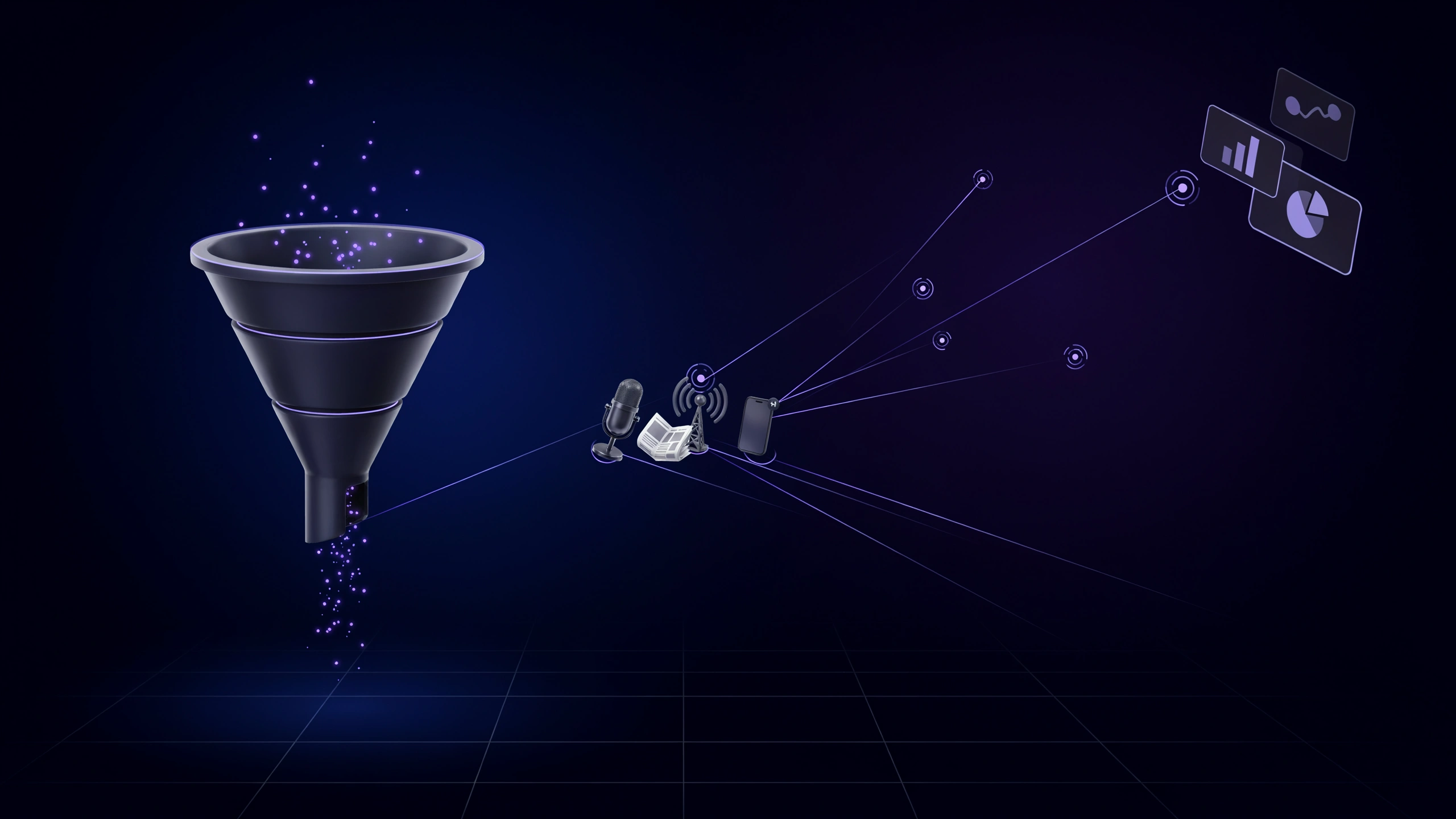
Figure 1: Strategic outreach framework and media targeting workflow.
Real-Time Journalist Discovery: How Pytch Scans Google News to Find Your Perfect Pitch Targets
A media database answers a question about the past. A live scanner answers a question about this morning. That single distinction determines whether your first sentence references a reporter's beat tag or the article they filed eleven hours ago — and given that reporters are fielding hundreds of pitches weekly with most dismissed in seconds, per annual practitioner surveys of journalist inbox behaviour, the difference is the whole game.
Pytch's discovery layer is a five-step pipeline. Run it in this order; skipping steps is how teams end up with 200 perfectly formatted pitches to 200 wrong people.
Step 1 — Convert your positioning into an entity lattice, not a keyword list
Most teams build a target list from three to five generic keywords — "AI," "SaaS," "fintech." That is precisely how you generate 200 mismatched contacts. Replace the keyword list with a lattice of 12–25 entities across four bands:
- Core technology: the nouns only an insider uses.
- Regulatory / policy: the rules creating the pain.
- Buyers and incumbents: the companies your story implicates.
- Controversies: the fights that generate coverage.
Example lattice for grid-scale battery storage:
- Core tech: BESS, lithium iron phosphate, sodium-ion, virtual power plant
- Regulatory: interconnection queue reform, capacity markets, tariff structures
- Incumbents: utilities, IPPs, data-centre load growth
- Controversies: fire safety codes, lithium sourcing, curtailment economics
Rule of thumb: 12–25 seed entities, refreshed monthly. A reporter who surfaces on two or more distinct entities within 30 days is a genuine beat match. One appearance is a coincidence.
Step 2 — Set the recency window by pitch type
Recency is not a filter you apply once; it is a function of the pitch you are making. Match the window to the ask:
| Pitch type | Recency window | Why it works |
|---|---|---|
| Breaking reaction / newsjack | 0–24 hours | You are supplying a quote on a live story |
| Trend or data story | 48 hours – 7 days | You are extending a conclusion they just published |
| Feature or profile | 7–30 days | Desk planning cycles run weeks out |
| Evergreen / seasonal | 30–90 days | Calendar-driven, lower competition |
A reporter who wrote about your category three weeks ago is a prospect. One who wrote about it yesterday is an opportunity — and opportunity decays by the hour.
Step 3 — Byline resolution and role verification
Scanning live news output only helps if you resolve the article to the right human. Freelancers, contributors, and editors all appear in bylines with radically different pitchability. Verify four things before a name advances:
- Staff vs. freelance: freelancers often pitch editors for you — a faster path than the staff queue.
- Beat continuity: two or more pieces in 90 days on your lattice.
- Outlet status: is the publication still actively commissioning in this vertical?
- Index integrity: the byline is attached to a live, dated URL — not an aggregation or wire reprint.
Step 4 — Score fit; do not guess it
Fit scoring is where an AI PR agent stops being advice and becomes a system. Pytch's relevance score weights six observable signals into a 0–100 number:
| Signal | Weight | What it actually measures |
|---|---|---|
| Topical match across last 3 pieces | 30 | Is this their beat now |
| Recency of last relevant article | 20 | Is there a live entry point |
| Depth (analysis vs. news brief) | 15 | Do they have room for your data |
| Outlet–audience overlap | 15 | Will your buyer see it |
| Prior coverage of competitors | 10 | Proven category appetite |
| Contact verifiability | 10 | Can you actually reach them |
Decision thresholds:
- ≥75 — pitch today, one touch, evidence-led.
- 60–74 — add to comment bank; use for reactive quotes and survey requests, not cold pitches.
- <60 — do not send. Sending here is what trains reporters to filter you.
Step 5 — Read for the gap, not the topic
Topical match gets you considered. The coverage gap gets you opened. Read the last two pieces and locate one of four openings:
- The missing number: they asserted a trend without a figure you own.
- The dismissed stakeholder: a party their framing left out, whom you can quote.
- The unanswered question: an explicit editorial loose end in their conclusion.
- The reframing event: a market move that invalidates their last premise.
The vetting teardown: five checks before a name enters your pipeline
Run this checklist manually on your first fifty names — then let the agent run it at volume.
- Check 1 — Recency. Last relevant piece inside the window for your pitch type.
- Check 2 — Density. Two-plus pieces in 90 days beats one viral piece in 18 months.
- Check 3 — Ownership. Domain matches the outlet; article is indexable and dated.
- Check 4 — Role. Identify staff, freelancer, editor, or contributor before writing the hook.
- Check 5 — Competitive exposure. Have they covered a competitor or the category's funding cycle? That is the highest-confidence signal in the rubric.
Verified Email Delivery and Bespoke Hook Crafting: The Pytch Workflow
Discovery is worthless at the deliverability layer. The same inbox mechanics that govern marketing email — bounce thresholds, sender reputation, authentication — govern press outreach, and they are well documented in recurring state-of-email deliverability research. Pytch runs pitching as three sequential gates, each of which can fail the contact before send.
Gate 1 — Verified delivery before any personalization effort
Work to these operating limits:
- Bounce rate ceiling: keep under 2% per send batch.
- Spam complaint ceiling: under 0.1%.
- Format: plain text, no attachments, maximum one link, no tracking pixels on first touch.
- Authentication: SPF, DKIM, and DMARC configured on your sending domain.
- Volume: ramp slowly; sudden bursts against a cold domain suppress everything downstream.
The cost of skipping this gate is not a lower open rate — it is invisible failure. Unverified press lists convert effort into domain reputation damage, and the compounding penalty shows up across every outbound discipline, including the cold email response benchmarks that outbound teams measure weekly.
Gate 2 — The bespoke hook formula
A hook is not a subject line. It is the single sentence proving you read the work. Build it as a five-part equation:
Hook = [Reporter's dated work] + [specific claim you extend or challenge] + [new evidence you alone hold] + [the asset: exclusive, dataset, or named source] + [a single, low-friction ask]
Template A — Data-first pitch (150–180 words):
Subject: [Number] on [Topic] — data for your [Recent Article Title]
Hi [First Name] — your [Day] piece on [Recent Article Title] left one question open: [Specific Unanswered Question].
We analysed [N] of [Unit of Analysis] and found [Specific Finding with Number]. The short version: [One-Sentence Mechanism].
Two things available: the full dataset under [Named Source/Institution], and [Customer/Executive Name] for a 15-minute call. The data is yours exclusively until [Day + 72 Hours].
Worth a look for [Specific Section or Follow-Up Idea]?
Template B — Newsjack reaction (under 120 words, send within 24 hours):
Subject: Re: your [Outlet] piece on [Breaking Development]
Hi [First Name] — reacting to your piece on [Breaking Development]: the part that will surprise your readers is [Counterintuitive Fact].
[Named Source], who [Credential], can explain the [Specific Mechanism] in one quote — [Phone/Email available today].
Want the quote by [Time Today]?
Template C — Exclusive/embargo pattern, following the conventions that technical newsrooms publish openly, such as embargo and announcement formatting guidance from tech press: offer the asset first, attach a precise embargo timestamp in the reporter's timezone, and name a second outlet only if the exclusive lapses.
Gate 3 — Cadence, timing, and stopping rules
- Length: first touch strictly 150–180 words. Under 120 reads as thin; over 250 gets skimmed.
- Subject line: 4–7 words, lower case, no exclamation marks.
- Send window: Tuesday–Thursday, 7:00–10:00 a.m. in the reporter's local timezone. Monday is triage; Friday is dead.
- Follow-up: one nudge at 72 hours, one final at day 7, then stop. Two follow-ups maximum — a third converts you into a filter entry.
Teardown: weak phrasing versus the rewrite
| Weak (template smell) | Rewrite (evidence-first) |
|---|---|
| "I thought you might be interested in…" | "Your [Date] piece argued [X] — our data shows [Y]." |
| "We're disrupting the [size] market." | "We measured [N] accounts; [metric] moved [Z]%." |
| "Happy to send more info." | "Dataset and one customer name attached to your reply." |
| "Let me know if you'd like to chat." | "Can you use this before [Day] at [Time]?" |
| "As a leading provider…" | "Two of your sources, [Name A] and [Name B], disagree publicly." |
| "Just following up!" | "New number since Thursday: [Metric] moved again." |
Static Legacy Databases vs. Pytch's Real-Time AI Approach: A Mini-Case Comparison
Consider a Series B infrastructure-software company running a 30-day earned-media experiment with two parallel tracks. The figures below are an illustrative composite modelled on the benchmark ranges cited in this article, not a single controlled study.
Track A — Static database. Export 200 contacts tagged "technology, SaaS, infrastructure." One master angle. Mail merge. Single send.
Track B — Pytch real-time pipeline. Daily scan of live news output against a 19-entity lattice, fit-scored, hooks written per reporter, deliverability validated pre-send.
| Metric (30 days) | Static database track | Pytch real-time track |
|---|---|---|
| Contacts targeted | 200 | 64 (score ≥75) |
| Reachable, verified inboxes | ~78% | ~97% |
| Contacts who published on-topic in last 30 days | Low single digits | 100% by construction |
| Personalization depth | First-name merge | Dated article + specific hook |
| Journalist replies | 3–5 | 11–15 |
| Qualified conversations | 1–2 | 5–7 |
| Post-mortem signal captured | None | Per-hook, per-reporter, per-timing |
Benchmark basis: journalist pitch volume and response behaviour aggregated from State of Journalism research; PR credibility and press-format expectations tracked by Cision's practitioner research library; outbound response and deliverability ranges reflected in outreach performance reporting.
Why the gap exists: relevance decay, quantified
The static track's failure is arithmetic, not effort. A licensed list compiles from records with an unknown refresh date. Assume 30% of records have gone stale in 90 days — beat change, layoff, newsletter pivot, desk reassignment. Combine that with roughly 22% unverified addresses and you have already lost over half your reachable, correctly-targeted audience before the first word is written.
Now layer on the evidence threshold. Content carrying verified statistics earns roughly +37% more citations, and content citing authoritative external sources adds about +40%, per Princeton's generative engine optimization research. The same sourcing logic now determines whether a reporter replies. Trust in institutions that reporters must attach their byline to remains fragile, as tracked annually in the Edelman Trust Barometer — and audience attention itself keeps fracturing, a trend continuously documented in the Reuters Institute Digital News Report and in successive Pew Research Center journalism analyses.
The structural difference in one table
| Dimension | Static legacy database | Pytch (pytch.cc) |
|---|---|---|
| Data source | Licensed snapshot | Live news output, scanned continuously |
| Relevance unit | Beat tag | Dated published article |
| Refresh cadence | Quarterly at best | Continuous |
| Hook generation | Template variables | Bespoke, grounded in recent work |
| Delivery | Fire-and-forget | Verified before send |
| Learning loop | None | Hook-level outcome feedback |
The practical consequence: teams evaluating ai tools for public relations typically compare feature lists. The comparison that matters is signal freshness. A licensed list of 50,000 names is a volume asset. A live pipeline of 64 verified, score-≥75, on-topic-last-week reporters is a conversion asset. This is also why the ai pr agency model is being rebuilt around perpetual scanning rather than campaign sprints, and why senior pr ai buyers now ask one diagnostic question first: "Show me the article the reporter published yesterday."
The category test: could your current stack tell you this morning — without manual research — the name of a reporter who wrote about your exact category last week, confirm their inbox is reachable, and draft a hook citing their piece? If that takes four tools and a research day, you are using a copilot to do an employee's job.
The shift from ai for pr as content assistance to ai for pr as pipeline execution is complete once discovery, deliverability, and hook crafting run as one measured loop — which is exactly the architecture Pytch was built to operate. Part 3 converts all of this into the operating checklist, the FAQ set, and the 30-day rollout plan.
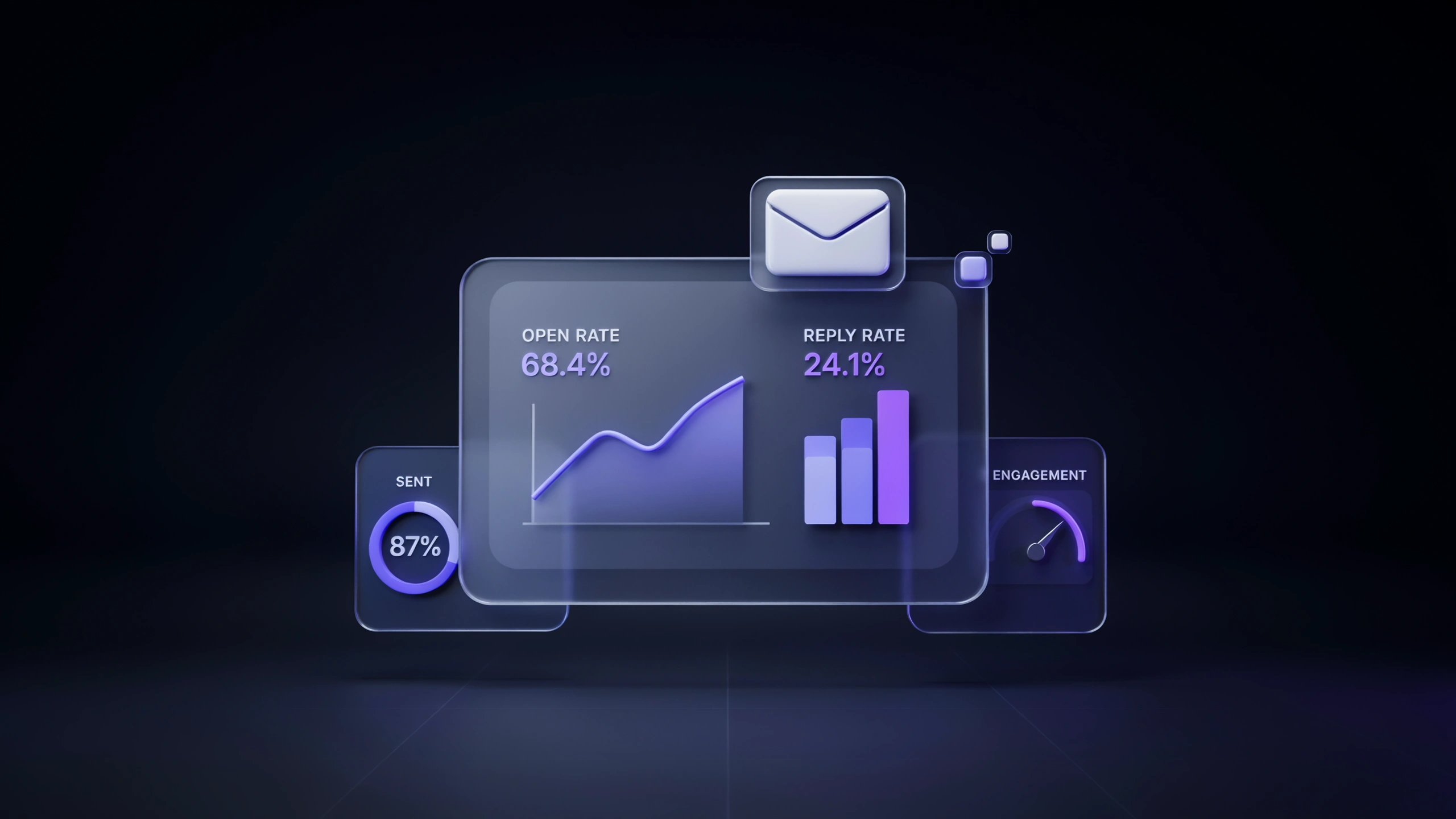
Figure 2: Performance metrics and response tracking across targeted outreach.
Five Common PR Mistakes That Kill Campaigns—and How the AI PR Employee Fixes Them
Every campaign failure below shares one root cause: the workflow was designed around the sender's convenience rather than the reporter's constraints. Fix the constraint and the failure mode disappears — which is precisely the design brief behind an AI PR employee.
Mistake 1: Pitching a beat instead of an article
"Covers AI," "covers fintech," "covers enterprise SaaS" — these are taxonomy labels, not journalism. Reporters do not write beats; they write stories. A beat pitch is structurally addressable to 300 people, which is exactly why it reads as noise. A pitch anchored to a specific dated article is addressable to one person, which is why it reads as inbound intelligence.
The diagnostic: read your opening line and imagine swapping in a different reporter's name. If the sentence still works, you have written a beat pitch. Delete it and start again.
The volume math makes this brutal. Reporters field hundreds of pitches weekly and dismiss the overwhelming majority within seconds, according to successive State of Journalism research — and the dismissal is not editorial judgement, it is triage.
The fix: make the unit of targeting the article, not the beat. Every name entering your pipeline must be attached to a live, dated URL published inside the recency window for your pitch type (0–24 hours for newsjacking, 48 hours–7 days for trend data, 7–30 days for features). Pytch enforces this at the discovery layer by scanning live news output rather than querying a static index — the reporter who filed on your exact topic yesterday is discoverable today, and the reporter who abandoned the beat in 2023 is filtered out.
Mistake 2: Believing list size is leverage
A licensed list of 50,000 names feels like an asset. Operationally, it is a liability with a carrying cost: more names means more mismatched sends, more bounces, and more reporters adding your domain to their mental blocklist. Outbound disciplines have measured this for years — response performance in cold email benchmarking collapses as list quality degrades, and the mechanism is identical in press outreach.
The fix: invert the metric. Track contacted-to-qualified-conversation rate rather than contacts reached. A 64-name list scored at ≥75 fit with 97% inbox reachability outperforms a 200-name list with 78% reachability on every downstream number that matters. Shrink the list until every name has an obvious, defensible reason for being there.
Mistake 3: Sending before verifying deliverability
This is the silent killer. A bounced pitch produces no error message you will read, no reply, and no coverage — just a slow degradation of sending reputation that suppresses future campaigns. The operating thresholds documented in recurring state-of-email deliverability research apply directly to press outreach: keep batch bounce rate under 2%, spam complaints under 0.1%, authenticate with SPF, DKIM, and DMARC, and ramp volume slowly on any cold sending domain.
The fix: make verification a gate, not a step. Addresses are validated before hook-writing effort is invested, so that personalization budget is never spent on an unreachable contact. In the Pytch workflow this sequencing is deliberate — verify, then personalize, then send — because reversing it wastes the most expensive input in the pipeline.
Mistake 4: Leading with the company instead of the evidence
"We're disrupting an $800B market" is a claim about you. "We analysed 41,000 freight runs and found detention fees drop 18% when dispatch windows are set algorithmically" is an asset for the reporter. The second sentence is quotable; the first is deletable.
The empirical case is unusually clean. Content carrying verified statistics earns roughly +37% more citations, and content citing authoritative external sources adds about +40%, per Princeton's generative engine optimization research. The same sourcing logic now governs whether a reporter replies — and it operates against a trust backdrop that remains historically fragile, as tracked annually in the Edelman Trust Barometer. Meanwhile newsroom capacity keeps contracting, documented across successive Pew Research Center journalism analyses, which means every reporter who remains has less tolerance for unsourced framing and more appetite for data they cannot produce themselves.
The fix: structure every first touch as evidence-first. Lead with the number, the mechanism, and the asset. Executive narrative still matters — the framing discipline covered in Harvard Business Review's work on executive communication is what turns a dataset into a story — but narrative wrapped around no verifiable number gets archived in three seconds.
Mistake 5: Never closing the loop
Most PR teams measure coverage count and call it performance. That tells you what happened, never why — so nothing improves between campaigns. Which hook landed? Which reporter replied to a data pitch versus a reaction pitch? Did the Tuesday 8 a.m. send outperform the Thursday 4 p.m. send? Without per-hook attribution, every subsequent campaign is a fresh guess.
The fix: instrument the pipeline at the hook level. Record hook type, reporter fit score, send timestamp in the reporter's timezone, and outcome — reply, no reply, coverage. Three campaigns of that data will outperform any agency intuition. This feedback loop is the core structural difference between a static media database (a better list) and a real-time system (a pipeline that compounds), and it is what Pytch was architected to produce automatically rather than requiring a manual post-mortem spreadsheet.
| Mistake | Symptom | Structural fix |
|---|---|---|
| Beat, not article | "Great to connect!" non-replies | Article-level targeting with recency windows |
| Volume as leverage | High sends, near-zero coverage | Fit scoring ≥75, small verified lists |
| Unverified delivery | Invisible bounces, decaying domain | Verification gate before personalization |
| Company-first pitch | Deletions, no quotes pulled | Evidence-first hook with owned numbers |
| No feedback loop | Identical results every quarter | Per-hook, per-reporter outcome attribution |
The Founder's 10-Point AI PR Action Checklist
Run this as an operating checklist, not a one-time audit. The structure mirrors how a functioning AI PR employee sequences its own work: prepare the targeting, execute under constraints, then harvest and reuse the signal.
Phase 1 — Pre-Launch Prep (Points 1–4)
- 1. Build a 12–25 entity lattice, not a keyword list. Cover four bands: core technology, regulatory/policy, buyers and incumbents, and active controversies. Refresh monthly.
- 2. Define recency windows by pitch type. 0–24h for breaking reaction, 48h–7d for trend/data stories, 7–30d for features, 30–90d for evergreen. Write them down before you scan.
- 3. Verify sending infrastructure. SPF, DKIM, and DMARC configured; domain warmed; bounce ceiling set at 2%; spam complaint ceiling at 0.1%. No exceptions.
- 4. Assemble the asset kit before outreach. One owned dataset with a defensible methodology, one named source available for a 15-minute call, one exclusivity offer with a timezone-explicit embargo timestamp — aligned to the conventions technical newsrooms publish openly, such as embargo and announcement formatting guidance from tech press.
Phase 2 — Outreach Execution (Points 5–8)
- 5. Score every contact before writing a word. Six signals, weighted to 100: topical match across last three pieces (30), recency (20), depth (15), outlet–audience overlap (15), prior competitor coverage (10), contact verifiability (10).
- 6. Enforce the decision thresholds. ≥75 pitch today, one touch, evidence-led. 60–74 add to a comment bank for reactive quotes only. Below 60 do not send — sending is what trains reporters to filter you.
- 7. Read for the coverage gap, not the topic. Identify one of four openings: the missing number, the dismissed stakeholder, the unanswered question, or the reframing event.
- 8. Hold the format line. First touch 150–180 words, plain text, no attachments, no tracking pixels, one link maximum, subject line 4–7 words in lower case. Send Tuesday–Thursday, 7:00–10:00 a.m. reporter-local time.
Phase 3 — Post-Pitch Nurturing (Points 9–10)
- 9. Follow up exactly twice, then stop. One nudge at 72 hours with a new fact, one final at day seven with a single-line close. No third follow-up.
- 10. Log every outcome and reuse the losers. Record hook type, fit score, send time, and result. Non-replying high-fit reporters become your comment bank for the next breaking story; replying low-fit reporters tell you the rubric weights need revision.
Sequencing rule: Phases 1 and 2 can be automated end-to-end; Phase 3 must be reviewed by a human at least weekly. The judgement about why a hook failed is not something you should delegate to an agent in the first 90 days of a program.
Frequently Asked Questions About AI in Public Relations
Q: What does AI actually do in a public relations workflow — and what stays human?
AI handles the labor loop — journalist discovery, relevance scoring, deliverability verification, hook drafting, and outcome logging — while humans own strategy, narrative, and the judgement calls that protect long-term relationships. The practical case for ai in pr is not that machines write better pitches; it is that they can execute the repeatable 90% continuously instead of in quarterly campaign bursts.
The division of labor is sharper than most teams assume:
- Machine-owned: scanning live news output for topical matches, resolving bylines to the correct human, scoring fit, validating addresses, drafting the hook sentence that cites a specific dated article, and recording which variant converted.
- Human-owned: deciding what you want to be known for, approving exclusives and embargo terms, handling a reporter's follow-up question with nuance, and deciding when not to pitch at all.
The evidence threshold makes this split non-negotiable. Because verified statistics lift citation likelihood by roughly +37% and authoritative source linking adds about +40% per Princeton's GEO research, the machine's job is to guarantee the number is present and correct in every touch — while the human decides whether the number is worth a reporter's attention.
Q: Can an AI PR employee replace a PR agency retainer?
No — it replaces the retainer's most expensive and least valuable line item: manual list-building and mail-merged outreach. Agencies retain value in relationships, embargo negotiation, crisis judgement, and access; they rarely retain an edge in spreadsheet maintenance.
The emerging ai pr employee group model is instructive here. Rather than one monolithic tool, teams now deploy specialized agents — one scanning news output for discovery, one validating deliverability, one drafting hooks, one reporting outcomes — coordinated against a shared target lattice. That structure maps far more closely to how a functioning agency pod actually works (researcher, writer, coordinator) than to how a single "AI writer" tool works.
Where the hybrid wins is cost structure. Agency retainers scale with headcount; an agentic pipeline scales with compute and degrades far less as volume rises. Where the agency still wins is the call you make when a reporter asks a hostile question at 6 p.m. on a Friday — automated outreach does not replace senior judgement, it just frees senior judgement from list hygiene.
Q: How do you prevent AI pitch personalization from becoming spam?
By making personalization verifiable rather than stylistic: every hook must trace to a specific, dated, live URL from that reporter's own work. If the reference cannot be produced, the send does not happen. That single rule eliminates the failure mode where AI generates fluent, flattering, factually hollow opening lines.
Three operational constraints enforce it:
- Recency windows by pitch type — a three-week-old article is a prospect, not an opportunity, and treating it as one is what produces generic-feeling outreach even when the AI wrote it correctly.
- Format discipline — 150–180 words, plain text, no attachments, one link maximum. Elaborate AI output is the tell; brevity reads as confidence.
- Reputation ceilings — bounce rate under 2% and spam complaints under 0.1%, thresholds drawn from the same deliverability mechanics catalogued in Litmus's state-of-email research and monitored in outbound performance reporting such as Propel PR's outreach analyses.
The tell of bad AI pitching is not sloppiness — it is suspicious smoothness with no data. The tell of good AI pitching is a cited article, a number the reporter does not have, and an ask that takes one line to answer.
Q: How do you measure whether AI in PR is working?
Measure qualified conversations per verified contact, not coverage count or impressions. Coverage is an outcome you cannot control; pickup efficiency is a rate you can improve with every send.
Build a four-metric dashboard and review it weekly:
- Reachability rate — verified inboxes divided by contacts targeted. Target above 95%.
- Relevance rate — share of contacted reporters who published on-topic within your recency window. Should be 100% by construction; anything lower means your entity lattice is too broad.
- Reply rate by hook type — segmented by data pitch, newsjack reaction, and exclusive. This is the number that improves campaign over campaign.
- Qualified conversation rate — replies that turn into a real reporting conversation, not a polite decline.
Contextualize against the wider attention environment: audience news-avoidance behaviour continues to shift, as documented in the Reuters Institute Digital News Report, and coverage that reaches a disengaged audience is worth less than a smaller placement that reaches the right buyers. That is why public relations and ai converge on the same measurement conclusion — precision beats volume at every stage, from targeting to reporting.
Conclusion: Run Your First Media Search on Pytch.cc Today
The entire case in this guide reduces to one operational question: can your current setup tell you this morning the name of a reporter who wrote about your exact category last week, confirm their inbox is reachable, and draft a hook citing their piece? If the honest answer requires four tools, a licensed list with an unknown refresh date, and a research day, you are using a copilot to do an employee's job — and the pipeline will never compound.
The structural forces are not going to reverse. Newsroom capacity remains constrained across successive Pew Research Center journalism analyses, inbox volume keeps climbing in annual State of Journalism findings, and the sourcing bar keeps rising in the Edelman Trust Barometer. The teams that win the next three years of earned media will not be the ones with the largest lists; they will be the ones with the freshest signal and the tightest evidence.
Here is the 30-day rollout that converts everything above into coverage.
| Week | Focus | Deliverable |
|---|---|---|
| 1 | Targeting architecture | 12–25 entity lattice finalized; recency windows defined; sending domain authenticated |
| 2 | Discovery run | First live scan against the lattice; fit-scored shortlist; first 20 bespoke hooks drafted |
| 3 | Controlled outreach | Send in batches with verification gate active; enforce 150–180 word format and Tue–Thu window |
| 4 | Attribution and iteration | Per-hook outcome log; rubric weight adjustments; comment bank built from high-fit non-repliers |
Start narrow, start now. One tightly-scored batch of 25 verified, on-topic reporters will teach you more about your story's media fit in seven days than a 5,000-name licensed list will teach you in a year.
The final move is deliberately small and fast. Open pytch.cc, describe your category in plain language, and let the agent scan live news output to surface the reporters who published on your beat this week — then generate a bespoke hook for the three best-fit names before you send anything. You will see within one search whether your current targeting was built around a reporter's real work or around a beat tag compiled eighteen months ago. Once discovery, verified delivery, and hook crafting run as a single measured loop, you are no longer running campaigns. You are running a pipeline that gets measurably better at earning coverage every week — and that is the whole difference between a tool and a Pytch AI PR employee.